
Chimney & Fireplace FAQ
The questions Denver Metro homeowners ask us most, answered the way our technicians answer them on the phone.
Cleaning, inspection levels, leaks, crowns, mortar and removal. If your question is not here, call us and ask it.
Dispatching from 12640 W Cedar Dr, Unit 7, Lakewood.
Cleaning, sweeping and creosote
What a sweep covers, how long it takes and what changes the scope.
How long does a chimney cleaning appointment take?
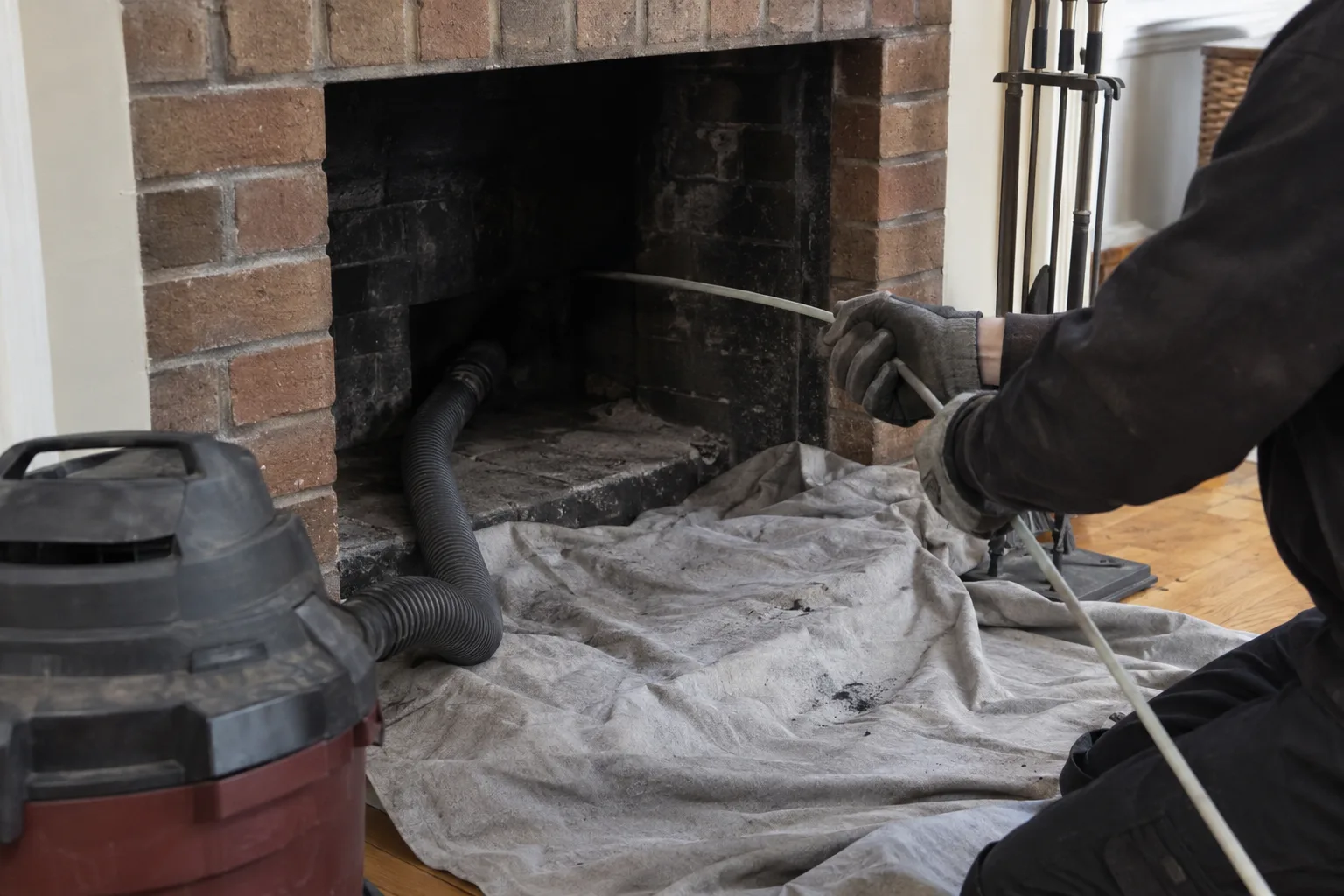
Most chimney cleaning appointments take 60 to 90 minutes. Heavier creosote buildup or a taller flue can push that closer to two hours. AR Chimney Pros dispatches a 20 person crew from Lakewood, so technicians arrive with the right tools for the job rather than a standard kit that may require a return visit.
See chimney cleaningDo I need to do anything before the technician arrives?
Clear a two foot path around the fireplace opening before the appointment. Move rugs, furniture and decorative items away from the hearth. The technician will cover the firebox opening with a dust shield before cleaning begins. You do not need to pre-clean the firebox or remove ash. That is part of the service.
What happens if Stage 2 or Stage 3 creosote is found?
Stage 2 creosote requires rotary cleaning equipment, not a standard brush. Stage 3 glaze requires chemical treatment before any mechanical removal begins. If either stage is found during your appointment, the technician will document it and explain what additional service is needed before proceeding. Standard cleaning rates do not cover Stage 2 or Stage 3 removal.
See creosote and glaze removalWhen is the best time to schedule a sweep in Lakewood?
September and early October are ideal, before Denver's heating season begins. Scheduling before demand peaks means shorter wait times and a clean flue ready for the first fire. Spring appointments, after the wood burn season ends, catch creosote that accumulated through the winter before it off-gasses odors into the home during summer.
See odor removal and sealingWhat makes AR Chimney Pros different from other sweeps?
Every cleaning appointment includes a visual flue check before and after the sweep. The technician documents what was found, not just what was removed. Homeowners leave with a clear picture of their flue condition rather than just a receipt. That documentation is available if an insurance question or future inspection arises.
Cost comes up on almost every call. We quote after a technician has seen the system, so phone us with what you are seeing and we will explain how the visit is scoped.
Inspection levels, reports and cameras
NFPA 211 defines three inspection tiers. Here is what each one covers and what it cannot.
Level 1
How long does a Level 1 inspection take?
A Level 1 inspection typically takes 45 to 75 minutes. The technician works through the firebox, accessible flue sections, chimney cap, crown and exterior masonry in sequence. AR Chimney Pros produces a written findings report at the end of every Level 1. That documentation step adds a few minutes but leaves the homeowner with a record they can keep.
See Level 1 inspectionDoes a Level 1 use a camera inside the flue?
No camera is used during a Level 1 inspection. NFPA 211 defines Level 1 as a visual examination of all readily accessible areas, with no specialized tools or equipment required. The technician uses a flashlight to view the accessible flue sections from the firebox opening and the chimney top. A camera scan triggers a Level 2.
What is in the written report after a Level 1?
Most chimney companies deliver a verbal summary at the end of the visit. AR Chimney Pros produces a written findings report that documents each component checked (crown, cap, mortar joints, liner, firebox) and records the condition of each. That report is yours to keep and can be shared with an insurance carrier or real estate agent.
Can a Level 1 miss something a Level 2 would catch?
Yes. A Level 1 covers only what is visually accessible without tools or camera equipment. Liner cracks deeper in the flue, offset sections in older Denver homes and internal blockages that are not visible from the firebox or chimney top fall outside Level 1 scope. If you are selling a home, buying one, or have had a significant weather event, a Level 2 is required.
Level 2
How long does a Level 2 inspection take?
A Level 2 inspection typically runs 90 minutes to two hours. The camera scan of the full flue length is the main factor that extends the appointment beyond a Level 1. AR Chimney Pros delivers a written report with still images captured during the camera scan, and that review and documentation step is completed before the technician leaves the property.
See Level 2 inspectionDoes the report include photos or just written notes?
The Level 2 report includes still images pulled from the camera scan alongside written findings for each component. Images capture liner condition, any cracks or offsets, and the condition of the flue at the top of the stack. These images can be shared directly with a real estate agent, buyer or insurance carrier without any additional request.
What triggers a Level 2 requirement, and who decides?
Three situations require a Level 2 under NFPA 211: a home sale or purchase, a significant weather event (hail, wind, lightning), and any change to the connected appliance. In Colorado real estate transactions, the Level 2 requirement typically surfaces during the inspection contingency period. The buyer's inspector, the real estate contract, or an insurance carrier may each trigger the requirement independently.
Can a Level 2 reveal problems a Level 1 already cleared?
Yes. A Level 1 visual pass from the firebox below and the cap above can miss liner cracks mid flue, offset joints in older Denver homes, and mortar deterioration that is not visible from either access point. The camera scan covers the full flue length in a continuous image, and that is the specific capability that separates Level 2 from Level 1.
Will the camera work on older offset flues in Denver Metro homes?
Flexible camera systems navigate chimney offsets found in pre-1980 Denver Metro construction. Terra cotta tile flues with angular offsets are among the most common inspection scenarios in this service area. The camera captures footage through the offset section, which is precisely where liner separation and mortar cavity collapse are most likely to appear first.
See forensic diagnosticsLevel 3
What is in the scope agreement, and can I change it?
The scope agreement specifies which building components will be removed, for example which chimney wall sections, masonry panels or flue covers, and the sequence of that removal. It also defines what the restoration scope covers after inspection is complete. AR Chimney Pros establishes the scope before any demolition begins so the homeowner knows exactly what will be opened and what will be closed back up.
See Level 3 inspectionIs my chimney safe to use after a Level 3?
A Level 3 inspection produces a findings report. It does not automatically restore the chimney to operational status. If the inspection reveals damage such as cracked liner sections, shifted masonry or a failed mortar cavity, the findings report documents what was found and what repairs are required before the chimney is safe to use again. Restoration scope is defined separately from the inspection scope.
Why can a camera scan not replace demolition access?
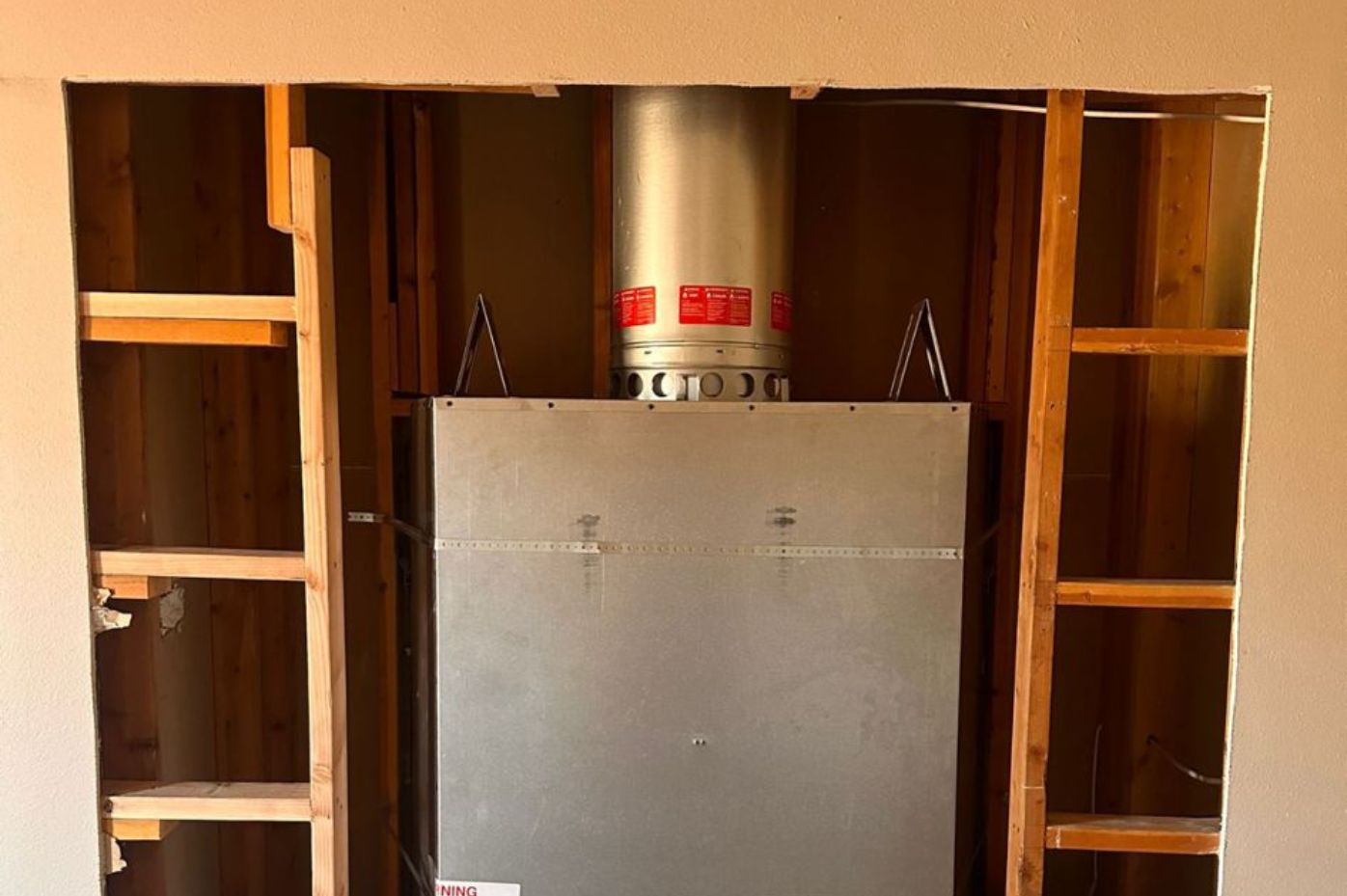
Camera equipment captures images of accessible flue surfaces. Concealed portions of a chimney, meaning sections hidden behind masonry, inside wall cavities or beneath structural components, cannot be reached by a camera. NFPA 211 defines Level 3 specifically because some failure modes only become visible when components are removed. Camera footage cannot confirm what is behind the tile, only what is visible through it.
How does AR Chimney Pros handle a Level 3?
AR Chimney Pros defines the demolition scope in writing before any component is removed. The homeowner receives a written findings report after inspection is complete, not a verbal summary. That documentation is formatted for insurance carrier submission and includes the specific structural failure modes identified during the investigation. Restoration work is quoted separately, after findings are confirmed.
Leaks, diagnostics and water repairs
Water is the most common reason a Front Range chimney fails early. These are the questions that follow a stain on the ceiling.
How long does a leak diagnostic visit take?
A chimney leak diagnostic visit typically runs 60 to 90 minutes. The technician works through each potential entry point (crown, flashing, mortar joints, liner and chase cover) before any finding is recorded. Moisture mapping across multiple entry points takes longer than a single source check, but that thoroughness is what prevents a repair cycle where water returns through the next opening.
See leak inspectionCan you find a leak that only shows after heavy spring storms?
Intermittent water intrusion is the most common scenario in Colorado chimney diagnostics. The technician maps each potential entry point regardless of whether active moisture is present at the time of the visit. Moisture indicators such as staining patterns, salt deposits and soft mortar remain visible between rain events. The goal is identifying where water entered, not waiting for the next storm.
Do I need a repair quote before I can book the leak inspection?
No. The leak inspection is a standalone diagnostic service. AR Chimney Pros treats the diagnostic as a separate appointment that produces a moisture map of active and potential entry points. Repair recommendations come after the findings are confirmed, not as part of the diagnostic visit. Homeowners are never pressured to commit to repairs before the source is identified.
How is this different from a contractor who checks the flashing?
Checking flashing is one step, not a leak inspection. AR Chimney Pros evaluates all seven common water entry points (crown, step flashing, counterflashing, apron flashing, mortar joints, liner and chase cover) as separate diagnostic steps. Each entry point is assessed for active versus incidental moisture before any finding is recorded. A single point check misses multiple simultaneous entry scenarios, which are common after Colorado freeze thaw cycles.
Can the inspection tell me which repairs to prioritize?
Yes. The moisture map produced during the diagnostic identifies which entry points are actively contributing to water intrusion and which show potential but not confirmed failure. That distinction allows the repair scope to be sequenced, with active failures addressed first and potential failures monitored or addressed in a second phase. The diagnostic report gives the homeowner a prioritized finding, not a flat list of everything that needs work.
Can you repair just the flashing without replacing the crown?
Yes, if the diagnostic confirms the crown is structurally intact and the active failure is isolated to the flashing zone. AR Chimney Pros matches the repair method to the confirmed entry point. Flashing repairs, crown restoration, mortar repointing and liner patching are each treated as separate scopes. No component is replaced unless the diagnostic confirms it is the source or a contributing factor.
See flashing repairWhat is the difference between a patch repair and full remediation?
A patch repair addresses one isolated entry point when damage is confirmed to be single source and the surrounding components are structurally sound. A full remediation scope addresses all active water entry points in a single coordinated repair sequence, which is appropriate when multiple components (flashing, crown, mortar joints) have failed simultaneously. In Colorado, where freeze thaw cycles accelerate multi point failure, a patch that leaves adjacent entry points unaddressed often fails within one additional winter season.
See leak repairWill the repair hold through a Colorado winter?
Repair durability depends on the method and material matched to the confirmed entry point. Flexible crown coat applied to surface crazing is formulated for freeze thaw resistance. Mortar repointing uses a mix matched to the existing masonry to prevent differential stress cracking. Flashing repairs using embedded counterflashing hold through thermal expansion cycles that caulk only patches cannot survive. The repair method is selected based on confirmed cause, not a generic product applied to all entry points.
Read the freeze and thaw guideHow do I know the leak is fixed before the next rain?
The technician documents the condition of each repaired component before leaving the property. For flashing, that includes verifying that the counterflashing is fully embedded and sealed. For mortar, it includes confirming pack depth and joint profile. For crown repairs, it includes confirming cure and surface seal. That documented standard, rather than a verbal confirmation, is the baseline for any follow up assessment if water appears again.
Crowns, mortar, brick and efflorescence
Masonry questions, from a hairline crack in the crown to white bloom on the brick face.
Crown repair and crown installation
The crown is the concrete slab on top of the stack. How it cracks decides whether it is coated, filled or rebuilt.
Can a cracked crown be repaired, or does it need replacing?
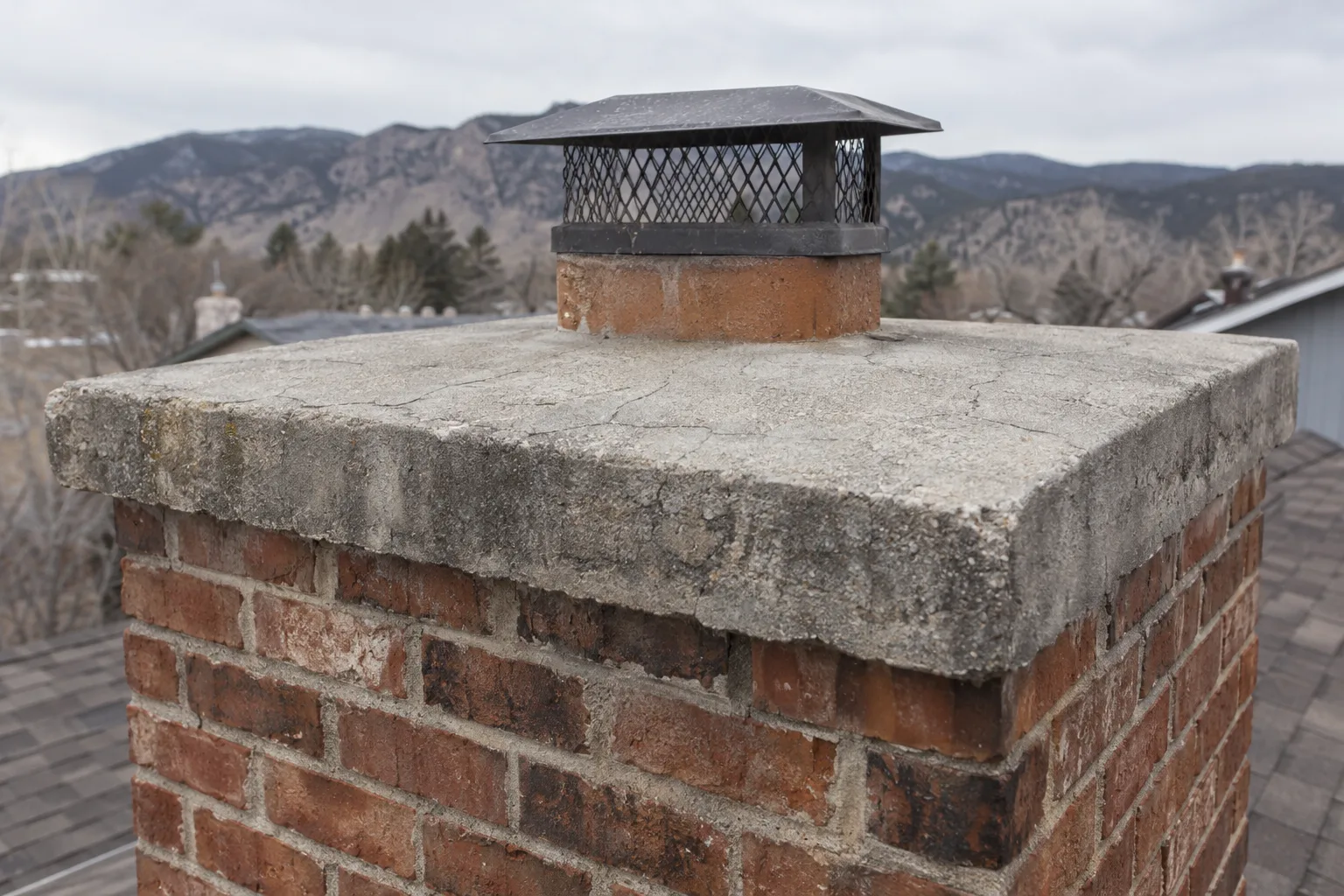
Most cracked crowns can be repaired rather than fully replaced, if the damage stage is correctly identified first. Surface crazing (fine line cracking across the crown face) gets a flexible crown coat treatment. Through cracks (gaps the full depth of the crown) get filled and overlaid. Only crowns with structural separation, meaning sections that have shifted, fallen or collapsed, require full rebuild. The stage determines the method.
See crown repairWhat is crown coat, and why does it beat a mortar patch here?
Crown coat is a flexible, brush applied resurfacing compound formulated to grip existing concrete and stay flexible through freeze thaw cycles. Standard mortar patches are rigid, so they crack when the crown expands and contracts with Colorado's temperature swings. Crown coat moves with the substrate rather than against it. That flexibility is the specific property that makes it appropriate for surface level crown repair in the Front Range climate.
How do I tell which damage stage my crown is at?
Surface crazing looks like a road map of fine lines across the crown face, visible from the ground on a bright day. Through cracks are gaps you could fit a fingernail into. Structural failure means you can see sections of the crown that have shifted, separated or fallen. If the crown looks intact from the yard but water appears inside the firebox after rain, a through crack is the most likely cause even if it is not visible from street level.
Will a crown repair hold through hail season?
Crown coat materials are formulated for outdoor masonry exposure, including UV and impact resistance. They are not rated for direct golf ball hail impact, and no surface material is. A crown that takes a direct hail strike may sustain new surface damage regardless of the repair material used. The value of crown coat over rigid mortar in Colorado is freeze thaw performance between hail seasons, not impact resistance during a storm.
Why does crown overhang depth matter?
A crown with no overhang allows water to run straight down the chimney's masonry face, saturating mortar joints and accelerating spalling. The overhang directs that runoff outward, away from the brick below. AR Chimney Pros forms each crown with a minimum two inch overhang past the chimney's masonry edge, matched to the actual dimensions of the chimney. Factory crowns are often poured flush, and that flush edge is the starting point for most masonry water damage in Denver Metro homes.
See custom concrete crownsWhy does a custom formed crown last longer than a pre-cast one?
A custom formed crown is sized, sloped and jointed to the specific chimney it covers. The center slope directs water toward the edges. The control joint absorbs thermal expansion rather than letting it crack the body of the crown. The overhang includes a drip edge that breaks water tension before it reaches the masonry face. Pre-cast options are generic. They approximate the right geometry but are not calibrated to your chimney's actual dimensions, flue collar location or local thermal load.
Can a new crown be poured over the old mortar wash?
The existing crown must be assessed before any decision is made. If the old mortar wash is deteriorated, soft or has pulled away from the chimney top, it must be removed, because pouring new concrete over a failing substrate transfers the existing instability into the new crown. If the old material is structurally sound and still firmly attached, a properly prepared surface can accept a new pour. The assessment determines which approach applies to each chimney.
Is a new crown the right fix, or do I need flashing work too?
Crown installation addresses water entry through the crown itself, such as deteriorated concrete, a cracked flue collar seal or a missing overhang. If the roof to chimney junction (step flashing, counterflashing) is also failing, a new crown alone will not stop all water intrusion. The technician assesses both zones during the initial visit and identifies whether the crown alone accounts for the leak pattern or whether flashing is also a contributing factor.
Mortar, brick and white staining
Joints, spalling faces and efflorescence all come back to how water moves through the masonry.
Why does the mortar mix have to be matched before cutting starts?
Using a mortar harder than the surrounding brick transfers freeze thaw stress into the brick face rather than the joint. When the joint is harder than the brick, the brick absorbs the expansion load and begins to spall. AR Chimney Pros matches the lime to Portland ratio and aggregate size to the existing masonry before any joint is cut. The mix selection step happens first, not as an afterthought once the old mortar is out.
See mortar repointingCan you skim new mortar over the old joints?
No. Skimming mortar over deteriorated joints produces a thin surface layer with no mechanical grip. Industry standard requires removing existing mortar to a minimum three quarter inch depth before packing new material. That depth gives the new mortar enough surface area to lock into the surrounding brick. A surface skim looks finished but fails within one or two freeze thaw seasons in Colorado's climate.
Does the joint profile matter in Colorado's climate?
Joint profile affects how water sheds from the mortar face. A concave profile, the most common choice for exposed masonry, curves inward at the center and directs water away from the joint face rather than pooling in it. A flush or weathered profile is used when matching historic brick. The profile choice is made relative to the existing masonry and the exposure conditions of the specific chimney. In Colorado's front facing sun and hail exposure, a poorly profiled joint collects water that a correctly finished joint would shed.
Do I need repointing or something more extensive?
Repointing is appropriate when the mortar joints are recessed or crumbling but the brick units themselves are intact and firmly in place. If individual bricks are loose, cracked through or showing face delamination, the damage has moved beyond the joint into the masonry unit itself, and that condition requires brick replacement rather than repointing alone. The technician assesses joint depth and brick condition as separate evaluations during the initial visit.
Can I just seal the flaking brick myself?
Sealing spalling brick before the moisture source is addressed traps water inside the masonry. The next freeze cycle expands that trapped water and accelerates the damage rather than stopping it. Film forming sealants applied to actively spalling brick are a common cause of worsened deterioration in Colorado's climate. The moisture source must be identified and interrupted before any sealing product is applied to the chimney surface.
See spalling brick repairWhat is the difference between active and stabilized spalling?
Active spalling means moisture is still entering the brick, so each freeze cycle produces new face loss. Stabilized spalling means the water source has been removed or interrupted, and the surface damage exists but is no longer progressing. The repair scope is different. Active spalling requires moisture source correction before any surface work begins. Stabilized spalling can move directly to brick replacement and surface treatment. Quoting without making that distinction produces a repair that may fail in one additional season.
Do soldier course bricks need special handling?
Soldier course bricks, the vertical rows typically found at chimney cap transitions, are oriented with their longest face exposed to weather. That orientation exposes maximum surface area to sun, hail and freeze thaw cycling. They spall earlier than standard horizontal courses on the same chimney. When spalling appears on a soldier course, it is an early indicator that the rest of the chimney will follow. The soldier course is where deterioration typically starts, not where it ends.
Is the white staining on my chimney dangerous or just cosmetic?
Efflorescence itself is not structurally dangerous. It is crystallized salt left behind as water evaporates through masonry. What it signals can be. Secondary efflorescence, meaning recurring deposits, means water is actively moving through the chimney masonry on a continuing basis. That ongoing moisture migration is what causes mortar deterioration, spalling and liner damage over time. The stain is a symptom. The water movement behind it is the condition that requires attention.
See efflorescence removalDoes the efflorescence diagnostic add time to the appointment?
The moisture migration assessment happens at the beginning of the appointment, before any chemical treatment is applied. That sequencing, diagnostic first and treatment second, is the approach AR Chimney Pros takes on every efflorescence call. It does extend the visit compared to a scrub and seal approach, but it is what prevents the staining from returning the following spring. Treating without diagnosing is faster in the short term and more expensive over two or three seasons.
Full repairs and chimney removal
When the whole stack is involved, sequence and scope decide the outcome.
What is the repair sequence, and why does the order matter?
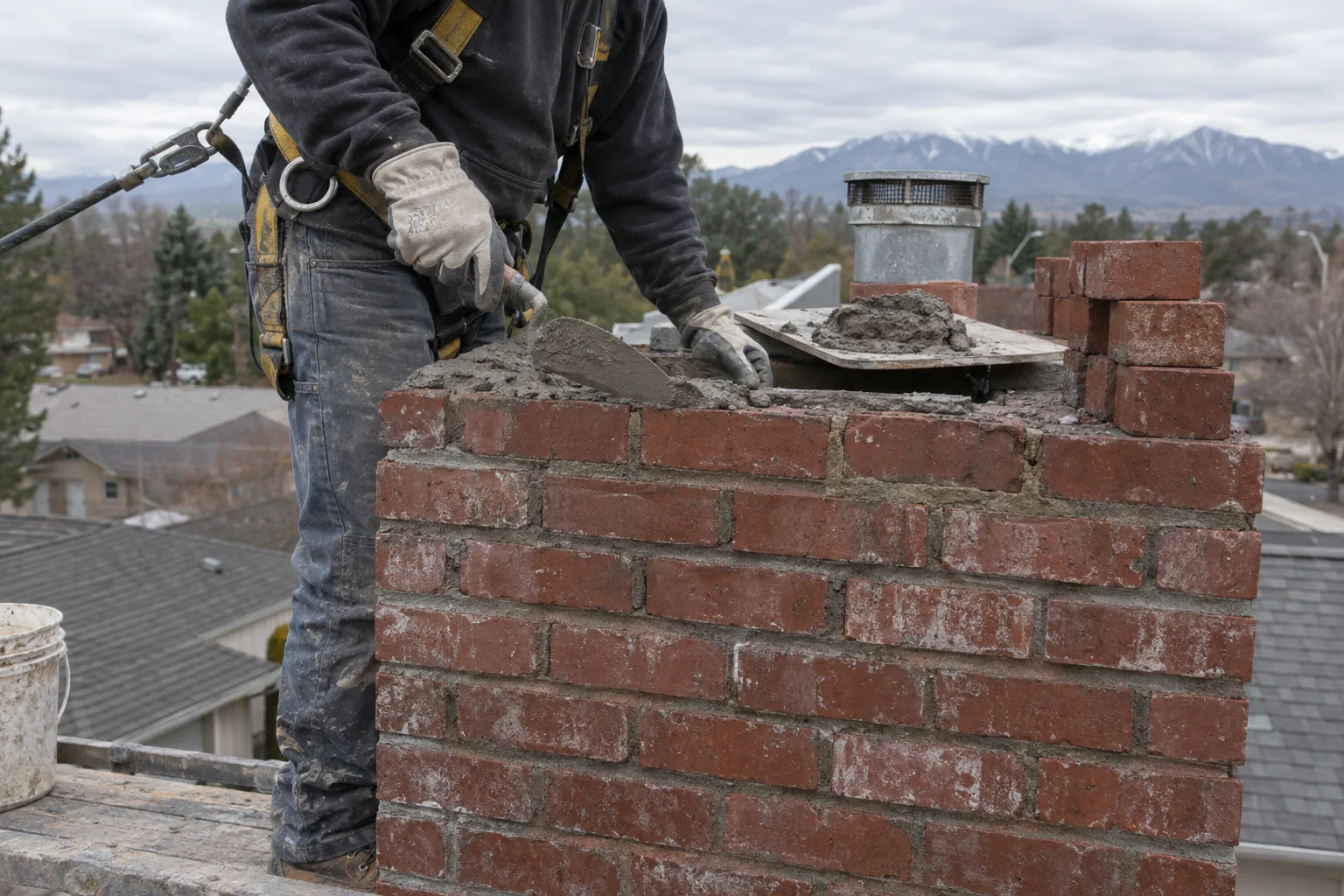
Masonry work comes first, because the structure has to be stable before any liner or cap work begins. Liner installation follows, once the flue is cleared and the interior access is confirmed. Crown and cap work closes out the sequence, after the liner is seated and the flue collar is sealed. Reversing that order means revisiting finished work, which extends the timeline and raises the total cost.
Can a load bearing chimney be repaired without affecting the house?
Load bearing chimneys in older Lakewood and Denver Metro homes require a structural assessment before any repair work begins. That assessment determines which sections of the chimney carry load and what the safe repair sequence is relative to the home's framing. Not all full chimney repairs involve load bearing structures, and many older Denver Metro chimneys are freestanding masonry with no structural function, but the distinction must be confirmed before demolition or rebuild work starts.
How is this different from a company that subcontracts phases?
AR Chimney Pros staffs masonry, liner and finishing work with its own 20 person crew. When a company subcontracts phases, hiring a separate mason for the masonry and a separate crew for the liner, sequencing and accountability gaps open between each phase. One crew owns the full scope here. That structure means the masonry and liner phases can be scheduled back to back rather than waiting for a different company's availability between visits.
After a full repair, how do I know the chimney is safe to use?
After a full chimney repair, a post repair inspection confirms each component against the scope that was agreed to before work began. The inspection documents that the liner is properly seated, the crown is cured and sealed, and the masonry joints are packed to the correct depth and profile. That written post repair record, rather than a verbal sign off, is what AR Chimney Pros delivers before the homeowner's first fire after a full repair.
Do I need a permit to remove a chimney in Jefferson County?
Most chimney removal projects in Jefferson County require a building permit, particularly when the work involves structural changes to the roof deck or any load bearing component. AR Chimney Pros scopes the removal and identifies permit requirements before any work begins. The homeowner is not left to navigate the permitting process independently after the crew has already started.
How do I know if my chimney is structural before removal starts?
A structural chimney is one that is integrated into the home's wall framing or floor system, as opposed to a freestanding masonry stack that could theoretically be removed without affecting structural integrity. Many older Lakewood ranch homes have freestanding chimneys, but mid century two story homes sometimes have chimneys built into an exterior wall. The pre removal assessment identifies this before any demolition begins.
Why not hire a mason and a roofer separately?
AR Chimney Pros handles chimney removal as a complete scope: demolition, debris removal, roof deck patching and closure of the former chimney opening. When a mason and roofer are hired separately, the homeowner coordinates timing between two companies and absorbs any scheduling gap that leaves the roof open between phases. A single crew owning both phases eliminates that coordination burden and the associated risk of a rain event hitting an unpatched opening.
Timelines on removals and full rebuilds depend on scope, access and permits. Call and describe the chimney, and we will tell you how the job would be staged.
Still have a question
These guides answer the longer ones, and the service pages explain how each job is scoped.
Ask us the one that is not on this page
Call AR Chimney Pros at 720-608-7668 or send a message through our contact form.
Tell us what you are seeing, smelling or hearing. We will say what it usually means, what the visit would cover, and what happens next.