
Why Denver's Altitude Makes Chimney Draft Problems More Common
Denver chimneys generate less draft pressure than identical chimneys at sea level. Lower air density at 5,280 feet reduces the buoyancy force that pulls smoke up the flue, and most fireplaces in the metro weren't designed around that.
AR Chimney Pros is based in Lakewood and covers the full Denver Metro. This guide explains the mechanism in plain terms, the symptoms it causes and the correction options that actually match the cause.
Air density at elevation
17% less
Oxygen per cubic foot of air in Denver compared to sea level. Less density means less buoyancy, and less buoyancy means weaker draft.
Altitude directly reduces chimney draft
Most fireplaces in Denver weren't designed around that fact.
Chimney draft, the upward flow of combustion gases through a flue driven by the pressure difference between hot gas inside and cooler air outside, depends on one thing above everything else: air density. At 5,280 feet, Denver's elevation means every cubic foot of air contains roughly 17 percent less oxygen than the same cubic foot at sea level.
Less dense air generates less buoyancy. Less buoyancy means weaker draft pressure. The result is a fireplace that draws slower, struggles on cold starts, and can push smoke back into the room before the flue warms enough to pull. Each part of the chimney responds to that weaker pressure differently, and often shows a different symptom first.
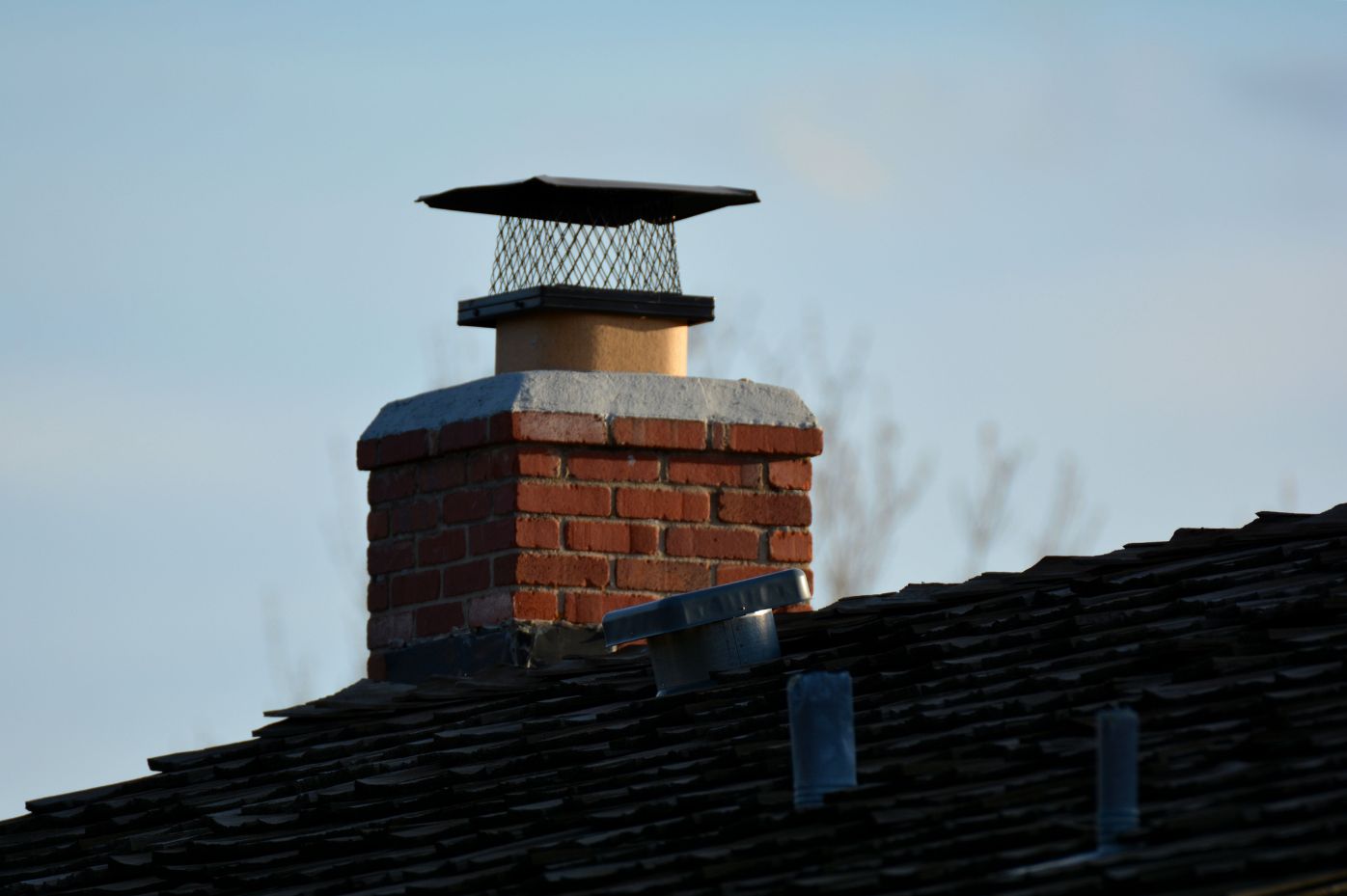
Points to: CapRust streaks or a loose cap after wind
A damaged or undersized cap changes how air moves across the top of the flue. At Denver's reduced draft pressure, that airflow is doing more of the work, so cap condition matters more here than at sea level.
See cap installationPoints to: FlashingWater stain on the ceiling near the chimney
Failed flashing lets water into the framing around the chimney. Moisture there has no connection to draft pressure, but it is often mistaken for a smoking problem, so it belongs on the same diagnosis before any pressure test.
See leak repairPoints to: Flue linerThe fire won't draw well on cold mornings
A liner sized for sea level can leave the height to opening ratio borderline at Denver's elevation. The flue needs more height or a tighter diameter to recover the pressure the thinner air takes away.
See full chimney repairPoints to: Smoke chamberSmoke rolls back into the room at ignition
The smoke chamber has to accelerate gases into the flue before they cool. Weak draft pressure gives that transition less time to work, so smoke spills at the exact moment the fire is lit.
See draft analysisPoints to: DamperThe damper feels stuck or won't seal fully
A damper that doesn't close cleanly changes the pressure balance of the whole system when the fireplace isn't in use, and a damper that won't open fully restricts the already thin draft margin when it is.
See full chimney repairPoints to: FireboxSmoke lingers low near the opening
A firebox opening sized for sea level draft can be too large for Denver's weaker pull. Reducing the opening increases exit velocity enough to carry smoke past the boundary instead of hanging in it.
See draft analysisWhy this matters specifically in Denver and in the foothills beyond
Most residential chimneys meet IRC (International Residential Code) minimum height and clearance rules built around sea level combustion physics.
A chimney that just meets the 2 foot above 10 foot rule performs adequately at sea level. In Denver, that same chimney works with a reduced pressure margin. It may draw fine on a warm afternoon. It may not draw reliably on a cold January morning, when flue temperatures start low and outside air is dense and heavy.
High altitude chimney draft issues in Colorado compound with other factors. Older brick homes in neighborhoods like Wheat Ridge and Edgewater often have fireplaces with borderline height to opening ratios that performed well decades ago, before weatherstripping improvements, attic insulation upgrades and exhaust fan additions tightened the building envelope.
AR Chimney Pros serves communities across the full Denver Metro, including foothill neighborhoods along the I-70 corridor such as Evergreen, Idaho Springs and Conifer, where elevations climb well above 6,000 feet, roughly 1,650 feet higher than Lakewood itself. Draft performance drops measurably at every additional thousand feet of elevation.
- 5,280 ft
- Denver elevation and its draft disadvantage
- 1,650 ft
- Average elevation gain from Lakewood into the foothill corridor we serve
- 6,000 ft+
- Elevation along the I-70 foothill corridor we serve
The physics, the symptoms and the correction options
Understanding the mechanism is the fastest path to the right fix.
How draft pressure works at elevationBuoyancy and the pressure gradient
Chimney draft is driven by buoyancy. Hot combustion gases are lighter than the surrounding air, so they rise. The taller the column of hot gas, the stronger the upward pull. That pull is measured in Pascals, draft pressure, and it has to exceed the resistance created by flue friction, bends and the weight of cooler outside air pressing down.
At sea level, a chimney with 15 feet of flue height and a standard 8x13 inch clay liner generates a predictable draft pressure range. At 5,280 feet, that same system generates meaningfully less pressure, because the air density difference reduces the buoyancy gradient that drives the draft upward.
The chimney height to opening ratio, the relationship between flue height and fireplace opening area, matters even more at altitude. A ratio that is borderline adequate at sea level becomes genuinely insufficient at Denver's elevation. Small deficits in the ratio are amplified by reduced air density.
What negative pressure does to a Denver homeDepressurization
Negative pressure, also called depressurization, means interior air pressure is lower than outdoor pressure. It is common in Denver's newer homes and in any home that has been air sealed in recent years.
Range hoods, bath fans and HVAC returns all pull air out of the house. When a home is tightly sealed and multiple exhaust devices run at the same time, the house goes negative. A chimney in a depressurized home doesn't exhaust, it becomes an air inlet. Combustion gases push back into the room because the path of least resistance is downward, not up.
This happens at any elevation. But at 5,280 feet, the chimney's positive draft pressure is already reduced. It takes less negative pressure to overwhelm it.
Symptoms Denver homeowners describeWhat poor draft at 5,280 feet looks like
These patterns show up consistently across Lakewood, Arvada, Westminster and the surrounding Denver Metro. Any single symptom can have multiple causes, but more than two together point to an altitude driven draft deficit.
- Smoke enters the room during the first 10 to 15 minutes after lighting, then clears once the flue warms.
- The fire burns well but dies down faster than expected, with poor secondary burn on hardwood.
- Glass on fireplace inserts fogs or blackens within 30 minutes of lighting.
- Smoke backs into the room on cold days but not mild ones.
- Running the kitchen hood or bath fan noticeably worsens the smoking.
- The fireplace smokes at a fire level that worked fine at a lower elevation.
Correction options that work at elevationMatched to the measured cause
Cleaning alone does not fix a pressure deficit. Neither does relining alone, unless the reline changes the effective flue diameter in a way that improves the height to opening ratio.
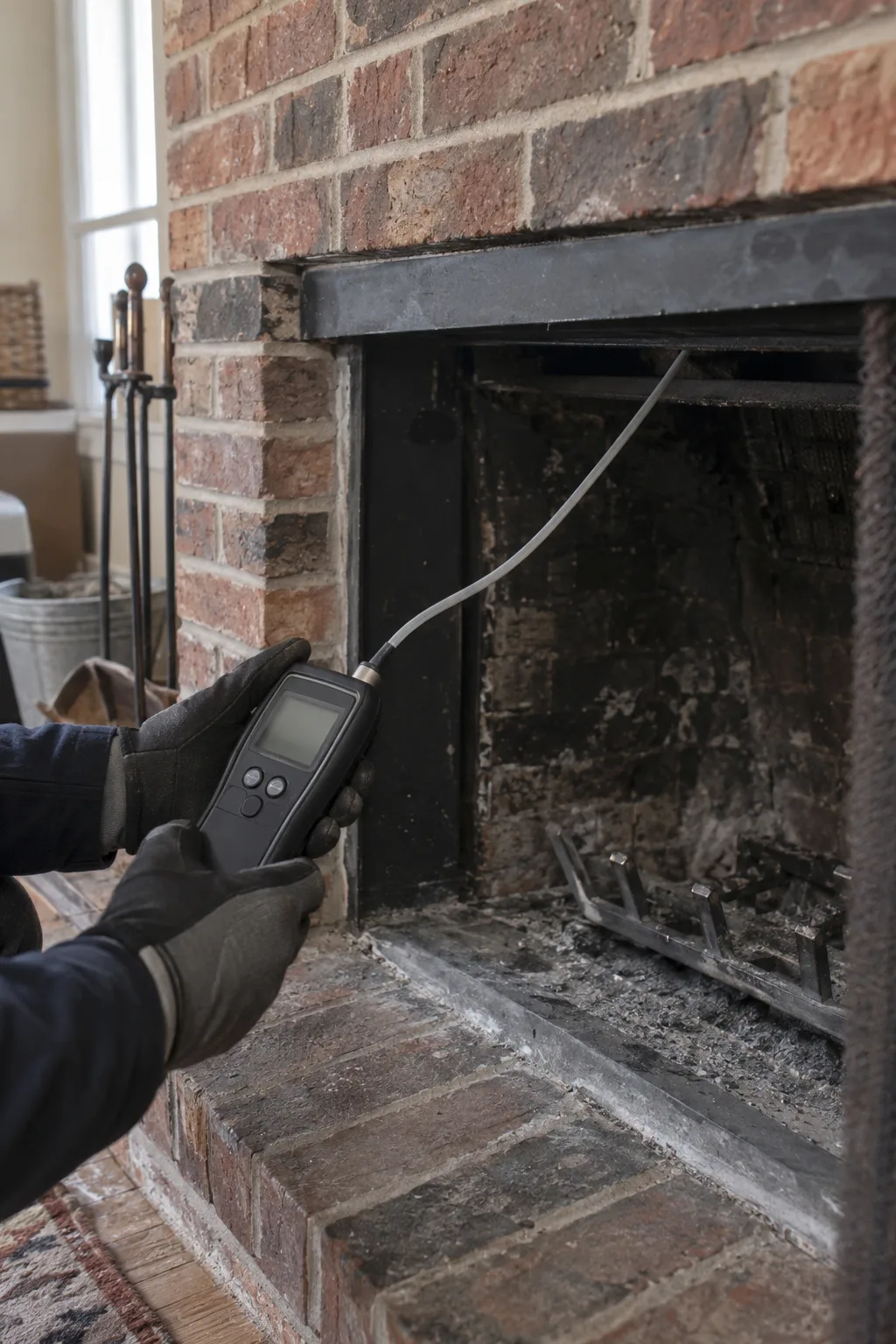
Real correction starts with measurement. Actual draft pressure, in Pascals, needs to be measured at the firebox level, not estimated from a visual inspection. Once a pressure deficit is confirmed and quantified, the correction is matched to the specific cause.
- Chimney height extension raises the flue column to increase draft pressure.
- Cap type change to a draft inducing cap that uses airflow across the top to assist upward pull.
- Smoke guard installation, a metal strip at the top of the fireplace opening that reduces opening area, increases draft velocity, and reduces smoke spillage at the room boundary.
- Airflow correction addresses negative pressure by adding a controlled outside air source, reducing competition from exhaust fans, or adjusting HVAC return placement.
Three scenarios that play out across the Denver Metro
Each situation has a different root cause, and a different correction.
The newer home in Arvada
A gas fireplace installed in a well insulated 2019 home with a tight envelope and an HRV system drafts fine in summer. In winter, with the HRV running continuously, the house holds negative pressure and the fireplace backdrafts at ignition. The flue is clean. The issue is depressurization. A makeup air supply to the firebox corrects it.
The 1970s ranch in Lakewood
A wood burning fireplace built in 1973 starts smoking on cold mornings after the homeowner adds attic insulation and new windows. The firebox opening hasn't changed and the chimney height is code minimum, but the house is now tighter than when the fireplace was designed. A smoke guard reduces the opening, increases velocity and stops the morning smoke.
The foothill cabin above Idaho Springs
At roughly 7,400 feet, a vacation home sees consistent smoke spillage even with seasoned hardwood and a well maintained flue. A draft inducing cap rated for high altitude performance paired with a flue height extension brings draft pressure into functional range. Cleaning had been completed twice in two years without improvement, because cleaning is not a pressure problem solution.
A technician's view on what altitude does to a fireplace
I've gone into homes across the Denver Metro where the homeowner has already had the chimney cleaned, replaced the cap and tried different wood. The fireplace still smokes. When we run a draft pressure measurement at the firebox, the number tells the story immediately. At 5,280 feet, a chimney generating 2 Pascals of draft pressure instead of the 4 to 6 Pascals it needs will not perform, regardless of how clean it is.
What I find across Lakewood, Westminster, Thornton and up into the foothills is that altitude compounds every other marginal condition. A chimney that would just barely work at sea level doesn't just barely work at elevation, it fails to draft reliably. The margin disappears.
Chimney draft analysis as we perform it isn't a visual check. It's pressure measurement inside the flue against the system's actual design. When we find the deficit, we match the correction to the specific cause.
AR Chimney Pros field technician, Lakewood service area
Want your flue measured?
We run a pressure based draft analysis before recommending any correction.
When a draft problem is ready for professional measurement
Measuring draft pressure is the step that separates guessing from solving.
If your fireplace smokes on calm days with dry wood and an open damper, that's a pressure problem, not a maintenance problem. Cleaning can wait until after diagnosis when draft failure is the primary symptom.
Call a professional when you see
Smoke in the room on two or more fires in a row with no obvious cause
Symptoms that worsen when exhaust fans run inside the house
A fireplace that smoked consistently last season, was cleaned, and still smokes
Any new smoking behavior in a home that was recently weatherized or air sealed
High altitude chimney draft issues in Colorado are fixable. If your home sits above 6,000 feet along the I-70 corridor, factor that in: elevation makes the baseline margin tighter and the correction more specific.
Areas we serve across the Denver Metro
We work across Lakewood, Denver, Wheat Ridge, Arvada, Westminster, Thornton, Englewood, Littleton, Aurora, Edgewater, Golden and Broomfield. We also serve foothill communities including Evergreen, Conifer, Idaho Springs, Morrison and Nederland, where elevation related draft physics are even more pronounced.
See the full service area listGet a draft pressure reading, not another guess
Call AR Chimney Pros at 720-608-7668 or email info@archimneypros.com.
We serve the full Denver Metro from our Lakewood office at 12640 W Cedar Dr, Unit 7. A draft problem is a solvable problem, once you know what you are actually measuring.