
Compressed Burning Windows Accelerate Creosote Buildup
CDPHE red and yellow action days reduce the hours you can actually burn. Here is how that affects what builds up inside your flue.
AR Chimney Pros dispatches from Lakewood and covers the full Denver Metro restriction zone. This guide explains what no-burn days are, why they compress a normal creosote schedule, and when to book cleaning around them.

Two restriction levels
Red and Yellow Action Days
Red prohibits recreational wood burning across the Denver Metro zone. Yellow is a voluntary advisory to burn less.
Denver's no-burn rules come from one state agency
Here is what the CDPHE, the Colorado Department of Public Health and Environment, actually controls when it comes to burning wood in Denver.
CDPHE runs the Air Pollution Control Division. That division monitors Front Range air quality daily. When forecasts show pollution reaching certain thresholds, it issues an action day for the Denver Metro area.
There are two levels.
Two levels, one agency
- Red: mandatory, no recreational wood burning
- Yellow: voluntary advisory to cut back
Both are issued by the CDPHE Air Pollution Control Division based on daily Front Range air quality forecasts.
A Red Action Day prohibits all recreational wood burning, fireplaces, wood stoves and outdoor fire pits, across the Denver Metro Wood-Burning Restriction Zone. If your fireplace or wood stove is your only source of heat, you may qualify for an exemption. For most homeowners, a Red Action Day means the fireplace stays cold.
A Yellow Action Day is a voluntary advisory. CDPHE asks residents to reduce wood burning, but it is not legally required. Many homeowners still burn on yellow days, which is permitted, but the advisory is part of the same regulatory framework.
Action days cluster in winter, exactly when you want to burn most. November through February is peak restriction season in Denver, because cold, still air traps pollutants close to the ground. CDPHE can issue multiple consecutive action days during a single cold spell. Your burning season does not just start later. It gets interrupted repeatedly.
Lakewood sits at the center of the restriction zone
Every zip code AR Chimney Pros serves falls inside the CDPHE-regulated Wood-Burning Restriction Zone.
That matters for scheduling. Our office dispatches from Lakewood, centrally positioned within the regulated area, and we serve the full metro, from Westminster and Thornton in the north down to Highlands Ranch and Lone Tree in the south.
When CDPHE issues a Red Action Day, it applies uniformly across the entire Denver Metro restriction zone. There is no neighborhood exempt because it is farther from the highway or closer to open space. Lakewood, Wheat Ridge, Arvada and Aurora all fall under the same rule.
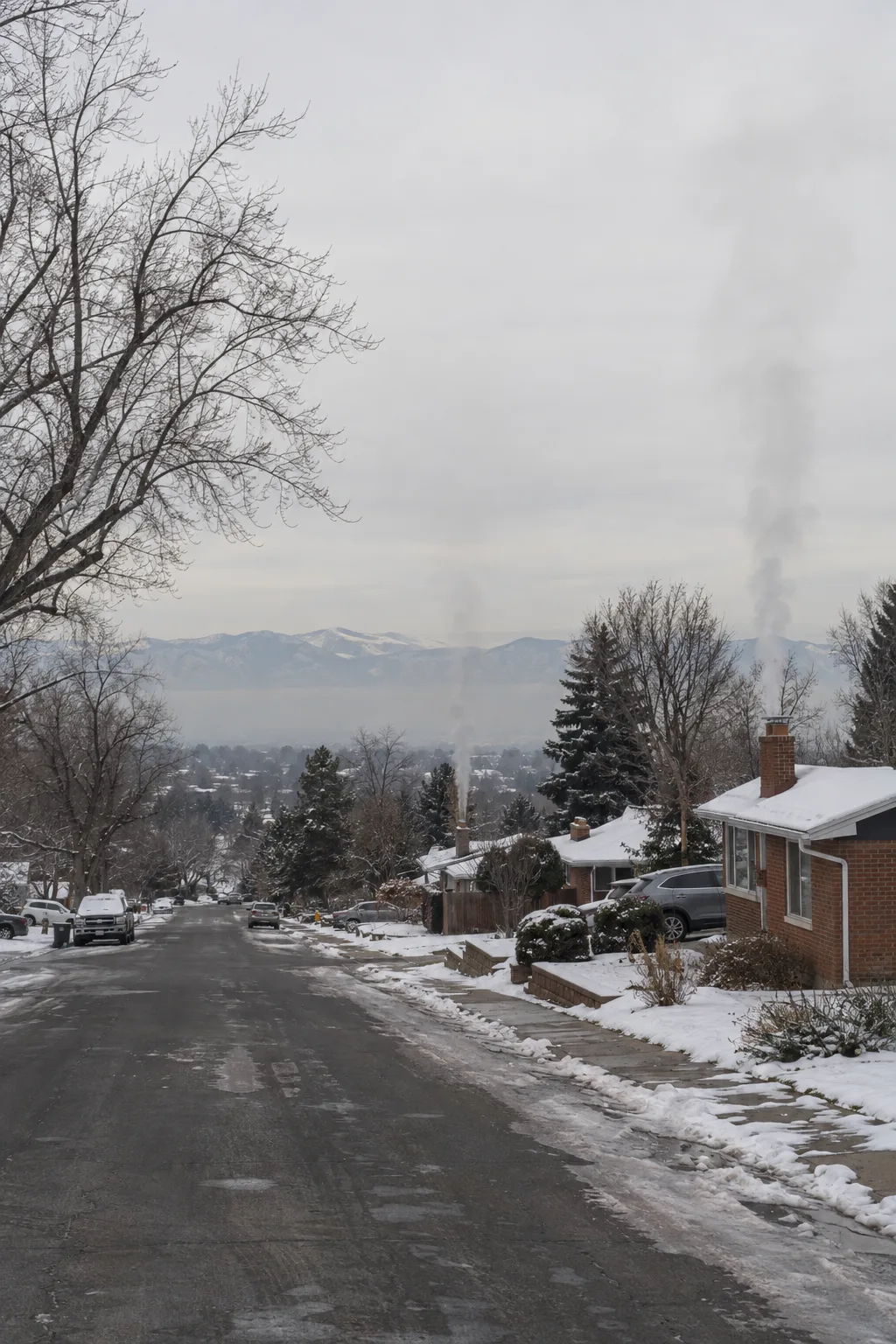
That means demand for chimney cleaning appointments shifts across the metro at the same time. When a stretch of cold weather brings several consecutive action days, homeowners in every part of the region start thinking about scheduling. We cover the full affected area, so we can usually find appointment times even when demand spikes.
The Denver Metro also sits at elevation, roughly 5,280 feet. Cold air settles faster here than at lower elevations, which is part of why inversion events happen more often here than in other metro areas. It is a local factor that shapes the action day calendar in ways that do not apply to most other Colorado cities.
What compressed burning does inside your flue
Burning the same amount of wood in fewer available days accelerates creosote accumulation in ways that catch homeowners off guard.
Say you typically burn two or three fires per week during the heating season. In an unrestricted season, that burning spreads across roughly 16 to 18 weeks, November through early March. That is a manageable load on the flue. Creosote, the combustion byproduct that builds up on the inner walls of your flue lining, accumulates gradually. An annual cleaning keeps pace.
Now compress that same total burn time into a shorter window. Action days removed five or six available burning days in a cold stretch. You made up for it by burning longer on the days you could. The flue handled the same volume of combustion, but in less time, with less recovery between fires.
The creosote accumulation rate, the speed at which combustion byproducts build up inside a flue lining, does not track the calendar. It tracks total heat and fuel load. More intense burning in a compressed window produces more accumulation, faster.
First-stage versus second-stage creosote
First stage
Dry, flaky. Brushes out in a standard cleaning.
Second stage
Tar like, harder to remove. Builds up when fires run hot after cold stretches.
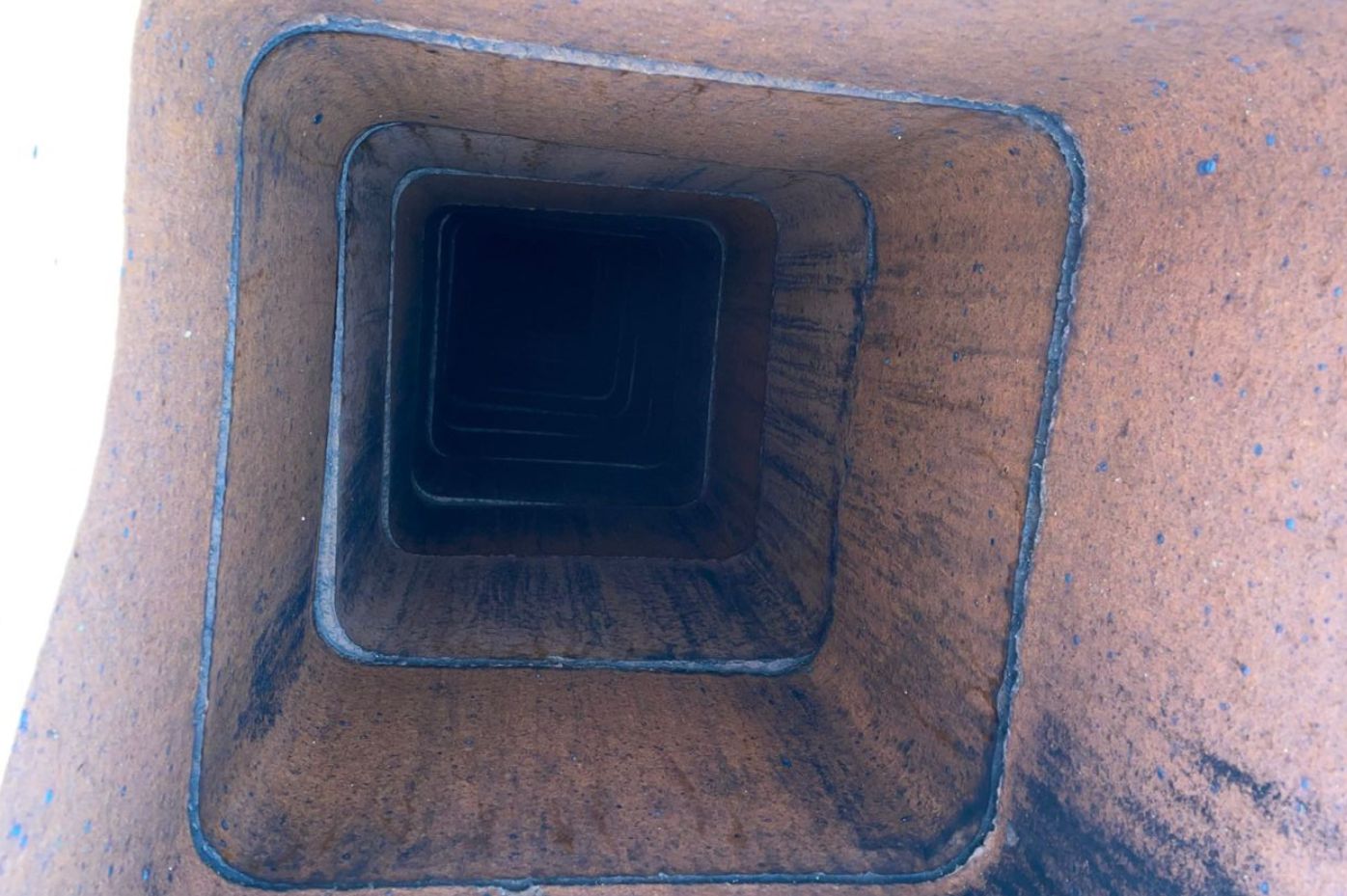
First-stage creosote is dry and flaky. It brushes out easily during a standard cleaning. Second-stage creosote is tar like, harder to remove, and builds up when fires run hot after periods of cold buildup. Compressed burning seasons create the exact conditions that accelerate the transition from first to second stage.
A homeowner who burned through a full, unrestricted season might end the winter with light first-stage buildup. A homeowner who compressed the same fires into fewer weeks, compensating for action days, could end up with heavier deposits.
What this means for your cleaning schedule
Annual cleaning is the baseline. It assumes a relatively even distribution of burning across the season. When no-burn days compress that distribution, the annual schedule may not be enough. This is especially relevant for homeowners who burn regularly, use their fireplace as a primary heat source during cold stretches, or have older flue liners that accumulate more quickly.
A pre-season chimney cleaning, an appointment scheduled before the primary heating season begins, resets your flue before restriction season starts. Every burning day you get, however few or many CDPHE allows, starts from a clean baseline.
Which equipment is affected
CDPHE action days cover wood-burning fireplaces, wood stoves and outdoor fire pits, not gas appliances.
| Appliance | Subject to action day restrictions |
|---|---|
| Wood-burning fireplace | Yes, restricted on Red Action Days |
| Wood stove | Yes, same restriction zone rules apply |
| Outdoor wood fire pit | Yes, covered under the same action day |
| Gas fireplace or gas insert | No, gas appliances are not restricted |
| Wood-burning box with gas log set | No, burning the gas logs is permitted |
| EPA-rated wood stove | Varies, check current CDPHE guidelines |
This is a question we hear regularly. If you have a gas fireplace or a gas insert, CDPHE no-burn restrictions do not apply to you. Gas appliances burn cleaner and do not contribute to the particulate matter that triggers action days. EPA-rated wood stoves are a different conversation, and Colorado's rules have varied over the years, so check current CDPHE guidelines directly before assuming an exemption applies to your specific equipment.
The short version: if your appliance burns actual wood, logs, pellets, fire starters in a wood-burning box, you are subject to action day restrictions. If it burns gas, you are not.
Check status before you light a fire
CDPHE publishes action day status daily. A quick check before you burn takes about 30 seconds.
Bookmark the CDPHE Air Quality website or the Colorado Air Quality app. Both show the current day's action day status for the Denver Metro area. The forecast is typically updated the evening before, so you can check the night before you plan to burn.
- Action day status can change. A Yellow Advisory issued in the morning can be upgraded to a Red Action Day if conditions deteriorate. Check again before you light.
- CDPHE typically issues the no-burn season forecast in late October, covering expected restriction patterns for the coming winter. That forecast gives you a planning window.
- If you burn on a restricted day, CDPHE violations can carry fines. The more relevant point is that it is avoidable with a 30-second check.
Use the restricted day
A Red Action Day is a good time to schedule your chimney cleaning. You are not losing any burning time, and you are investing in the flue before the next open window.
A practical scheduling timeline
The best cleaning window is before the action day season starts, not after it ends.
- Sept to early OctPre-season window. Action days are rare this early. Scheduling is flexible and demand is lower. The ideal time to clean and inspect the flue.
- Late Oct to NovCDPHE action day season begins. Demand for appointments picks up. Book now before consecutive restriction days compress your window further.
- Dec to JanPeak restriction season. Cold spells, inversion events and consecutive action days are most common. A break in restrictions means burning on whatever has accumulated so far.
- Feb to MarchTail end of restriction season. Still worth cleaning if you haven't. Late season burning adds up.
- April to MayPost-season option. Removes accumulated creosote before warmer months, prevents off-season odors, and prepares the flue for fall.
The pre-season window is the most valuable. It gives you the most flexibility, the most booking availability, and the cleanest start to a restricted season.
Areas we serve across the restriction zone
AR Chimney Pros serves wood-burning homeowners across the full CDPHE-regulated Denver Metro area.
We dispatch from Lakewood and schedule appointments across the entire restriction zone. If your address falls inside the zone, we serve your zip code.
- Denver
- Arvada
- Westminster
- Thornton
- Aurora
- Englewood
- Littleton
- Highlands Ranch
- Centennial
- Wheat Ridge
- Broomfield
- Northglenn
- Commerce City
- Boulder
- Golden
- Evergreen
- Parker
- Lone Tree
And surrounding communities.
Schedule your cleaning before the first Red Action Day
Call AR Chimney Pros at 720-608-7668 or email info@archimneypros.com to schedule.
Once action days start, your available burning windows shrink fast. Getting your flue cleaned before that happens means every day CDPHE allows you to burn, you're burning on a clean, ready system. Let us know your fireplace type and zip code, and we'll find an appointment that works before the restriction calendar takes over.