
Efflorescence Removal and Diagnostics in Lakewood, CO
The stain is what the water left behind. Removing it without finding the source brings it back.
We run every efflorescence visit as a two part appointment: moisture assessment first, chemical treatment second. That order is what stops the white staining from returning.
Dispatching from 12640 W Cedar Dr, Unit 7, Lakewood.
Every visit includes
- A full moisture assessment before treatment
- Chemistry matched to your brick and mortar
- A sealing recommendation once the source is known
- A plain answer on what, if anything, needs repair
White staining on a chimney is a water story written in salt
Efflorescence, the white or grayish crystalline deposit on brick and mortar, forms when water moves through masonry and carries soluble salts, naturally occurring minerals like calcium sulfate and sodium sulfate, to the outer surface.
As the water evaporates, those salts are left behind. What you see on the chimney face is the residue of that journey, not the problem itself.
There are two types. Primary efflorescence shows up once during the initial curing of new mortar or brick. It's self limiting and fades. Secondary efflorescence is different: it means an active water source is still moving through the masonry, so it keeps coming back because the source never stopped.
Scrubbing the surface removes the salt deposit. It does nothing about the moisture migration, the movement of liquid water through the masonry, that put it there. That's the piece most homeowners don't realize until the staining reappears the following spring.
Colorado's freeze and thaw cycle is the most common driver here
The white deposits appearing in April and May aren't from April rain. They're from February and March.
Temperatures along the Front Range drop below freezing at night and rise above it during the day, over and over through winter. Water that entered the masonry in fall expands, contracts and pushes through the brick matrix repeatedly. By the time temperatures stabilize, the salts have finished migrating and deposited on the surface.
The 1960s through 1980s brick chimneys common in Englewood, Sheridan and Glendale, south Denver communities we serve regularly from our Lakewood location, often show the highest masonry porosity, the degree of openness in the brick or mortar matrix. That openness lets moisture move more freely. Older mortar joints that haven't been repointed are especially vulnerable, and staining shows up most visibly on north-facing walls and below the crown line, where melt runoff concentrates.
- 2 types
- Primary (fades) and secondary (active source)
- 2 steps
- Moisture assessment, then chemical treatment
- 1 visit
- Both steps happen the same appointment
A two part visit that changed what we found
The staining is visible. It looks like a surface problem. It often isn't.
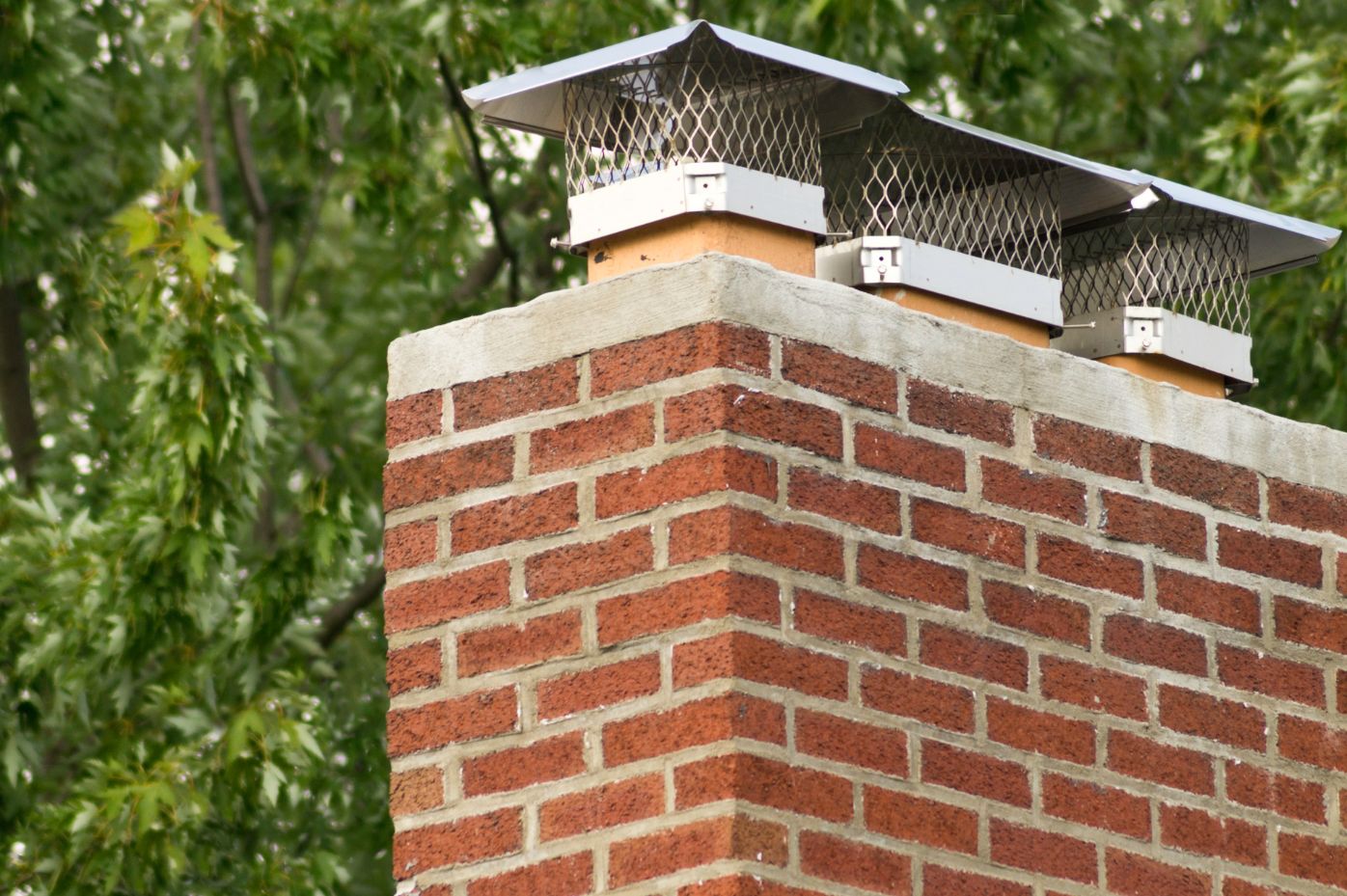
One spring, a visit to an Englewood home stands out. A 1970s ranch with a single story brick chimney on the south wall. The homeowner had scrubbed efflorescence off two years in a row and had it return each March. By the time we arrived, the staining was heavier than before and had spread lower on the chimney face.
We ran the moisture assessment before touching the surface. What we found wasn't a porous brick problem. The chimney crown, the concrete cap at the top, had developed a hairline crack running almost its full width. Every time snow melted or rain fell, water entered through that crack, ran down through the flue, and saturated the mortar joints from the inside out. The exterior staining was secondary efflorescence driven entirely by that one crown failure.
We repaired the crown first. Then we applied chemical treatment to break down and remove the salt deposits from the masonry surface. Then we sealed the brick.
That homeowner called us the following spring. No staining. Not a trace.
Starting with the source ended the cycle. That's why the diagnostic step isn't optional on our visits. It's the first thing we do, every time, before any chemical treatment goes on the brick.
AR Chimney Pros, Lakewood field team
How we make sure the staining stays gone
Homeowners often ask: will this come back after you treat it? The honest answer depends entirely on whether the source is addressed.
Recurring white staining means an active moisture source is still present.
Secondary efflorescence, the recurring type driven by ongoing moisture migration, will return as long as water has a path into the masonry. The salt deposits are just evidence of that path. Cleaning them removes the evidence. It doesn't close the path.
Every efflorescence visit starts with a full moisture assessment. We check the crown condition, inspect mortar joints for open gaps, assess flashing contact and seal, and look at the chimney cap. We're mapping where water enters, not just where it exits.
Once we know the source, we can give you an honest picture. Some sources are minor, like a resealed joint or a replaced cap. Others need more work, like crown repair or flashing correction. Either way, you know before chemical treatment starts.
Our standards for efflorescence removal
Every efflorescence removal visit follows the same quality sequence, with no shortcuts based on job size.
- Moisture assessment before surface treatmentWe map water entry points before applying any chemical treatment to the stained surface.
- Appropriate chemical selectionAcid-based and alkaline cleaning solutions are matched to the substrate. The wrong chemistry can etch older brick or lift mortar faces.
- Surface preparationDry brushing of loose deposits before any wet treatment, to prevent driving salts deeper into the masonry.
- Controlled applicationSolutions are applied section by section to manage dwell time and prevent runoff damage to adjacent surfaces.
- Thorough rinse protocolFull neutralization and rinse-down after treatment to prevent secondary reactions in the masonry.
- Post-treatment inspectionSurface checked for complete removal and substrate integrity before the visit is closed.
- Sealing assessmentEvery job concludes with a recommendation on whether waterproofing is warranted to slow future moisture migration.
Our efflorescence removal process
A fixed sequence: diagnose, treat, protect.
-
1
Crown-down diagnostics
We start at the top, not the stain.
Crown, cap and flashing are inspected first, since these are the most common water entry points above the efflorescence line. We then work down through the mortar joints, looking for open gaps, recessed pointing, or friable mortar allowing capillary absorption. We note which faces show staining and at what height, since that pattern tells a story about where water is entering and how it's traveling.
Findings are documented before any treatment begins.
-
2
Surface treatment
Loose deposits are brushed off before any chemical touches the brick.
Chemical treatment, either acid-based or alkaline depending on brick composition and mortar age, is applied to the stained areas with carefully controlled dwell time. On older Lakewood-area chimneys with softer brick, we use lower-concentration solutions and longer, gentler cycles rather than aggressive single-pass treatment.
After full treatment, the surface is neutralized and rinsed, then checked for even removal.
-
3
Post-service assessment
Once the surface is clean, we reassess the substrate.
If mortar joints are sound and the source has been addressed, the chimney may be ready for waterproofing. If we found open joints or a damaged crown during diagnostics, those repairs are scoped before sealing is recommended, since sealing over compromised masonry traps moisture rather than blocking it.
You leave the visit knowing what was found, what was treated, and what, if anything, comes next.
Areas we serve
AR Chimney Pros serves Lakewood and the full south Denver metro area.
We cover Lakewood, Denver, Englewood, Sheridan, Glendale, Littleton, Highlands Ranch, Centennial and Greenwood Village. We also serve Westminster, Arvada, Wheat Ridge, Edgewater, Aurora and Golden. Call 720-608-7668 to confirm availability in your zip code.
- Lakewood
- Denver
- Englewood
- Sheridan
- Glendale
- Littleton
- Highlands Ranch
- Centennial
- Greenwood Village
- Westminster
- Arvada
- Wheat Ridge
- Edgewater
- Aurora
- Golden
Related repair services
If the moisture assessment finds a source beyond the surface, these are the next steps.
Frequently asked questions
Efflorescence questions we answer most often on the phone.
How much does efflorescence removal cost in Lakewood, CO?
Pricing varies based on chimney size and staining extent. Call 720-608-7668 for a quote based on your chimney's condition.
Is the white staining on my chimney dangerous, or just cosmetic?
Secondary efflorescence signals active moisture moving through your masonry. That's a structural concern, not just a cosmetic one. Water migrating through mortar joints weakens the masonry matrix over time and accelerates freeze-thaw deterioration in Colorado winters. The stain itself isn't the hazard, the ongoing moisture migration causing it is.
Does the diagnostic step add extra time to the appointment?
Both steps happen in a single visit. The diagnostic portion typically adds 20 to 30 minutes before chemical treatment begins. That time identifies the water entry point so the removal work addresses the actual source rather than just the visible deposit.
What's different about this approach versus just scrubbing and sealing?
Most surface-only treatments remove the salt deposit but leave the moisture path open. We run a moisture assessment first, mapping the entry point before any chemical solution touches the brick. Sealing over an active moisture source traps water inside the masonry, so diagnosing the source first means the sealing step actually works.
Can efflorescence come back after professional removal?
Primary efflorescence, one-time deposits from new mortar curing, won't return after removal. Secondary efflorescence returns if the water source isn't corrected. Our two part visit finds and documents that source before treatment, so you leave knowing whether the underlying cause is resolved or still needs repair.
Do I need other repairs done before you can treat the efflorescence?
Not always. Minor moisture sources, like a resealed joint or a replaced cap, can often be addressed the same visit. Larger issues like crown failure or compromised flashing may need to be scoped as a separate repair before waterproofing is applied. You'll know which category applies after the diagnostic step, before any treatment begins.
See crown repairMore questions about your chimney? Read the full FAQ.
Ready to diagnose and remove the staining?
The fastest way to stop efflorescence from coming back is to find the source first.
AR Chimney Pros schedules two part efflorescence visits across Lakewood, Denver and the surrounding metro. Call 720-608-7668 to book your moisture assessment and removal appointment. You can also email info@archimneypros.com or use the contact form on our site. We'll confirm your visit and walk you through what to expect before we arrive.