
Copper Chimney Pots Fabricated to Your Flue Dimensions and Stack Height
Sized for airflow improvement at Denver's altitude, not just decorative proportion.
Custom copper chimney pots built to your exact flue opening and stack height, fabricated at our Lakewood shop for homes across the Denver Metro.
Dispatching from 12640 W Cedar Dr, Unit 7, Lakewood.
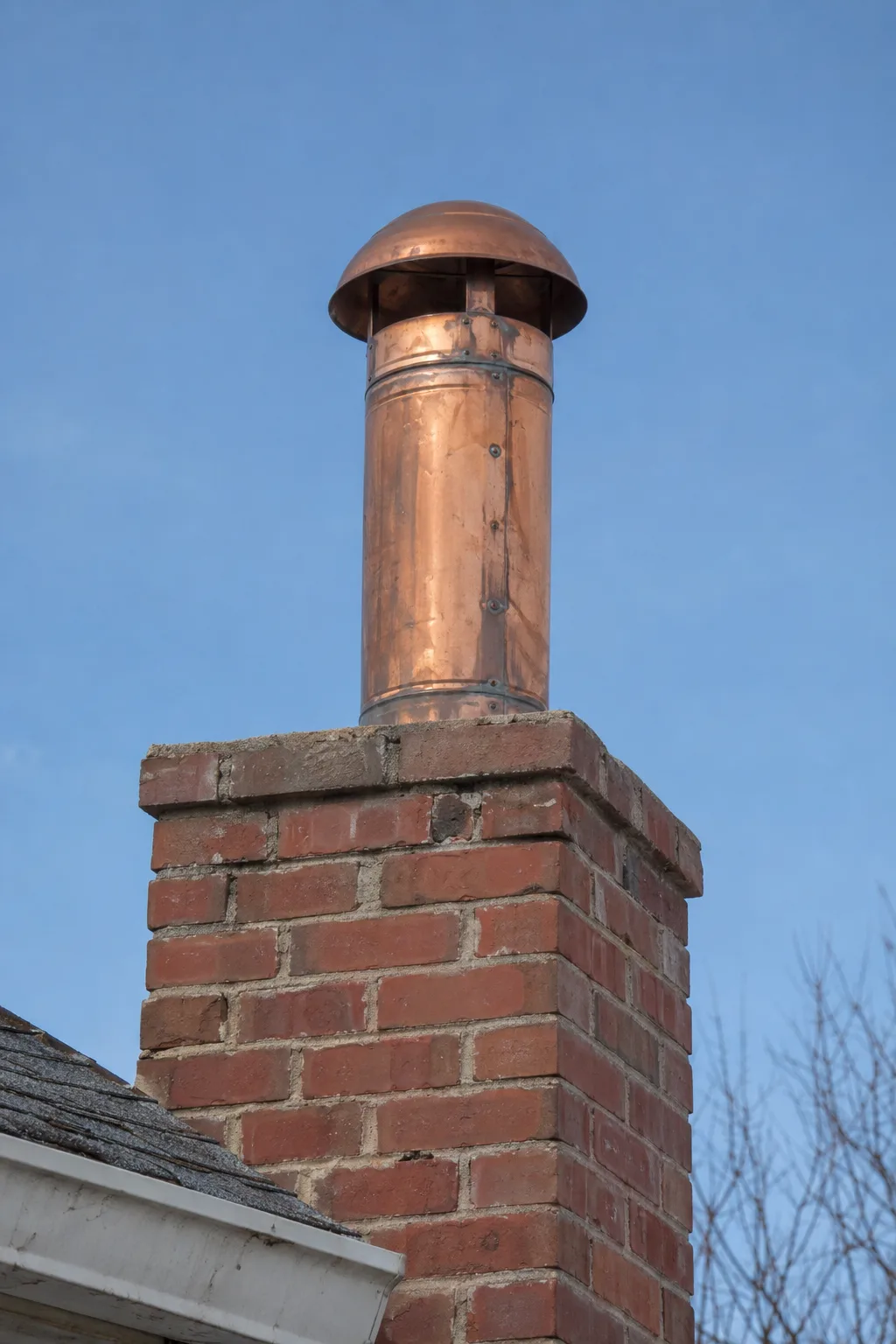
Built to your flue
- Measured on-site before anything is fabricated
- Square, round, rectangular or oval base geometry
- Minimum 20-oz copper sheet on every pot
- Draft tested with smoke before we leave the roof
Symptom to part
What your chimney is telling you
Six things homeowners describe on the phone, and the exact part of the chimney each one points to.
Fires take several tries to catch, especially on cold morningsFlue liner and stack height
At altitude, a short stack doesn't build enough draft pressure differential to pull smoke up on the first strike. Extending effective flue height with a copper pot restores the pull a longer stack would normally give you.
Wind pushes smoke back down into the roomSmoke chamber
This is wind-induced downdraft, pressure at the chimney top forcing combustion gases back into the living space. A pot with directional venting can be oriented to the prevailing wind on your roof to redirect it away from the opening.
Water stains show up on the ceiling near the chimney breastFlashing
This points to the flashing where the chimney meets the roofline, not the flue opening itself. A copper pot won't correct a flashing leak.
See leak repairCracks are visible across the top of the chimney crownCrown
A pot's base joint seals to the crown. If the crown is cracked or the top course of masonry is deteriorating, that gets repaired first, otherwise the new pot won't seal properly.
See crown repairThe flue opening sits bare, with no finish or rain capFlue opening and cap
A copper pot fabricates the rain cap into the same piece as the extension, so the flue opening gets a finished top edge and weather protection in one fitting.
The firebox smells smoky even when there's no fire burningFirebox
Odor at rest usually means air is moving down the flue instead of staying put. Correct pot sizing and orientation reduces that resting downdraft.
Why Lakewood and Denver Metro homes benefit from this solution
Denver's altitude and older housing stock create a specific draft challenge that copper pots address well.
At sea level, a standard chimney stack height, roughly 14 to 16 feet of vertical flue, generates enough draft pressure differential to pull smoke cleanly. At 5,280 feet, that same stack performs noticeably weaker. The air is thinner and the pressure difference is smaller.
Lakewood and surrounding Denver Metro neighborhoods carry a lot of mid-century and early postwar homes. Many were built with chimney stacks sized for sea-level combustion expectations. Stack height wasn't calibrated for altitude performance.
Foothills communities such as Morrison, Golden and Evergreen sit even higher, and stack height requirements shift again as elevation increases. Our crew dispatches from 12640 W Cedar Dr here in Lakewood, and we see this pattern regularly across the Front Range. A copper chimney pot, sized to extend flue height and redirect airflow at the opening, gives those shorter stacks the performance they've always been capable of.
A real installation, from the roof
Sizing a copper chimney pot correctly starts before the fabrication, not after it arrives.
From the Lakewood crew
We completed a job in Golden last spring on a 1958 ranch-style home with an original masonry chimney. The homeowner had been dealing with fires that took three or four attempts to draw properly, and cold mornings were the worst, with a puff of smoke into the room before the draft caught.
We started on the roof. First, chimney stack height, the vertical distance from the firebox floor to the top of the flue opening. This stack came in at just over 13 feet, below the minimum we'd want for reliable draft at Golden's elevation, which sits close to 5,700 feet.
Then we measured the flue opening. It was a 13 by 13 clay tile liner. Square tile liners were the standard for homes of that era, but opening shape matters for pot sizing. A round pot on a square flue creates gaps that defeat the purpose.
We fabricated a square to round copper transition pot with an integrated rain cap. The flue extension added just over 14 inches of effective chimney stack height. We sealed it to the existing tile with high temp mortar and a stainless tension band.
She called two weeks later to say the fire draws on the first strike now, every single time. That's what correct sizing does.
Copper patina, the natural oxidation layer that forms on copper over time, shifting from bright to green brown, develops slowly in Colorado's dry climate. She'll have that bright copper finish for several years before it starts shifting. In humid coastal climates, patina appears in months. Here, it takes years.
AR Chimney Pros field technician, Lakewood dispatch
Getting the sizing right before we fabricate
We measure your flue before anything is built. Custom fabrication starts with correct dimensions.
An off-the-shelf pot might fit loosely. It won't be optimized.
Every copper chimney pot we install starts with an on-site measurement visit. We check flue shape, round, square, rectangular or oval are the four common configurations. We check the existing liner material, because mortar attachment method changes depending on whether you have clay tile, poured liner or steel liner casing.
We also check roof pitch and prevailing wind direction for your specific property. Wind-induced downdraft isn't random. In Lakewood and the foothills west of Denver, prevailing winds often come from the northwest. A pot with directional venting can be oriented to redirect that specific wind pattern away from the flue opening. That's a detail we build into every qualifying installation.
Our standards for fabrication and installation
Every copper pot we install meets a specific set of quality thresholds for material gauge, fit and seal.
- Copper gaugeMinimum 20-oz copper sheet on all fabricated pots, with heavier gauge on taller extensions.
- Flue transition fitSquare, round, rectangular and oval openings all accommodated with matching base geometry.
- Sealing methodHigh temperature mortar at the base joint. No silicone-only seals on masonry openings.
- Rain protectionIntegrated rain cap on all standard pots, with a separate cap available for aesthetic-only designs.
- OrientationDirectional venting option available on all pots taller than 10 inches.
- Finish at installationBright natural copper, no artificial patina treatments applied. Colorado's dry air handles the aging timeline naturally.
- Attachment securityStainless steel tension band or masonry anchor bolts depending on stack condition.
No two pots leave our Lakewood shop with the same dimensions. Every one is measured and built to the specific job.
How the installation process works
Three stages, in the same order, on every copper pot we fabricate.
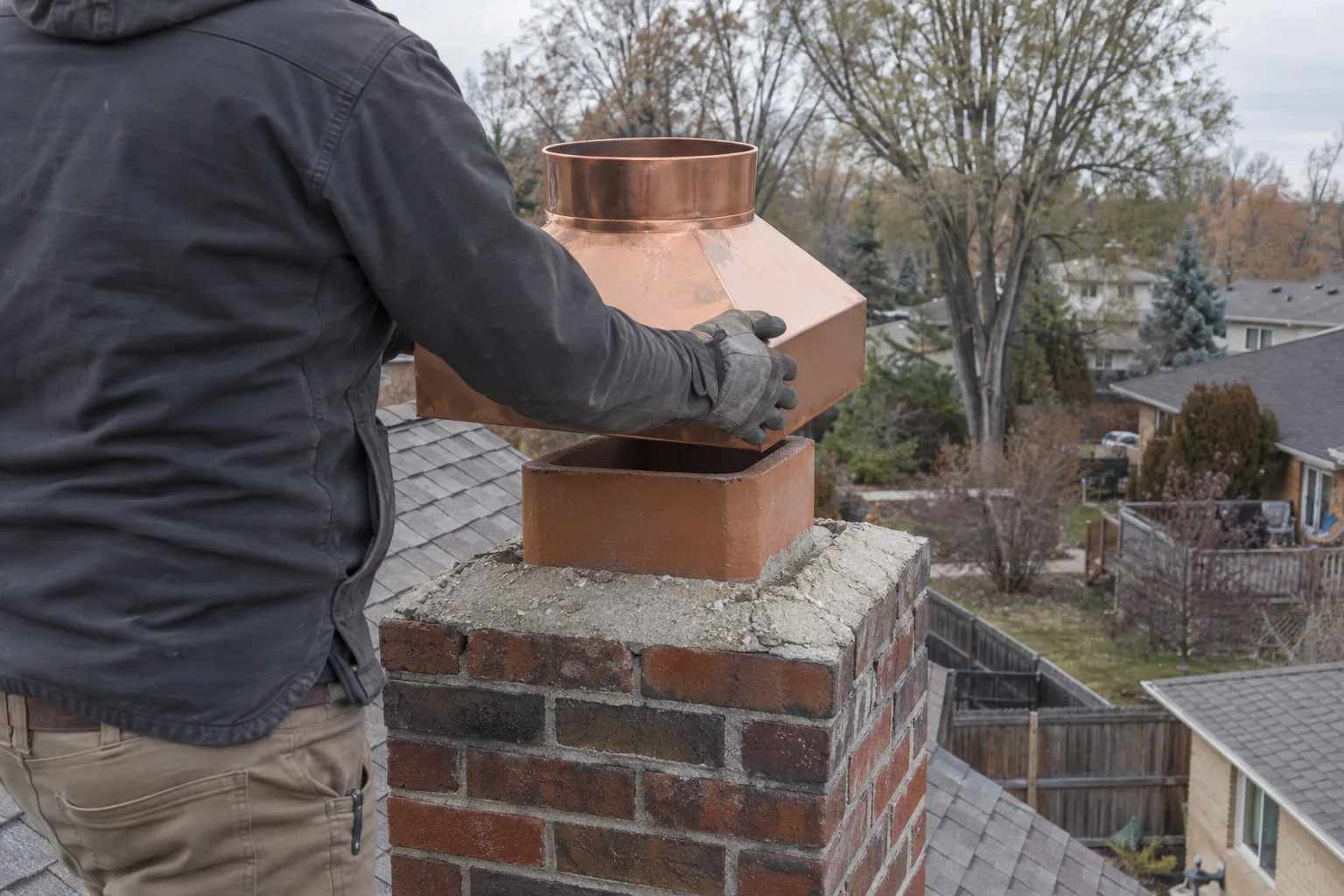
-
1
Diagnostics and measurement
We measure the flue opening in both directions and confirm liner shape and material.
We record chimney stack height from the firebox floor and assess the existing crown and top course of masonry for condition. If the crown is cracked or the top course is deteriorating, we address that before any pot goes on. A pot installed over a failing crown won't seal properly.
We also note prevailing wind exposure and roofline obstructions. Trees, dormers and adjacent roof peaks all influence downdraft patterns, and that information goes into the pot sizing and orientation decision.
-
2
Fabrication and fit
Our shop at 12640 W Cedar Dr in Lakewood handles all custom copper work.
We cut and form each pot to the measured opening dimensions. The base plate is sized to seat flush on the flue tile or liner casing, with no shimming and no gap-filling with caulk.
Taller extensions, those adding more than 18 inches of effective chimney stack height, get internal bracing to handle Colorado's wind load. We fabricate the rain cap as part of the same copper piece, not as a separate add-on, so the whole assembly moves and weathers as one unit.
-
3
Post-installation testing and draft check
Once the pot is set and sealed, we confirm draw direction with a test fire or smoke pellet.
We're looking for clean, consistent upward draft through the flue extension. If the fire has been slow to draw previously, we document the before and after smoke behavior so the homeowner can see the difference directly.
We also verify that the rain cap seats and seals correctly. The Denver Metro gets heavy late spring snowfall, and wet snow can pack into an uncapped flue opening faster than most people expect.
Areas we serve
AR Chimney Pros installs custom copper chimney pots across the Greater Denver Metro Area.
We serve Lakewood, Denver, Wheat Ridge, Arvada, Englewood, Littleton, Edgewater, Morrison, Golden, Sheridan, Glendale, Westminster, Aurora, Thornton, Highlands Ranch, Centennial, Broomfield, Evergreen, Conifer, Boulder and surrounding communities. Foothills scheduling runs regularly from our Lakewood location.
- Lakewood
- Denver
- Wheat Ridge
- Arvada
- Englewood
- Littleton
- Edgewater
- Morrison
- Golden
- Evergreen
- Boulder
Related installations
A copper pot is often paired with other top-of-stack or hearth work.
Frequently asked questions
Copper pot questions we answer most often on the phone.
How much does a custom copper chimney pot cost in Lakewood, CO?
Pricing depends on flue size, pot height and whether a directional vent orientation is included. Every pot is fabricated to your specific flue dimensions at our Lakewood shop, so cost is confirmed after the on-site measurement visit. Call 720-608-7668 for a quote.
How long does the full process take from first contact to installation?
Most custom copper chimney pot installations complete in two visits. The first visit covers roof measurement and flue assessment. Fabrication follows at our Lakewood shop, then installation and draft testing happen on the second visit. Total time from first contact to a finished, tested pot is typically one to two weeks depending on scheduling.
Will a copper chimney pot actually fix my draft problem, or is it just decorative?
A correctly sized copper pot improves draft by adding effective flue height and redirecting wind away from the flue opening. At Denver's altitude, even a modest height extension meaningfully increases draft pressure differential. Every pot AR Chimney Pros fabricates is sized for airflow performance first, with the aesthetic finish as a secondary result.
Does the pot have to match my exact flue shape?
Yes. A round pot seated over a square clay tile liner creates gaps that allow downdraft and rain entry. We fabricate square to round transition pots, rectangular bases and oval configurations to match whatever liner geometry your chimney has, with no shimming and no gap-filling with caulk after the fact.
How long before the bright copper finish turns green?
Colorado's dry climate slows patina development significantly. Copper patina, the natural oxidation layer that shifts the finish from bright to green brown, typically takes several years to appear here. Coastal climates see it in months. Your pot will hold a bright copper finish longer than most homeowners expect before the patina process begins.
What happens if the chimney crown is cracked, can the pot still be installed?
Crown condition is assessed before any pot goes on. A copper pot installed over a failing crown won't seal correctly at the base joint. If cracking or deterioration is found at the top course, that repair happens first.
See crown repairMore questions about your system? Read the full FAQ.
Ready to add a custom copper pot to your chimney?
Call AR Chimney Pros at 720-608-7668 or email info@archimneypros.com to get started.
We'll schedule a roof measurement, confirm your flue dimensions, and fabricate a pot built to your exact stack. No catalog sizing, no guessing on fit, a copper chimney pot built for your specific flue, your stack height and your altitude.