
Camera Scan of the Full Flue
Still images included in your written report.
Required before home sales, after storms, and following any appliance change. A Level 2 chimney inspection in Lakewood, CO documents the full flue interior, not just what's visible from the firebox.
Dispatching from 12640 W Cedar Dr, Unit 7, Lakewood.
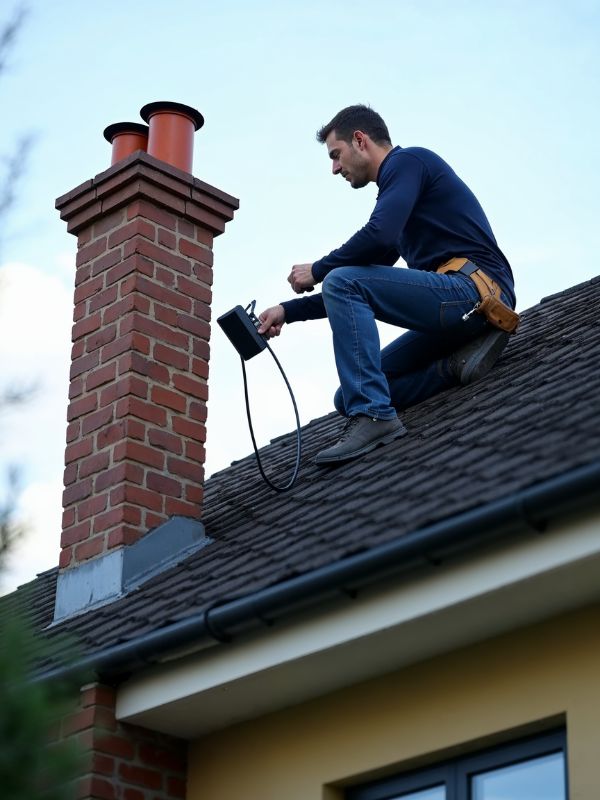
Included every visit
- Full flue camera scan, cap to firebox
- Written report with still images
- Level 1 components checked first
- Offset angles documented, not skipped
A Level 2 inspection goes further than what the eye can see
A Level 2 inspection is a camera-documented evaluation of the full flue interior, inside and out.
It covers everything in a Level 1 inspection, the firebox, damper, smoke chamber, and accessible exterior masonry. Then it goes further. A flue camera, a video inspection device inserted into the flue to capture liner condition, obstructions, cracks and offsets, travels the full length of the system. What it records becomes part of a written report with still images you can hand to a buyer, real estate agent, or insurance carrier.
Under NFPA 211, the national fire protection standard that governs chimney inspection requirements, a Level 2 inspection is required before a property sale, after any significant weather event, and following an appliance change: replacing or upgrading a connected furnace, fireplace insert, or wood stove. Any of those changes triggers the requirement.
AR Chimney Pros completes Level 2 chimney inspections across Lakewood and the Denver Metro area. Every appointment includes the camera scan and the written deliverable, not just a verbal summary.
Denver Metro closings move on tight timelines
Level 2 inspection requirements don't wait for a convenient week.
Jefferson County and the surrounding corridor, Englewood, Littleton, Highlands Ranch, see some of the fastest real estate turnover in Colorado. Sellers often receive a buyer's inspection request within the first week of listing. Then the clock starts.
Here's what many homeowners don't realize: a flue that looks perfectly clean from the firebox can still have issues that only a camera scan will reveal. Liner cracks, fractures in the flue liner that allow combustion gases to escape into surrounding masonry or living space, don't announce themselves from below. Neither do chimney offsets, sections of the flue that change angle rather than running vertically. Older Denver Metro homes built before 1970 commonly have offset flues, and those angles require camera inspection to assess internal condition properly.
Dispatched from our office at 12640 W Cedar Dr in Lakewood, we schedule Level 2 inspections to align with closing timelines across Jefferson, Arapahoe and Denver County properties.
What the camera found that changed the transaction
The flue looked fine. The camera told a different story.
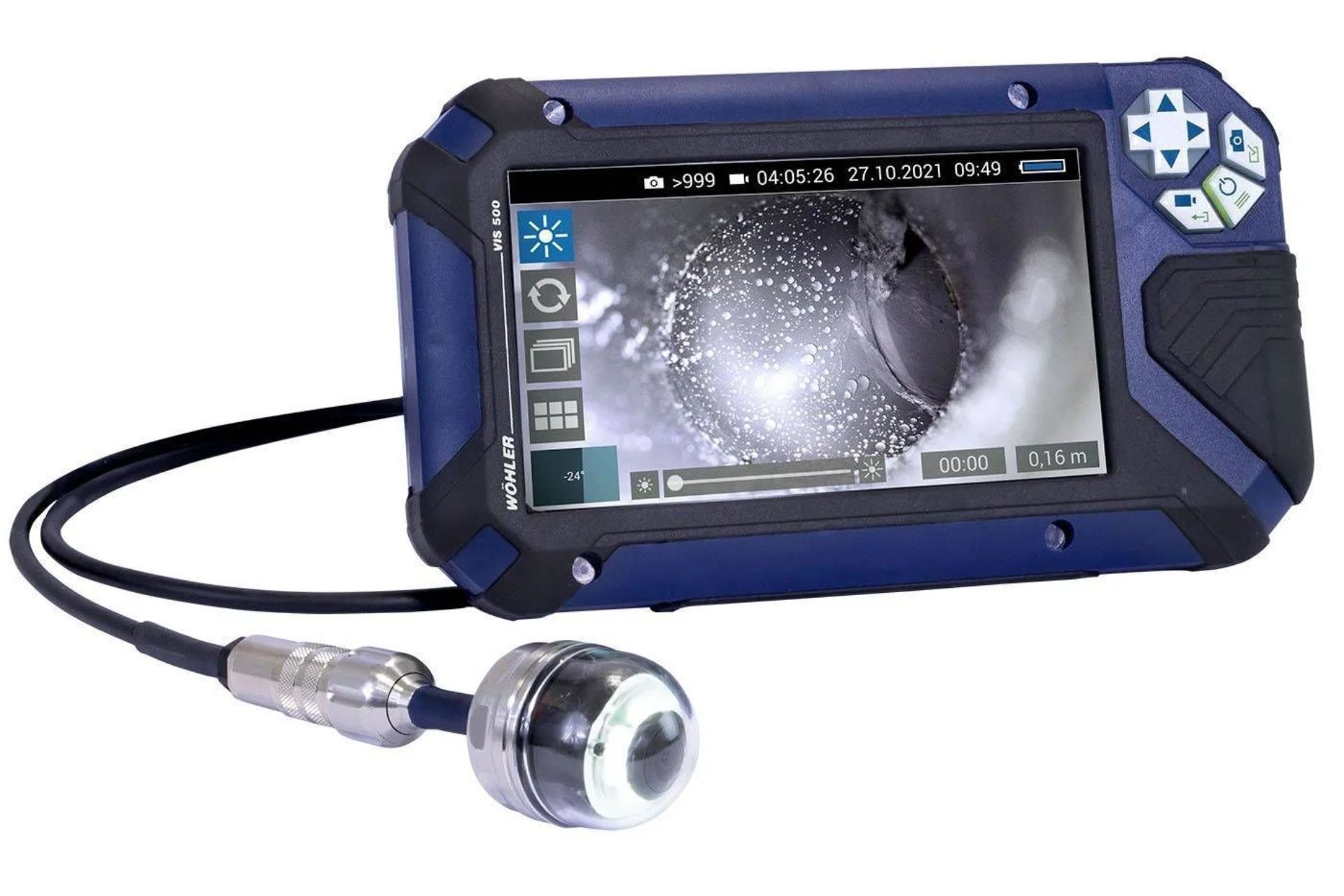
We were working a Level 2 inspection on a split-level in Edgewater, a well-kept 1960s ranch style home that looked move-in ready from every angle. The sellers had used the fireplace regularly. No smoke issues, no odor complaints. The Level 1 checks came back exactly as expected.
Then we ran the flue camera.
About halfway up the clay tile liner, we picked up a significant crack, not a hairline, but a full liner crack running about six inches along the tile joint. Below that section, there was visible creosote buildup in a recessed offset we couldn't have reached or assessed from the firebox opening. The offset itself was causing a draft restriction that pushed some combustion gases back toward the firebox under certain wind conditions.
None of that was visible without the camera scan.
We put together the written report with still images from the camera footage. The sellers shared it directly with the buyer's agent that afternoon. Because the condition was documented clearly, both parties had a precise scope, no guesswork, no inflated estimates from either side. The sellers addressed the liner crack through a repair quote and the deal closed on schedule.
Clear camera documentation keeps transactions moving. Buyers get the facts. Agents have a record to work from. A written report with images resolves open questions faster than any verbal walkthrough.
AR Chimney Pros field team, dispatched from Lakewood
Post-storm inspections follow a different checklist
After hail, high wind, or lightning, the visible exterior is only part of the picture.
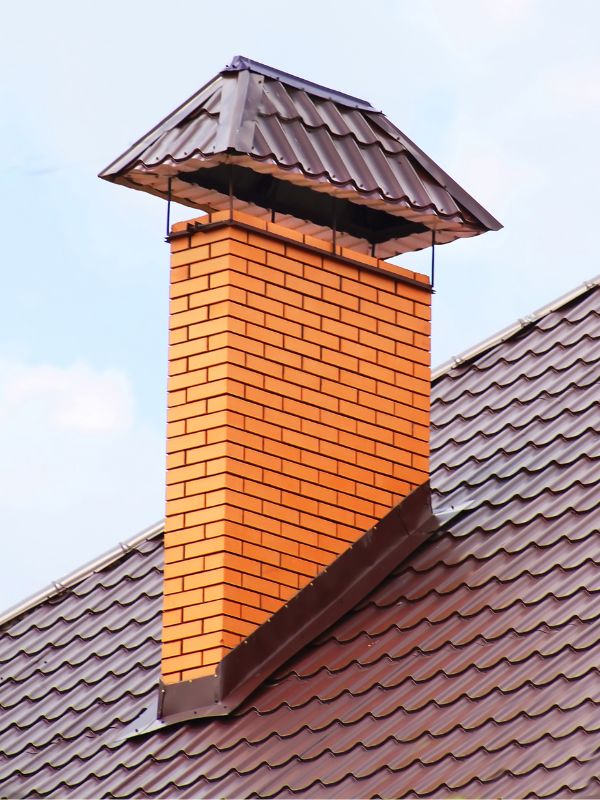
Colorado's Front Range is hail country. Jefferson County sees significant hail events most summers, and high wind through the foothills can shift masonry or displace flashing without leaving obvious evidence at ground level.
A post-storm inspection, a Level 2 inspection conducted after a significant weather event to identify damage not visible from the exterior, follows the same NFPA 211 standard as a pre-sale inspection. But the focus shifts. We check the crown for impact damage, the flashing for lifted or separated sections, and the liner for any shifting that could indicate settling or impact transfer through the masonry.
Here's how we handle post-storm appointments: we assess the full exterior first, document any surface-level damage with photos, then run the camera through the flue to verify interior liner integrity. The written report we deliver is formatted to work with insurance carrier requirements: still images, condition notes, and location references within the flue.
If your property took a hail hit and your insurer is requesting documentation, that report covers it.
Our standards for every Level 2 inspection
Every Level 2 we complete meets NFPA 211 requirements and delivers a written report with camera images. No shortcuts, no verbal-only summaries.
- Full flue camera scanFrom firebox to termination cap, the entire liner is documented.
- Written inspection reportWith still images pulled from camera footage.
- Level 1 components assessed firstFirebox, damper, smoke chamber and accessible exterior masonry.
- Liner condition notedFor clay tile, stainless steel, or cast-in-place systems.
- Offset documentationEvery angle change in the flue is captured and noted.
- Crown and cap assessmentIncluded in every appointment.
- Appliance change reviewWhen the inspection is triggered by a new insert, stove, or furnace connection.
- Carbon monoxide pathway checkWe note any condition that could allow gas migration into living space.
Three copies of the final report: one for the homeowner, one ready to forward to real estate or insurance contacts, one kept on file with us.
How a Level 2 inspection gets done
We confirm the trigger first, sale, storm, or appliance change, then sequence the inspection accordingly.
-
1
Diagnostics first
Trigger, then sequence.
Before we run the camera, we complete all Level 1 checks: firebox condition, damper operation, smoke chamber integrity, and accessible exterior masonry including the crown and cap. We photograph the starting condition of every component we assess, giving us a baseline for the camera findings.
For appliance change inspections, we review the connected appliance specs. A new high-efficiency furnace venting into an older clay tile liner sized for a different BTU output is one of the more common mismatches we find in Denver Metro homes. A camera scan confirms whether the existing liner is appropriate for the new appliance.
-
2
Camera scan
Full length, every inch.
The flue camera enters from the firebox and travels the full length of the liner. We capture still images at every point of interest: cracks, offsets, obstruction deposits, and any section where the liner shows wear. Nothing is skipped for time.
If the flue has an offset, and many Lakewood and Wheat Ridge homes do given the construction era, we slow down at those bends and document the liner condition at each angle change. Liner cracks in offset sections are easy to miss on a fast pass. We don't take fast passes.
-
3
Report delivery
Before we leave, when possible.
Once the camera scan is complete, we compile the still images, match them to the written condition notes, and deliver the report directly to the homeowner. For real estate chimney inspections on tight closing timelines, we can send the digital version to a real estate agent or attorney the same day.
If the inspection reveals conditions that need repair, a liner crack, a failed damper, a damaged crown, the report includes a clear description of each finding.
See full chimney repair
Areas we serve
AR Chimney Pros completes Level 2 chimney inspections across the full Denver Metro corridor.
We serve Lakewood, Denver, Wheat Ridge, Arvada, Englewood, Littleton, Edgewater, Morrison, Golden, Sheridan, Glendale, Westminster, Aurora, Thornton, Highlands Ranch, Centennial, Broomfield, Parker, Castle Rock, Lone Tree, Greenwood Village, and Boulder. We also reach into the foothills, Evergreen, Conifer, and Idaho Springs, for properties that require Level 2 documentation before a mountain area home sale.
- Lakewood
- Denver
- Wheat Ridge
- Arvada
- Englewood
- Littleton
- Edgewater
- Morrison
- Golden
- Aurora
- Thornton
- Highlands Ranch
- Evergreen
Related inspection services
If your situation calls for a different scope, these are the other inspection tiers and specialty checks we run.
Frequently asked questions
Level 2 inspection questions we answer most often on the phone.
How much does a Level 2 chimney inspection cost in Lakewood, CO?
AR Chimney Pros includes a full flue camera scan and written report with still images in every Level 2 appointment. Call 720-608-7668 for current pricing before your closing date.
How long does a Level 2 chimney inspection take from start to finish?
Most Level 2 inspections take 60 to 90 minutes on-site. The Level 1 walkthrough happens first, then the full flue camera scan, then report compilation. For real estate transactions, the written report with still images is typically ready before we leave the property.
Does the written report include photos, or just notes?
Every report includes still images pulled directly from the camera footage. Photos are matched to written condition notes for each finding. That format works for real estate agents, insurance carriers, and buyers who need a clear, shareable record, not just a verbal summary.
What triggers a Level 2 inspection requirement, and who decides?
NFPA 211, the national fire protection standard, defines three triggers: a property sale, a significant weather event, and any appliance change. Appliance change means replacing or upgrading a furnace, insert, or wood stove connected to the flue. Your real estate contract, insurer, or local fire code may also specify the requirement independently.
Can a Level 2 inspection reveal problems a Level 1 already cleared?
Yes, frequently. Liner cracks and offset blockages inside the flue are invisible from the firebox opening. A Level 1 inspection covers only what's accessible without a camera. The flue camera captures conditions deep inside the liner that a visual pass cannot reach, regardless of how thorough the Level 1 check was.
Will the camera work on older flues with offset angles common in Denver Metro homes?
Camera inspection is especially important on offset flues. Older homes in Lakewood and surrounding areas commonly have angled flue sections. We slow the camera at every bend and document liner condition at each offset. Those angles are where cracks and creosote deposits are most likely to hide, and most likely to be missed without camera footage.
More questions about your system? Read the full FAQ.
Schedule your Level 2 chimney inspection
A written report with camera images takes the guesswork out of any chimney related transaction or insurance claim.
If you're approaching a closing date, recovering from a hail event, or have recently changed a connected appliance, AR Chimney Pros is ready to schedule your Level 2 inspection. We serve Lakewood and the greater Denver Metro area. Call us at 720-608-7668 or email info@archimneypros.com to confirm availability.