
Wood Stove and Pellet Stove Service in Lakewood, CO
Installation, venting, annual cleaning and repair for freestanding stoves and stove inserts.
A stove only heats well when the venting, the clearances and the air path are all correct. We check those together, whether we are setting a new stove or chasing down a stove that quit.
Dispatching from 12640 W Cedar Dr, Unit 7, Lakewood.
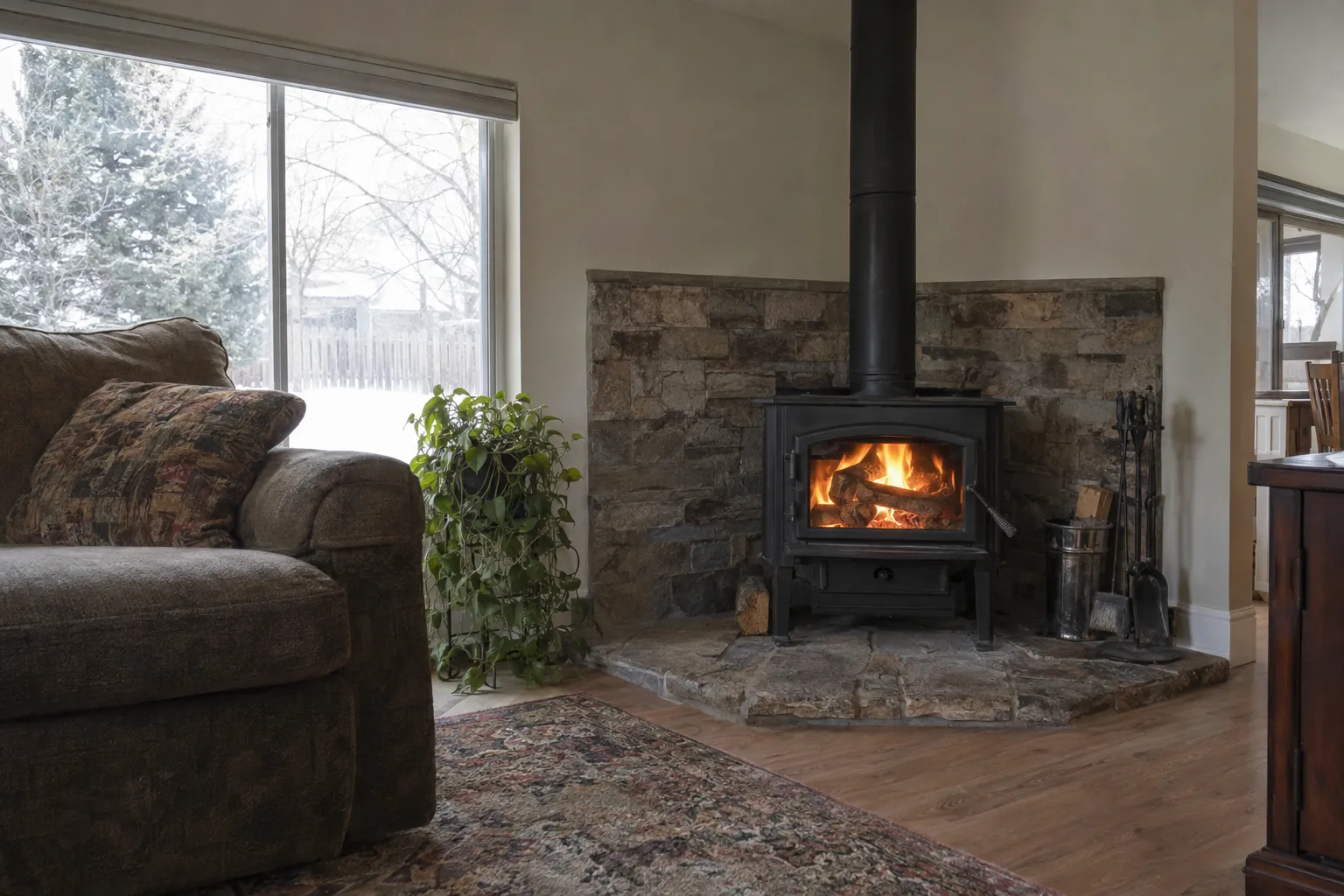
Every stove visit covers
- Vent run and liner condition
- Clearances to walls and floor
- Gaskets, glass and door seal
- Ash, creosote and airflow
Four things decide whether a stove heats the way you expected
Open each one to see what we check on a stove install or service call, and why it matters once the stove is running.
Venting and liner
A wood stove needs a continuous, correctly sized flue, usually a stainless liner run the full height of a masonry chimney and connected to the stove outlet. A pellet stove uses a smaller sealed pellet vent, often with a short vertical rise, and it still has to terminate clear of doors, windows and walkways. Dumping either appliance into an oversized unlined flue is the fastest way to a cold, sluggish, creosote-heavy chimney. See chimney relining.
Clearances to combustibles
Every stove has listed minimum distances from the back, sides and corner to walls and furniture, and those numbers change when a shield or an approved close-clearance pipe is used. We measure the actual space rather than assuming the old stove's footprint still applies.
Floor protection
The hearth pad under and in front of the stove has a minimum size and, for many wood stoves, a minimum insulating value. Pellet stoves generally need less, but they still need an approved non-combustible pad sized for the door opening and the ash pan.
Combustion air and power
A tight house competes with the stove for air, which shows up as a lazy draft or smoke rolling out at the door. Pellet stoves add one more requirement: a dedicated, reliable outlet, because no power means no auger, no igniter and no exhaust blower.
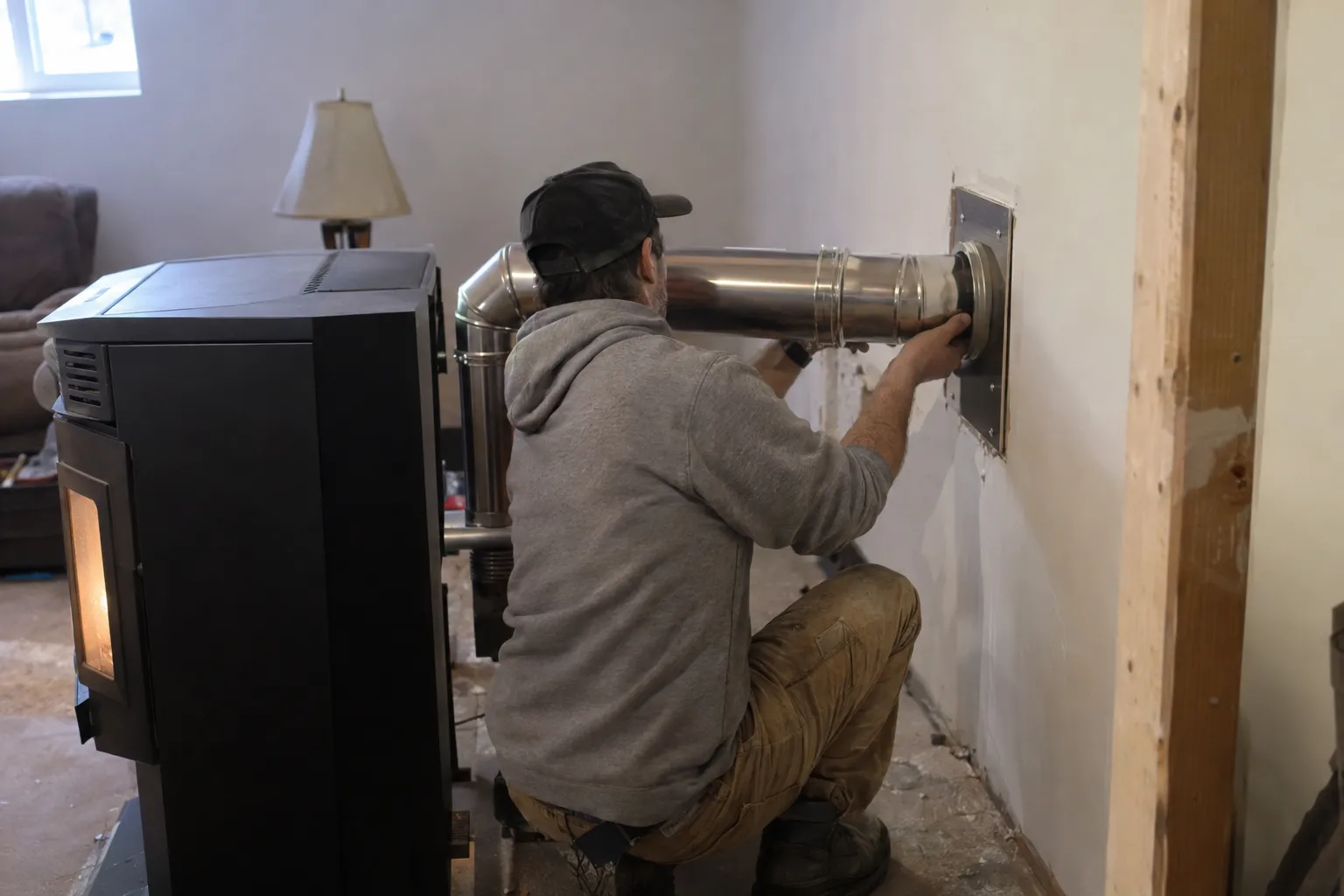
Front Range conditions change how a stove behaves
Altitude, long cold snaps and dry air all show up in how a stove drafts and how fast it needs cleaning.
Thinner air at Front Range elevation means less oxygen per cubic foot of combustion air, so a stove that was dialed in at sea level often needs its air settings adjusted and, on pellet units, a different feed and blower balance. Cold outside air also makes a chimney start slowly, which is why the first fire of the day is usually the one that smokes.
One local detail many Lakewood and Arvada homeowners miss: a stove installed in a basement or walkout has less vertical flue above it than the same stove on a main floor, and the vent is often buried in a chase where the pipe cools quickly. Short, cold vent runs draft weakly and collect creosote or fly ash faster, so those stoves earn their annual cleaning sooner than the owner expects. Denver-area air quality advisories are issued during the winter season as well, so check the current local advisory before you burn.
What a stove service call actually looks like
Most "my stove is broken" calls turn out to be an airflow problem somewhere along the path from the burn pot to the cap.
We work the whole path in order: fuel, firebox, gaskets, heat exchanger, blower, vent, termination. Parts come last, after the air path is clean and the symptoms are reproduced.
From a pellet stove call in Lakewood
The homeowner's stove was lighting, running for twenty minutes, then shutting down with the room still cold. The pellets were fine and the hopper was full, so the natural assumption was a failed control board. When we opened the unit, the heat exchanger passages were packed with fly ash and the burn pot holes were half glazed over. The exhaust blower wheel had a layer of ash on the fins, which quietly cut how much air it could move.
We vacuumed the exchanger, scraped and cleared the burn pot, cleaned the blower wheel, pulled and brushed the vent run, and replaced a flattened door gasket that was letting the stove pull air from the wrong place. On restart the flame changed shape, went from lazy and orange to tight and active, and the stove held temperature through a full cycle. No board, no auger motor, no igniter needed.
A wood stove call follows the same logic with different parts: we check the flue and cap for creosote and blockage, test the door and glass gaskets, look at the baffle and firebricks, and confirm the stove can get the air it needs before we touch anything else.
Installations are done to the appliance listing and local code
A stove is only as safe as the instructions it was installed by. Clearances, vent type, termination height and floor protection all come from the manufacturer's listing for that specific model.
New stove installations and vent changes typically require a permit and inspection from the local building department.
We confirm the requirements for your address before work starts, so the vent routing, termination point and hearth pad are set up to pass inspection the first time rather than being reworked afterward.
If you are replacing an existing stove, bring us in before the new unit is ordered. Vent diameter, clearance ratings and hearth pad requirements vary between models, and the old setup does not automatically carry over.
Wood, pellet, or a stove insert in an existing fireplace
Each one burns differently, vents differently and fails differently. Here is how they compare and what goes wrong with each.
Wood stoves
No electricity needed, so they keep heating during an outage, and cordwood can be stored outside. The tradeoff is hands-on tending, ash handling and a flue that collects creosote. Dry, seasoned wood and a hot, clean burn do more for performance than any adjustment we can make.
Common problems: weak draft and smoke at the door, flattened door or glass gaskets, blackened or cracked door glass, a sagging baffle or broken firebricks, a stuck damper, and creosote narrowing the flue. Related work includes creosote removal and damper repair.
Pellet stoves
Thermostat control and an auger feed make the heat steady and the loading simple, and the sealed vent gives more flexibility on where the stove can sit. They need power, bagged pellets kept dry, and more frequent internal cleaning than most owners expect.
Common problems: a jammed or noisy auger from fines and oversized pellets, an igniter that no longer lights on the first try, fly ash packing the heat exchanger and burn pot, a dirty exhaust blower, leaking door or ash pan gaskets, and a restricted vent or termination. Most of those read as "it shuts down" on the display.
Stove inserts
An insert turns an open masonry fireplace into a closed, far more efficient heater. It needs a liner carried from the appliance to the top of the chimney, not just a pipe into the smoke chamber, plus access for future cleaning.
We check the firebox, flue size and surround fit before an insert is chosen.
How we handle stove work
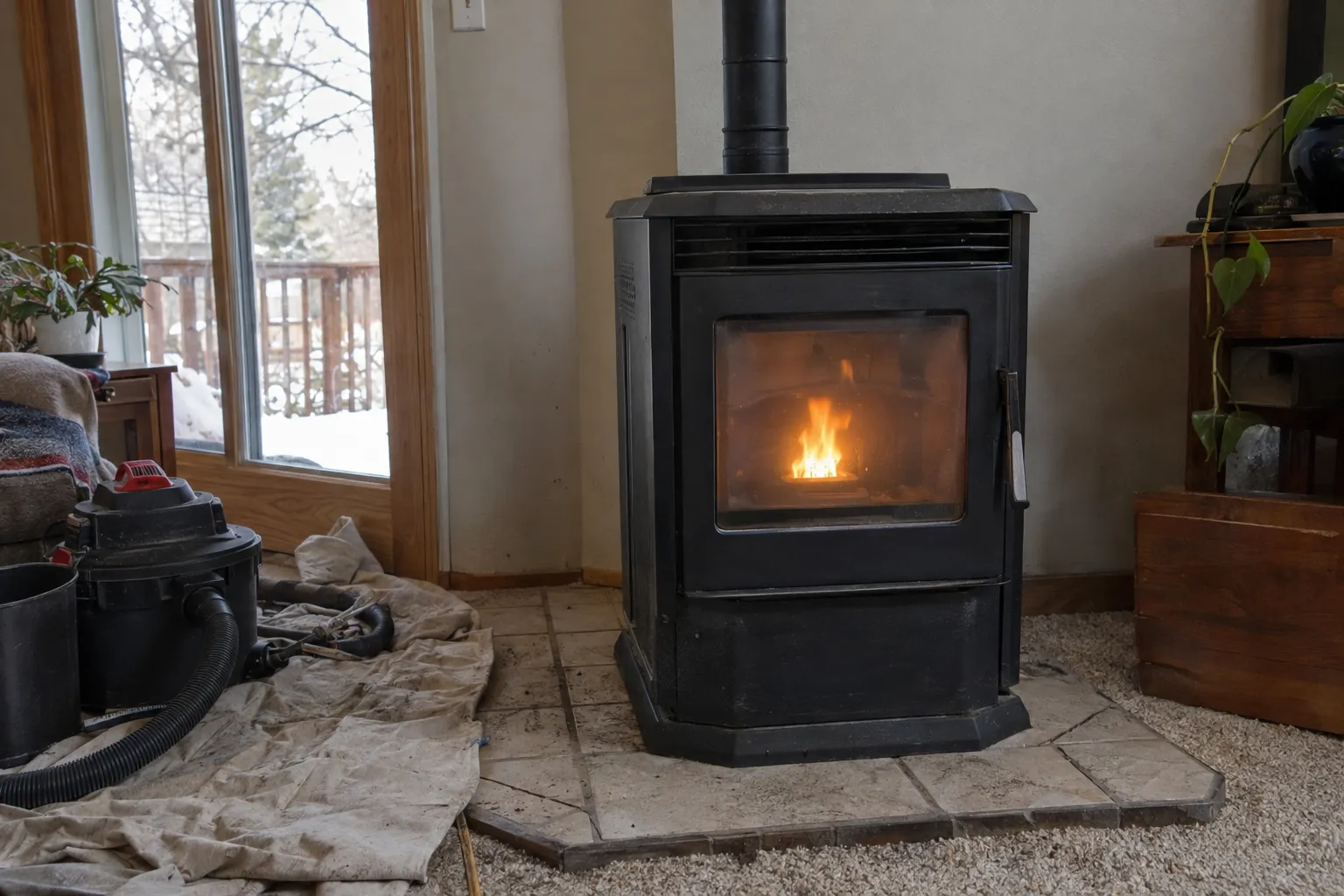
Whether it is an install, an annual cleaning or a no-heat call, the sequence is the same: diagnose, clean or correct, then test under fire.
-
1
Inspection and diagnosis
We look at the appliance, the connector pipe, the liner or pellet vent, the termination and the clearances around the stove. For a repair call we reproduce the symptom first, so we are fixing what is actually happening rather than what the error code suggests. A Level 1 inspection covers an accessible system; a Level 2 inspection is used when the stove or venting is changing, or after a chimney fire.
-
2
Cleaning, repair or installation
Annual service means brushing the flue or pellet vent, vacuuming the firebox, burn pot, ash pan and heat exchanger, cleaning the blowers and checking seals. Repairs cover gaskets, glass, firebricks, baffles, augers, igniters and blower assemblies. See chimney cleaning.
On installations we set the hearth pad and clearances first, then build the vent run to the listing, seal the joints and finish at the termination with a cap sized for the system. Liner and cap work is part of the same visit.
-
3
Burn test and walkthrough
We light the stove and watch it through a full cycle: ignition, flame shape, draft, blower behavior and temperature hold. Then we show you how to load it, what the flame should look like, how often to empty ash, and which signs mean it is time to call before the next heating season.
Areas we serve
AR Chimney Pros services wood and pellet stoves across the Denver metro and Front Range from our Lakewood office on West Cedar Drive.
We work in Lakewood, Arvada, Denver, Westminster, Broomfield, Thornton, Littleton, Englewood, Aurora, Parker, Centennial, Longmont, Loveland, Greeley and Colorado Springs. Call 720-608-7668 to confirm availability at your address.
- Lakewood
- Arvada
- Denver
- Westminster
- Broomfield
- Thornton
- Littleton
- Englewood
- Aurora
- Parker
- Centennial
Related stove and chimney services
The work that most often comes up alongside a stove install or service call.
Frequently asked questions
Stove questions we answer most often on the phone.
Should I choose a wood stove or a pellet stove?
A wood stove runs without electricity and burns cordwood you can store outside, but it needs hands-on tending and regular chimney cleaning. A pellet stove runs quieter and more evenly because an auger feeds fuel on a thermostat, but it needs power and bagged pellets kept dry. Fuel access, storage space, how often you want to load the stove and whether you want heat during a power outage usually decide it.
Can a wood or pellet stove vent into my existing masonry chimney?
Often yes, but not by simply pointing the pipe into the fireplace opening. A stove needs a correctly sized liner running the full height of the flue and connected to the appliance. An oversized unlined flue cools the exhaust, slows the draft and builds creosote faster. We measure the flue and the stove outlet before recommending a liner size.
How often does a wood stove or pellet stove need cleaning?
Plan on a cleaning and inspection once a year, and sooner if you burn daily through the winter. Wood stoves accumulate creosote in the connector pipe and flue. Pellet stoves accumulate fly ash in the heat exchanger, burn pot and exhaust vent, which quietly cuts heat output before it causes a shutdown.
Why does my pellet stove keep shutting down or failing to light?
The usual causes are a clogged or worn burn pot, a tired igniter, an auger jammed by fines or oversized pellets, a dirty exhaust blower, or ash packed in the heat exchanger restricting airflow. Door and ash pan gaskets matter too, because a leak upsets the pressure the stove relies on. We clean the whole air path first, then test ignition and feed before replacing parts.
My wood stove smokes into the room when I open the door. What causes that?
Weak draft is the common thread. Creosote or ash narrowing the flue, a cold flue at startup, a blocked cap, a short or poorly routed vent run, or a tight house pulling air away from the stove will all push smoke back into the room. Failed door and glass gaskets make it worse by letting the stove take air from the wrong place. We check the flue, the cap, the gaskets and the air supply together.
Do Denver-area no-burn days apply to my stove?
Air quality advisories are issued for the Denver metro and Front Range during the winter season, and the rules depend on your appliance type and whether wood is your only heat source. Check the current local air quality advisory before you burn. Keeping the stove clean and burning dry, seasoned wood also keeps smoke down on any day.
More questions about your system? Read the full FAQ.
Get the stove cleaned, fixed or installed right
Tell us what the stove is doing, or what you want installed, and we will start with an inspection of the appliance and its venting.
Call AR Chimney Pros at 720-608-7668 or email info@archimneypros.com. Let us know the stove type, whether it burns wood or pellets, and your address. We are open Sunday through Friday, 8am to 5pm.