
Liner Sized to Your Appliance and Denver's Altitude
Sea level liner sizing underperforms at 5,280 feet. We calculate before we order.
Chimney relining and liner installation in Lakewood, CO, sized to your appliance's BTU output, your flue height, and local air density, not a catalog default.
Dispatching from 12640 W Cedar Dr, Unit 7, Lakewood.
Sized before we order
- Camera inspection of the full flue length
- Diameter calculated for appliance, flue height and altitude
- Installed to UL 1777 for Colorado code and insurance
- Draft verified on site before we leave
What you need to know right now
A chimney liner is the fireproof channel that carries combustion gases safely out of your home. Without one in good condition, smoke, carbon monoxide and heat have nowhere controlled to go.
A large share of Lakewood and Jefferson County homes went up before 1980, with terra cotta flue tile, the original clay liner sections installed when the fireplace was first built. They were code compliant then. Many are not performing safely now. Here is how the three liner types compare before we go any further.
| Terra cotta tile | Stainless flexible liner | Cast in place liner | |
|---|---|---|---|
| Typical lifespan | 50+ years if intact | 20 to 25 years | 50+ years |
| Primary failure mode | Cracking from thermal shock and freeze thaw cycling | Mechanical damage or improper sizing | Rare, structural failure of surrounding masonry |
| Repair or replace | Replace when cracked, separated or spalled | Replace if crushed or corroded beyond repair | Repair is rarely possible, full reline needed |
| Best application | Original construction only | Gas appliances, wood stoves, existing masonry flues | Irregular or badly deteriorated masonry flues |
That table drives most of what we do on a relining job. The liner type follows the condition of what is already there, not a default product line.
Lakewood and Golden have more pre-1980 chimneys than most people realize
Jefferson County's older neighborhoods are full of original terra cotta liners, and Colorado's climate is hard on them.
Wheat Ridge, older Lakewood subdivisions near Alameda, and the Morrison Road corridor all have significant concentrations of homes built between 1950 and 1975. Those homes have chimneys. Those chimneys almost certainly have terra cotta flue tile, the original clay liner sections used before stainless steel became standard.
Colorado's cold start fire cycles create thermal shock. A flue sitting at 20 degrees on a January morning and hitting 400 degrees in twenty minutes will stress uncracked tile. Over years, tile sections crack, separate and shift. The gap between sections is invisible from inside the firebox. It only shows up on a camera inspection, or after a home sale inspection flags it.
From our West Cedar Drive location, we serve the entire Jefferson County corridor. Relining jobs in Lakewood, Golden and Wheat Ridge typically share the same diagnostic findings.
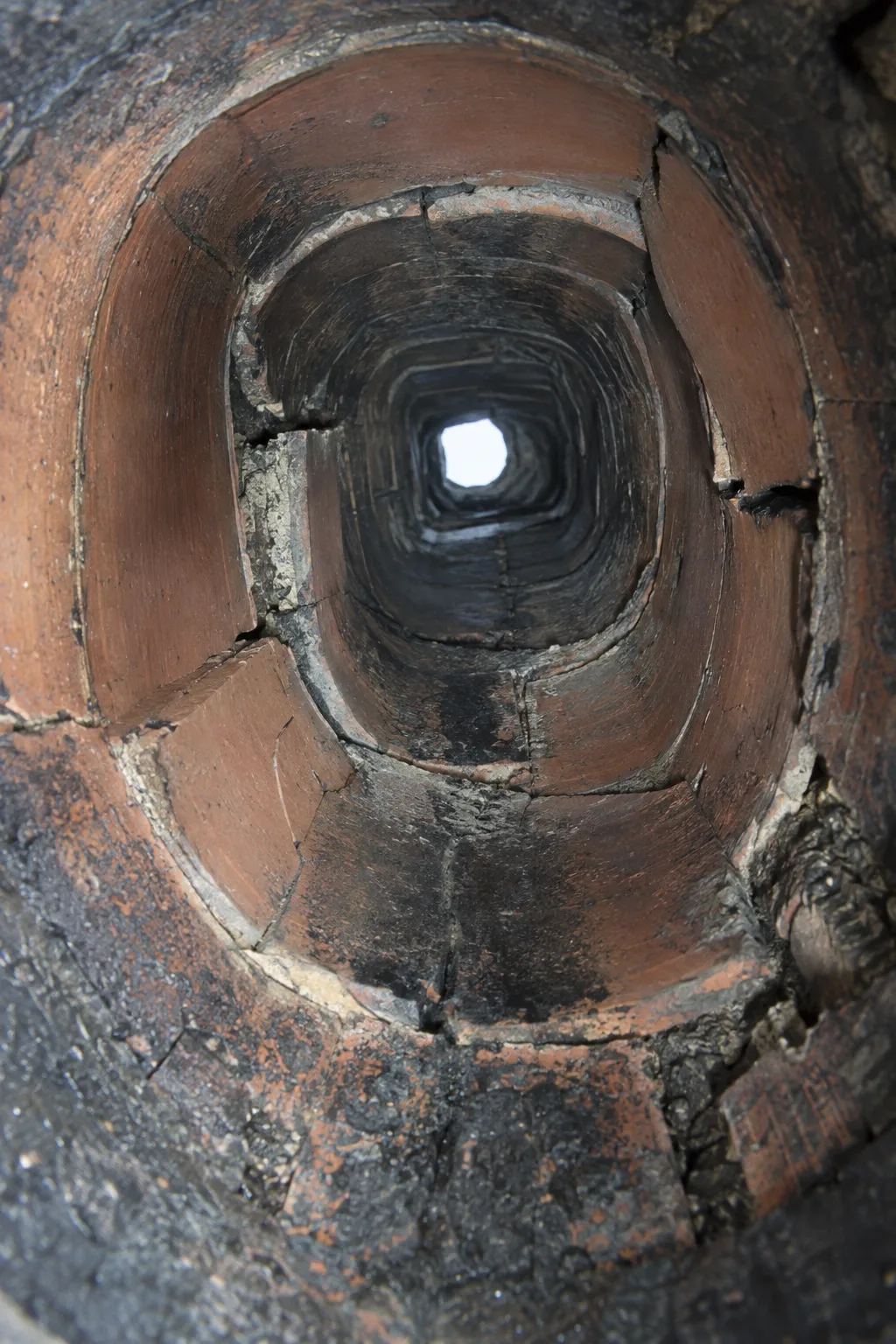
What each liner type actually looks like in the field
Different homes call for different liner solutions. Here is how each one actually works.
Terra cotta flue tile: when it fails and why
Terra cotta tile, the original clay liner sections used in chimneys built before the 1980s, is not inherently bad. Intact tiles work fine. Colorado's freeze thaw cycling and cold start firing patterns accelerate cracking. Once a tile section cracks through, the liner is compromised, with no patch that restores structural integrity. The answer is replacement with a liner that handles thermal movement.
Stainless flexible liner: the residential standard
A stainless steel flexible liner is a corrugated, continuous metal liner that runs the full length of the existing flue. It is the most common relining solution in the Denver metro. It navigates the slight offsets and bends common in older masonry. We wrap it with a high temperature insulation blanket inside a masonry chase, which keeps flue gases hotter longer and directly improves draft, especially at elevation.
Cast in place liner: for irregular or damaged flues
Cast in place liner is a poured refractory mixture applied inside the existing flue. It hardens into a seamless liner with no joints. This is the right answer when the existing flue is irregular, heavily damaged, or when the masonry has shifted enough that a flexible liner cannot run cleanly. It costs more, and it lasts decades when the surrounding structure is sound.
Altitude changes the calculation
At 5,280 feet, thinner air means every flue liner needs more precise sizing.
Here is what most homeowners don't realize about draft and elevation. A chimney works because hot combustion gases are lighter than cool air. The pressure difference between inside the flue and outside creates draft, the pull that moves smoke up and out. At sea level, air is dense. That density makes draft easier to generate.
In Lakewood and Denver, air is about 17 percent less dense than at sea level. That means the pressure differential is smaller. A liner sized using sea level defaults will draft weakly, run cooler, and deposit creosote faster than one sized correctly for altitude.
Draft deficit, the condition where flue pressure is insufficient to pull combustion gases up and out, is a real problem at Denver's elevation. It is also preventable. We calculate liner diameter against three variables before ordering anything: the appliance's BTU output, the flue's height, and the local air density. That calculation happens before installation, not after.
All liner systems we install meet UL 1777, the Underwriters Laboratories standard for factory-built chimney liner systems, which is required for insurance and code acceptance in Colorado.
- 5,280 ft
- Elevation at our Lakewood dispatch
- 17%
- Less air density than sea level
- 3 variables
- We calculate before ordering any liner
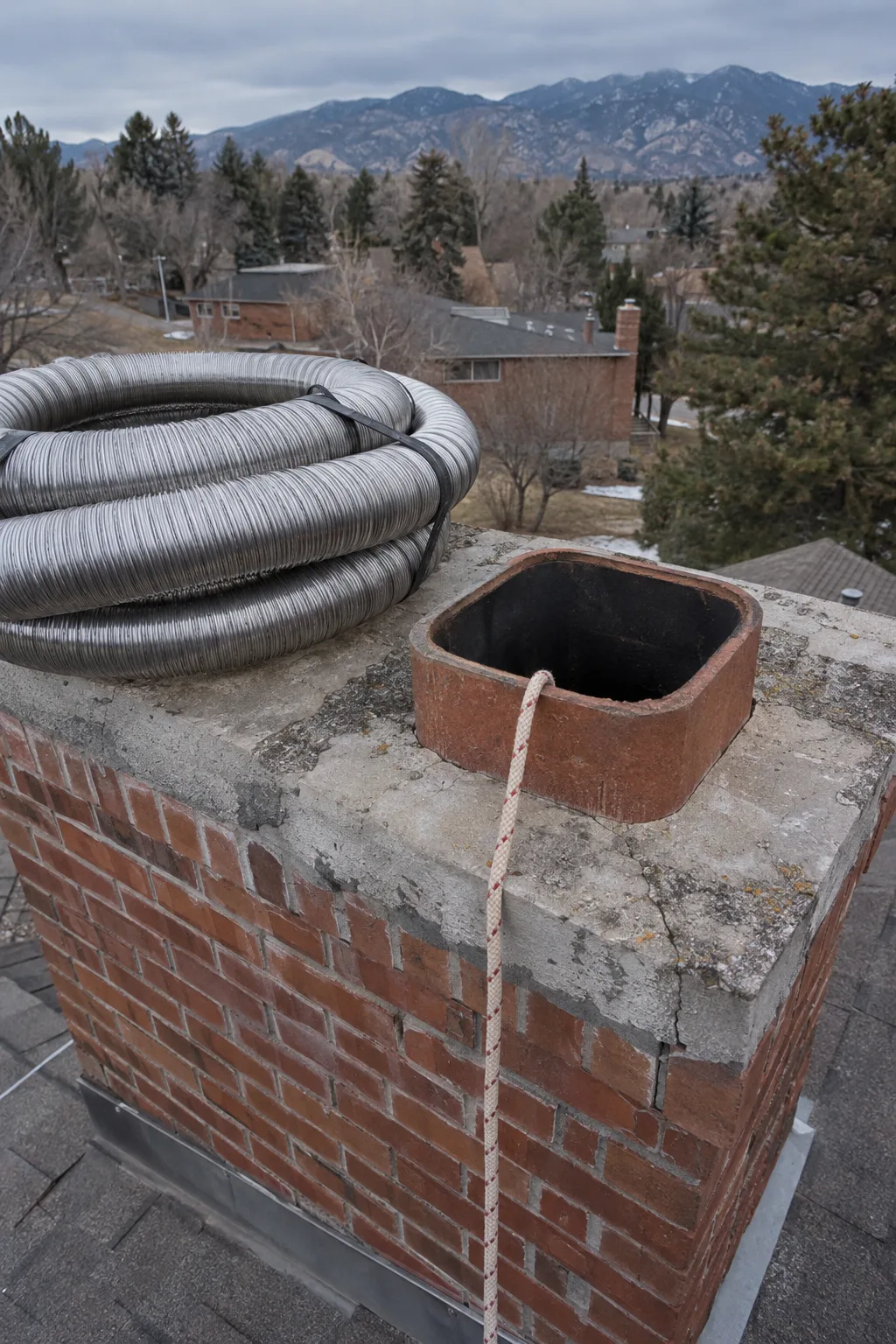
Our standards on every liner installation
Every relining job we complete is sized, insulated, and tested before we leave the site.
Call 720-608-7668- Diameter calculated before ordering Matched to appliance BTU output, flue height and Denver's air density, not a catalog default.
- Insulation wrap on every flexible liner Stainless steel flexible liners wrapped with high temperature insulation inside masonry chases.
- Refractory specification followed exactly Cast in place systems mixed and applied to the manufacturer's specification.
- UL 1777 compliance on every system Required for insurance and code acceptance across Colorado.
- Sealed terminations and connections Top termination and connection points sealed against moisture intrusion after installation.
- Draft verified before the job is closed Draft performance is checked on site, not assumed from the product spec sheet.
How a relining job gets done
From first inspection to draft verification, here is the actual sequence.
-
1
Diagnostics: camera first, then sizing
We run a camera down the full flue length before recommending anything. That footage tells us whether the existing terra cotta tile is cracked, separated or intact, and whether the flue is straight enough for a flexible liner or needs a cast in place solution. We measure the existing flue dimensions. Then we calculate the correct liner diameter for your appliance and flue height. That sizing step happens before any product is ordered.
-
2
Installation: liner, wrap, and connections
Flexible stainless liner is fed from the top of the chimney down. We attach the insulation wrap before insertion, so the liner and wrap go in together as a unit. Top and bottom connections are secured and sealed. For cast in place work, the inflation bladder method creates the form for the pour, and curing time follows the manufacturer's specification before the system is used.
-
3
Post-service testing: draft verified before we leave
We verify draft after installation with a controlled fire or appliance test, damper open, checking for smoke rollout and confirming gases exit cleanly at the top. We check all connection points and terminations before packing up. You get a plain language explanation of what was installed and which liner type is now in your system.
Areas we serve
AR Chimney Pros serves Lakewood, Golden, Wheat Ridge, Arvada and surrounding Jefferson County communities.
We also serve Englewood, Littleton, Morrison, Edgewater and Sheridan. Beyond Jefferson County, our crews reach Denver, Aurora, Westminster, Thornton, Highlands Ranch and Boulder. If your address is in the Greater Denver metro, we can get to you.
Related repair services
If the camera inspection turns up more than a liner problem, these are the next steps.
Frequently asked questions
Relining questions we answer most often on the phone.
How much does chimney relining cost in Lakewood, CO?
Chimney relining costs vary based on liner type, flue length, and appliance configuration. Stainless steel flexible liner installations typically run less than cast in place systems, which require more labor and materials. Flue length is the biggest cost driver: longer flues need more liner and more insulation wrap. Call 720-608-7668 for a sizing-based quote.
Does altitude actually change what liner diameter I need?
Yes. Denver's 5,280 foot elevation requires a recalculated liner diameter. Air is about 17 percent less dense than at sea level, and that thinner air reduces draft pressure. A liner sized for sea level conditions will run cooler, draft weakly, and build creosote faster. We calculate diameter against appliance BTU output, flue height, and local air density before ordering anything.
How long does a relining job take from inspection to finished installation?
Most residential relining jobs complete in one to two visits. The first visit covers camera inspection and liner sizing, and installation follows once the correct liner is ordered. Stainless flexible liner installations typically finish in a single day. Cast in place systems require curing time before the flue can be used. Draft performance is verified before we leave.
My terra cotta liner isn't cracked. Why would I still need relining?
Intact terra cotta tile is functional but limited. Original tile liners weren't sized for modern high efficiency appliances, which burn cooler and produce more condensation. A cooler flue deposits creosote and moisture faster. Relining resizes the flue to match your current appliance output, not the appliance that existed when the chimney was built.
Can a stainless liner be installed without removing the old terra cotta tile?
Yes. Stainless flexible liner runs inside the existing flue without removing terra cotta sections, and the old tile stays in place as the outer shell. We wrap the new liner with high temperature insulation before insertion, and the liner and wrap go in together as one unit from the top down. Removal of existing tile is only required when the masonry is structurally unsound.
What makes AR Chimney Pros' relining process different from a standard liner drop-in?
We size every liner before ordering, not after delivery. Most catalog defaults assume sea level draft conditions. We calculate diameter using three variables: appliance BTU output, flue height, and Lakewood's actual air density. We also wrap stainless liners with insulation inside masonry chases, which keeps flue gases hotter and directly improves draft. Draft is verified before the job is closed.
More questions about your system? Read the full FAQ.
Schedule your Lakewood chimney relining this week
A properly sized, properly installed liner is the most important upgrade a pre-1980 chimney can get.
Call AR Chimney Pros at 720-608-7668 or email info@archimneypros.com to set up your liner inspection and sizing appointment. We'll tell you exactly which liner type fits your flue, calculate the right diameter for your appliance and altitude, and get the job on the schedule.