
Custom Concrete Chimney Crown Installation in Lakewood, CO
Custom-formed crowns with a two-inch overhang and a built-in control joint, on every pour.
On-site forming matched to your chimney's actual dimensions, not a generic mold.
Dispatching from 12640 W Cedar Dr, Unit 7, Lakewood.
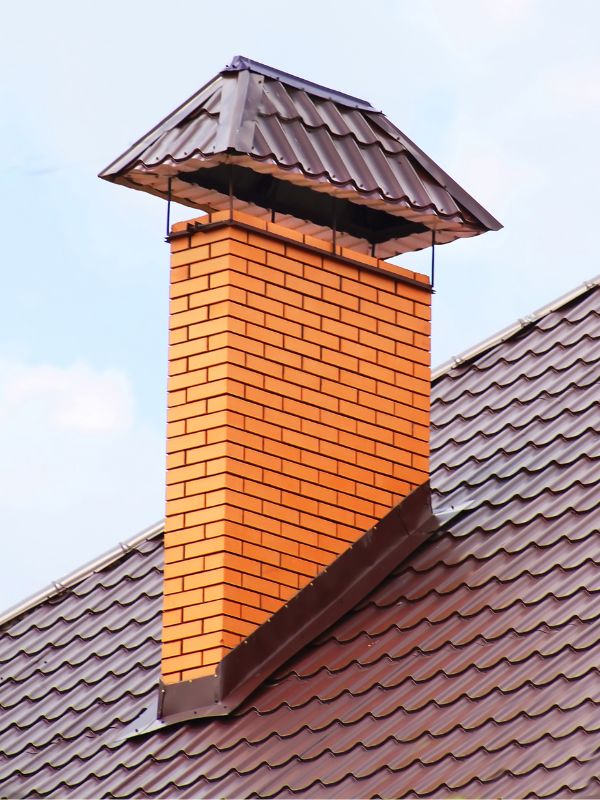
Standard on every pour
- Minimum two-inch overhang, all sides
- Center slope drains away from the flue
- Control joint for thermal expansion
- Flue collar sealed, not just troweled
What a custom chimney crown actually does
A properly formed chimney crown is the primary water barrier at the top of your masonry stack.
Stand on the sidewalk and look up at an older Lakewood home. You'll sometimes spot a chimney crown with hairline cracks running along the flue collar, the junction where the crown surface meets the liner. The edge sits flush with the brick face. No lip. No drip edge, the shaped overhang that breaks water tension so runoff can't track back down the masonry.
After a hard hail event or a deep freeze, that flush edge sends water straight down the chimney's face. The staining shows up inside first: damp firebox walls, loose mortar in the firebox throat, water spots on the smoke shelf.
AR Chimney Pros installs custom concrete chimney crowns formed on-site to the actual dimensions of your chimney. Every crown includes a minimum two-inch overhang, a center slope that drains toward the edges rather than pooling around the flue, and a control joint to manage seasonal thermal expansion. Those aren't upgrades. They're standard on every pour.
Why Lakewood and Jefferson County chimneys need this
Colorado's temperature swings do more structural work on a chimney crown than almost anything else.
- 2 inch
- Minimum overhang on every crown
- 300+
- Freeze-thaw cycles per year on the Front Range
- 2 visits
- Pour, then a return once cured for sealant
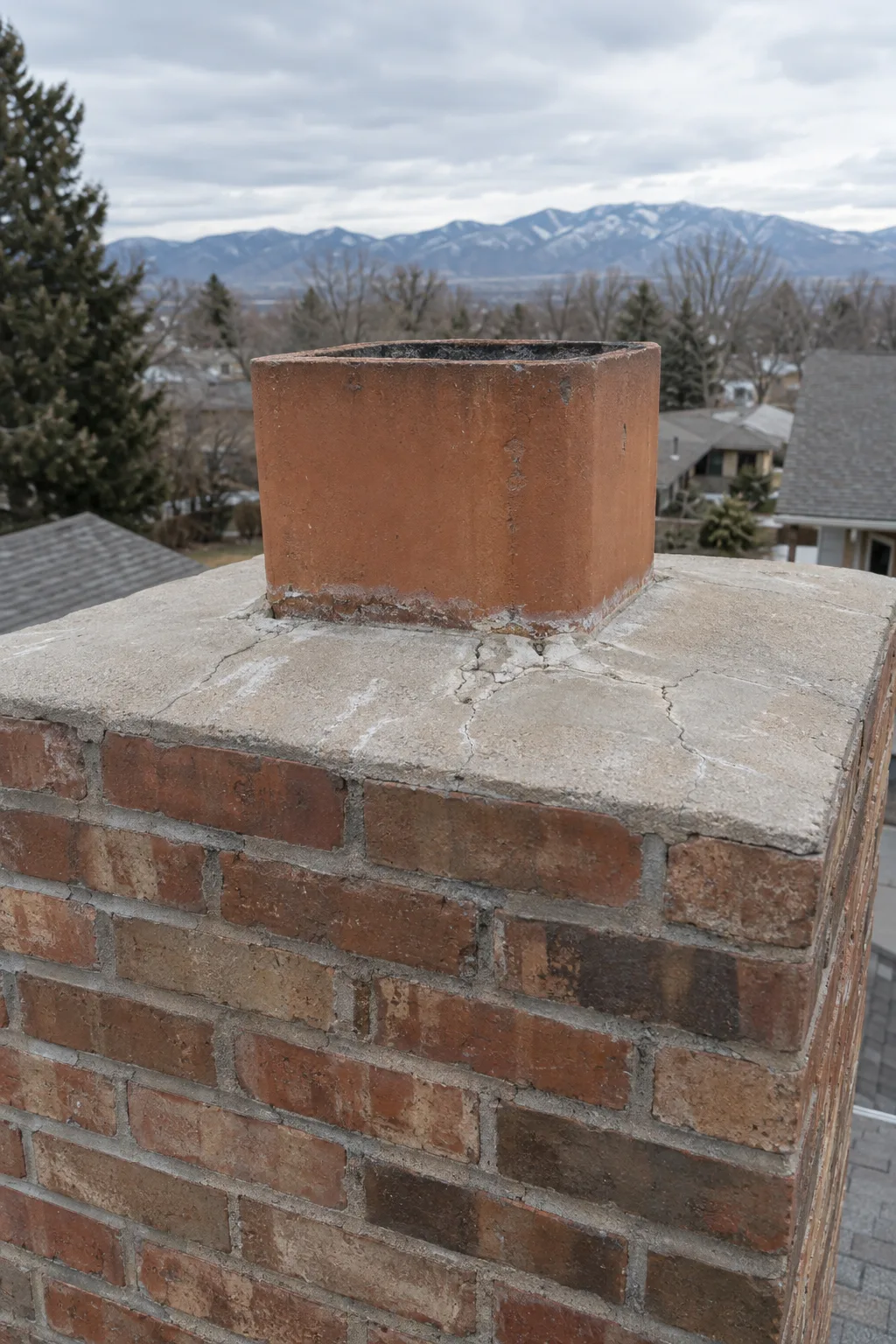
Our crew dispatches from 12640 W Cedar Dr here in Lakewood, so Jefferson County calls are first on the route. That proximity matters because we see the same chimney stock repeatedly. A large portion of the ranch-style and split-level homes in Lakewood's older subdivisions, particularly those built between the late 1950s and early 1980s, were fitted with thin mortar wash crowns. These aren't true concrete crowns. They're a thin mortar layer troweled over the chimney top, often with no overhang past the masonry edge.
Colorado averages more than 300 freeze-thaw cycles per year at Front Range elevations. Each cycle pushes a little more water into hairline cracks. That mortar wash degrades fast. By the time a homeowner notices it, the masonry below has already absorbed several seasons of direct runoff.
Here's what homeowners often don't realize about chimney crowns: slope angle matters as much as material. A flat crown, even a concrete one, holds standing water against the flue collar. That's the weakest seam in the system. Our center slope, the upward pitch toward the flue that ensures water drains outward, eliminates that pooling point entirely.
What I saw on a Green Mountain crown job last fall
One call changed how I explain the difference between a mortar wash and a real crown.
I'm Marcus, one of the masonry leads at AR Chimney Pros. Last October, a homeowner in Green Mountain called about a damp smell coming from the fireplace. They'd been running it all the previous winter without issue. The smell started in late September, right after the first hard freeze of the season.
When I got up on the roof, the crown looked intact from the ground. At eye level, I could see the cracking immediately. The flue collar, the junction between the crown surface and the clay liner, had opened up. The gap was about three-sixteenths of an inch wide. Not dramatic. But enough.
The crown had zero overhang. The outer edge was flush with the chimney's face brick. Every rain event from the past five years had run directly down the front of that stack. The brick face showed a white mineral residue, efflorescence, running from the crown line down about two feet.
We stripped the old mortar wash, formed the new crown in place using a custom-built frame sized to that chimney's exact dimensions, and poured a freeze-rated concrete mix. The new crown had a two-inch overhang, a drip edge at the outer lip, and a control joint, a planned break built into the crown body to absorb thermal expansion, cut into each long side.
The homeowner called back in March. Dry firebox. No smell. No new staining on the brick.
That job stuck with me because the original crown wasn't visibly failing from the street. You had to be on the roof to see how water had been entering every single season. That's the crown category most worth catching early, not collapsed, just quietly letting water in.
Marcus, masonry lead, Lakewood dispatch
Mortar wash crown versus custom-formed crown
A spec by spec look at what separates a quick trowel finish from a crown built to last.
| Spec | Mortar wash crown | AR Chimney Pros custom crown |
|---|---|---|
| Overhang past masonry edge | 0 to half inch, often flush | Minimum 2 inches |
| Center slope | Flat or reverse pitch | Built-in slope draining toward edges |
| Drip edge | None | Shaped lip on outer overhang |
| Control joint | None | Pre-formed joint on each long side |
| Flue collar seal | Mortar only, no flex | Sealed seam with flex allowance |
| Concrete mix design | Standard or mortar wash | Freeze-thaw rated for Colorado elevation |
| Formed on-site | No, trowel finish | Yes, custom frame to actual dimensions |
Does the crown need to match our chimney's shape?
Yes, and that's exactly why we form every crown on-site.
Chimney tops in the Denver Metro area aren't uniform. Single-flue chimneys, double-flue chimneys, rectangular stacks, tapered stacks, each requires a different crown footprint. A pre-cast form built to a standard size won't match.
When a crown doesn't fit the chimney it sits on, two things happen. First, the center slope, which should pitch upward from the outer edges toward the flue, runs in the wrong direction. Second, the overhang depth varies around the perimeter, leaving some sides with less coverage than others.
On a chimney with a non-standard footprint, that inconsistency can funnel water toward the most vulnerable side of the stack. Usually the south or west face, which takes the most direct sun and dries out fastest, becoming the most porous side over time.
We size the form to the chimney, not the other way around. The overhang is consistent on all four sides. The slope is engineered to drain outward regardless of the stack's shape. Control joint placement accounts for where expansion pressure is likely to concentrate based on the chimney's orientation on the roof.
Our standards on every crown installation
Every crown we pour meets the same set of standards, no shortcuts based on job size.
- Minimum 2 inch overhangPast the outer masonry edge on all sides.
- Drip edge at the outer lipBreaks surface tension so water drops clear of the brick face.
- Center slope built into the pourWater moves outward, not toward the flue collar.
- Control joint on each long sideAbsorbs freeze-thaw expansion without cracking the crown body.
- Flue collar sealed at the liner junctionThe most common water intrusion point on any chimney.
- Freeze-rated concrete mix designSelected for Front Range elevation and thermal cycling.
- Custom form built on-siteSized to your chimney's exact footprint, not a standard template. Three coats of waterproof sealant applied after cure, not one.
How the installation process works
Three clear phases, and you'll know what's happening at each one.
-
1
Chimney top assessment
We measure the masonry footprint, check the flue liner condition at the collar, and document the existing crown's state. If old mortar wash is present, we remove it fully. We clear to clean masonry before any form is set.
We also check the chimney's orientation, which face gets the most afternoon sun, which side faces prevailing weather. In Lakewood and the western Denver suburbs, that's typically the south and west faces. We note this when planning slope direction and overhang priority.
-
2
Form building and pour
We build a custom wooden form around the chimney top accounting for the overhang dimension, the center slope pitch and the drip edge profile. Once the form is set and level-checked, we pour the freeze-rated concrete mix.
The flue collar is formed and sealed during this phase, using a flexible compound that accommodates the liner's seasonal movement. Control joints are cut or formed into each long side before the concrete sets, the detail most homeowners never see but the reason custom-formed crowns outlast generic pours under Colorado conditions.
-
3
Cure check and waterproof seal
We don't seal a crown the same day it's poured. Concrete needs adequate cure time before a waterproof coating is applied. We schedule the seal coat return based on weather and temperature.
The sealant is rated for masonry exposed to freeze-thaw cycling. We apply it in multiple coats and confirm full coverage at the drip edge and flue collar, the two points where coverage gaps cause failures.
Areas we serve
AR Chimney Pros serves chimney crown installation across the western Denver Metro and beyond.
We cover Lakewood, Denver, Wheat Ridge, Arvada, Englewood, Littleton, Edgewater, Morrison, Golden, Sheridan, Glendale, Westminster, Aurora, Thornton, Highlands Ranch, Centennial, Broomfield, Boulder, Evergreen and Conifer. Our W Cedar Dr location in Lakewood puts Jefferson County neighborhoods on the fastest route.
- Lakewood
- Denver
- Wheat Ridge
- Arvada
- Englewood
- Littleton
- Edgewater
- Morrison
- Golden
- Sheridan
- Glendale
- Westminster
- Aurora
- Thornton
- Highlands Ranch
- Centennial
- Broomfield
- Boulder
- Evergreen
- Conifer
Related services
Once the crown is handled, these are the next things homeowners ask about for the rest of the chimney top and fireplace.
Frequently asked questions
Crown installation questions we answer most often on the phone.
How much does a custom concrete chimney crown installation cost in Lakewood?
Pricing for chimney crown installation varies based on your chimney's footprint and current crown condition. Call 720-608-7668 for a quote specific to your chimney.
Why does the overhang depth matter? Can't any concrete crown do the job?
A crown with less than two inches of overhang lets water run directly down the masonry face. Without a drip edge at the outer lip, surface tension pulls that runoff back into the brick joints below the crown line. Colorado's 300-plus annual freeze-thaw cycles turn that slow intrusion into accelerating mortar loss. A two-inch overhang with a shaped drip edge breaks that water path entirely.
How long does installation take from assessment to finished seal coat?
The pour itself typically takes one visit. The seal coat requires a separate return after the concrete has cured. Total project timeline runs two visits, spaced by cure time. Weather and temperature affect cure scheduling, particularly during late fall in the Denver Metro area. Your technician will confirm the return date before leaving after the pour.
Can a new crown be poured over the existing mortar wash?
The old mortar wash must be fully removed before any new pour. Pouring over deteriorated material transfers the base's instability into the new crown. Our crew strips back to clean masonry before the custom form is built. Skipping that step is the primary reason generic crown repairs fail within a season or two.
What makes a custom-formed crown last longer than a pre-cast option?
Every crown we form is sized to your chimney's exact footprint, not a standard mold. That means consistent overhang depth on all four sides, a center slope engineered for your stack's orientation, and control joints placed where thermal expansion pressure concentrates. Pre-cast options can't account for non-standard chimney shapes, which leaves some sides under-protected and prone to early cracking.
Is a crown installation the right fix, or do I need flashing repair too?
Crown installation addresses water entry at the chimney top. Flashing addresses water entry at the roof-line junction. Many chimneys need both. During the assessment, our crew checks the flashing condition alongside the crown. If both are failing, we document it clearly so you can prioritize repairs in the right sequence, crown first, since it protects everything below it.
See flashing repairMore questions about your system? Read the full FAQ.
Get your crown installed before freeze season
One well-formed crown protects the flue collar, the masonry face, and the interior firebox from a full season of Colorado weather.
AR Chimney Pros is located in Lakewood and serves Jefferson County and the broader Denver Metro directly. Call us at 720-608-7668 or email info@archimneypros.com to schedule your crown assessment. Tell us your address and we'll confirm route availability for your neighborhood.