
Creosote Removal and Glaze Removal in Lakewood, CO
Stage 3 creosote requires a chemical modifier. Standard cleaning does not remove it.
Cold-start wood fires common on Front Range winter mornings produce the exact conditions that build Stage 3 glaze. We assess the stage before any removal method is chosen.
Dispatching from 12640 W Cedar Dr, Unit 7, Lakewood.
Included every visit
- Stage assessment before any removal starts
- Chemical modifier on confirmed Stage 3 glaze
- Firebox containment set up before work begins
- Written record of the stage found and work done
Not all creosote is the same. Stage matters more than quantity
Creosote, the combustion byproduct that coats flue walls during wood fires, builds in three distinct stages. Each stage has a different consistency, fire risk and removal method.
A homeowner can get a cleaning done, feel confident the flue is clear, and still have Stage 3 glazed creosote lining the liner walls six weeks before a chimney fire. That outcome happens when the stage isn't assessed before the work begins.
AR Chimney Pros assesses creosote stage as the first step of every creosote removal appointment in Lakewood. What we find determines what happens next.
Lakewood's cold starts build glaze faster than most homeowners expect
Jefferson County's winter mornings are one of the best environments for Stage 3 creosote formation.
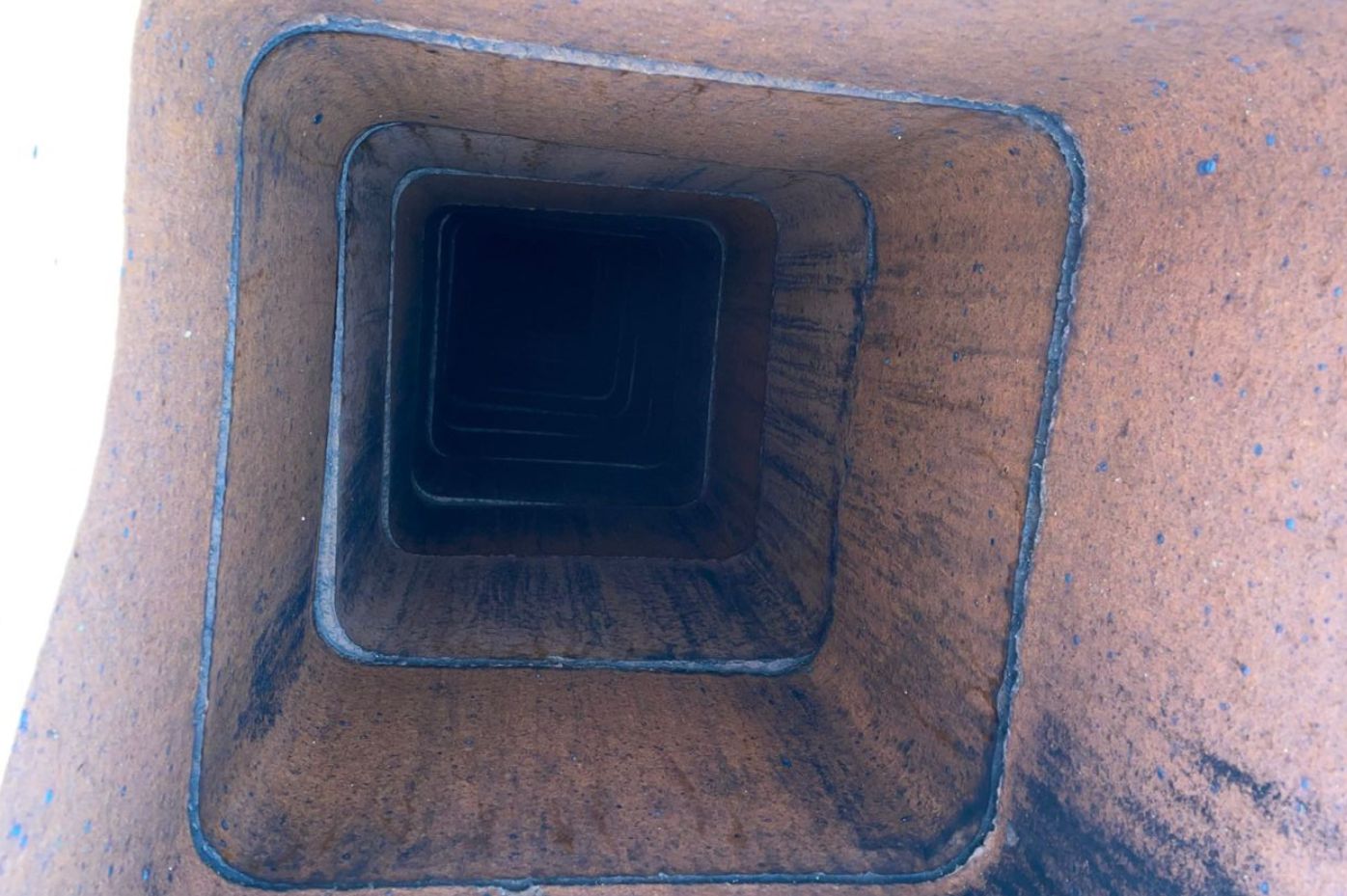
On a 15-degree January morning in Lakewood, the flue liner is the same temperature as the outdoor air. When warm smoke from a just-lit fire hits those cold terra cotta walls, it condenses fast. That condensate carries unburned hydrocarbons that stick to the liner surface.
Lakewood, Wheat Ridge, Arvada and Westminster sit in a corridor of Jefferson and Adams counties where a large share of homes were built in the 1970s and 1980s. Those homes typically have original terra cotta liners, the same type most vulnerable to Stage 3 glaze buildup from decades of cold-morning wood fires.
By the time we arrive for a creosote cleaning, we often find liners on these older homes carrying layered deposits from multiple seasons, not just one.
Three stages, and why Stage 3 needs its own process
Stage 3 glazed creosote cannot be brushed off. It has to be chemically converted first.
Light and flaky
Forms when combustion conditions are relatively good: seasoned wood, an established fire, a warm flue wall. It's easily removed with standard brushes during a routine cleaning.
One season of ideal burning habits keeps most flues at Stage 1. That's the goal.
Harder, tar-like
Forms when flue wall temperature drops below what's needed for clean combustion. Extended smoldering fires, unseasoned wood and cold starts push a flue toward Stage 2.
It still responds to mechanical removal, but it needs more aggressive brush work and a longer appointment.
Glazed creosote
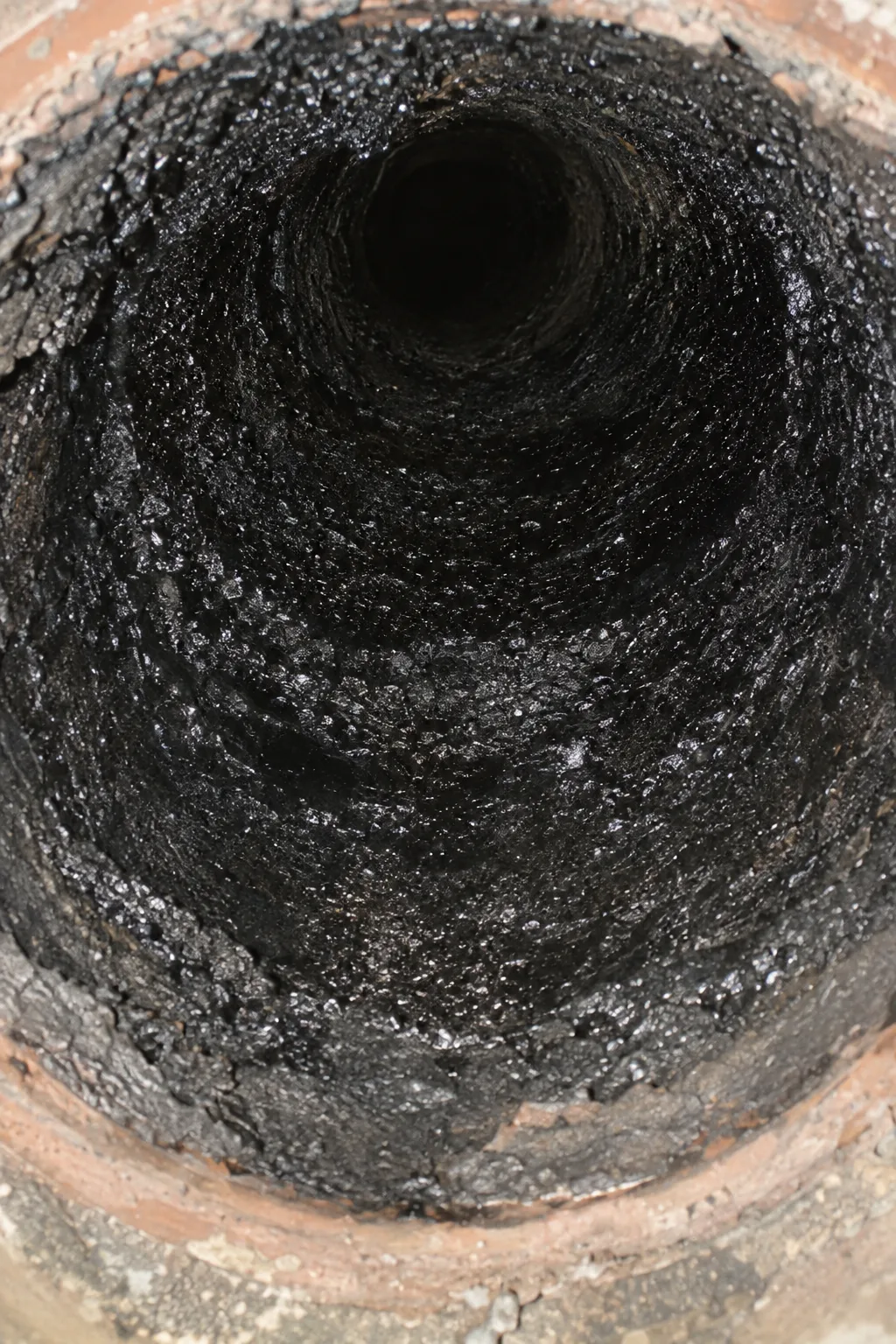
A dense, shiny, tar-like coating baked onto the liner surface. Highly flammable. It does not respond to standard brush removal.
Brushing it without chemical pre-treatment causes it to crack and fall in large sections, which can create a partial blockage lower in the flue.
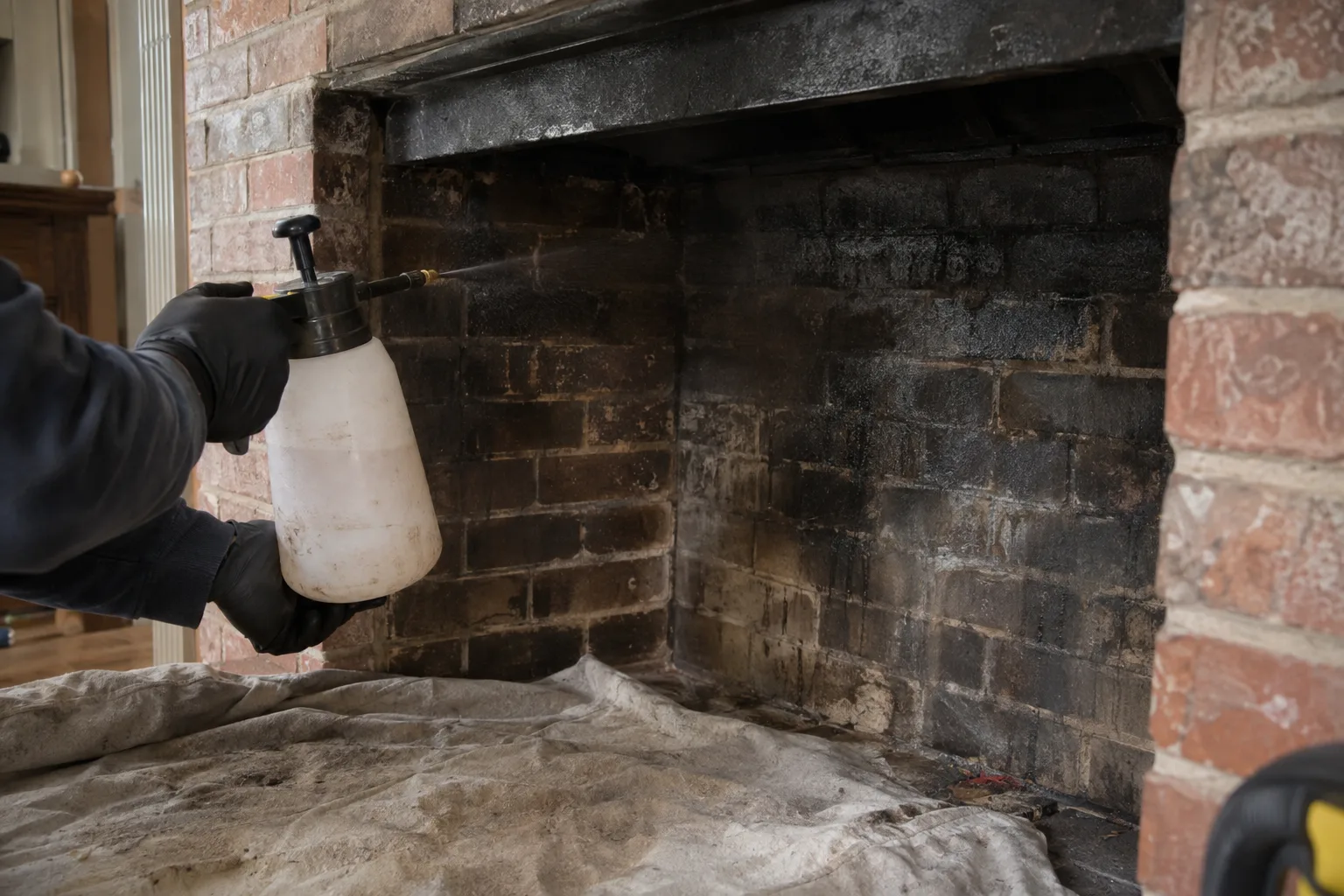
A chemical creosote modifier, a product applied directly to Stage 3 deposits, alters the chemical structure of the glaze. It makes the deposit brittle and brushable without generating large falling debris. We apply the modifier, allow the appropriate dwell time, then proceed with mechanical removal. Skipping the chemical step and going straight to brushing is how Stage 3 glaze creates new problems instead of solving old ones.
Glazed creosote burns at extremely high temperatures. A chimney fire involving heavy Stage 3 glaze can fracture a terra cotta liner or warp a stainless steel liner, a relining situation far larger than the chemical treatment that could have prevented it.
See chimney reliningWe can tell you the stage before the cleaning begins
A question we hear often: how do I know what stage my creosote is before you arrive? The honest answer is that you probably can't know for certain on your own.
Stage 3 glazed creosote can look like a thick, shiny interior coating. Stage 2 looks similar but feels different under a brush. The visual difference needs a practiced eye and the right lighting inside the flue.
What you can notice from the living room:
- A strong tar or asphalt smell from the firebox when the fireplace isn't in use
- Sticky residue visible around the damper area
- Smoke that seems to linger longer than usual
Any of these are worth a call. We stage-assess at the appointment and use the findings to decide whether chemical modifier treatment is needed before mechanical removal begins. Creosote stage assessment is part of every creosote cleaning we perform in Lakewood, no separate charge to diagnose what stage you're dealing with.
Our standards for heavy creosote buildup removal
Chemical-first removal is not optional on confirmed Stage 3 jobs. It's the standard, regardless of crew or location.
- Stage assessment before any removal beginsWe identify Stage 1, 2 or 3 before selecting the method.
- Chemical modifier applied to confirmed Stage 3 depositsFull dwell time is observed before mechanical work starts.
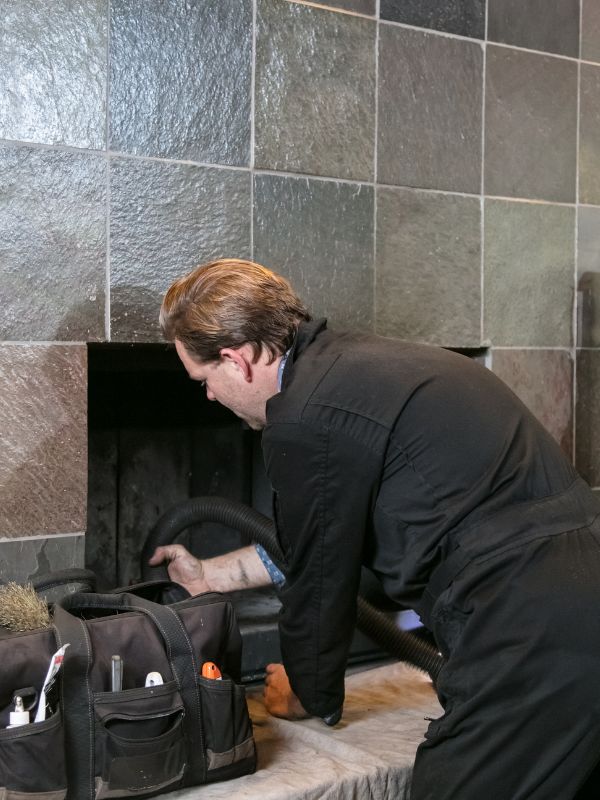
- Firebox containment before any debris fallsDrop cloths go down before brushing begins.
- Full mechanical clearance after modifier treatmentWe don't leave a partial removal.
- Post-removal visual inspection of the linerConfirms clearance and checks for damage caused by prior ignition.
- Documented stage findingYou get a written record of what was found and what was done.
Stage 3 creosote removal in the Denver area requires a different process than routine sweeping. We approach it accordingly.
Assess, treat, remove, verify
The sequence below is how every creosote removal appointment runs, including Stage 3 glaze.
-
1
Diagnostics
We inspect before anything comes off the wall.
A camera or light inspection documents the stage and distribution of deposits. We confirm the liner type, terra cotta, cast-in-place, or stainless steel, since it affects modifier application. Any existing liner damage is noted. All findings are shared with you before work begins.
-
2
Implementation
Stage 1 and Stage 2 jobs move directly to mechanical removal.
Brush selection matches liner diameter and deposit density. For Stage 3 glaze, we apply the chemical modifier to all affected surfaces, allow full dwell time, then run mechanical removal. Debris clears cleanly instead of breaking off in sections. A secondary pass covers any residual deposit found during interim inspection.
-
3
Post-service testing
We verify the flue is clear before we leave.
A final camera or light inspection confirms clearance along the full length. We check the firebox, smoke chamber and damper for debris, and review draft performance. If liner damage from a prior ignition event turns up, we document it and explain options, which may include relining or a post-fire inspection.
See post-fire inspection
Related cleaning services
If glaze turns up during one of these visits, we fold stage assessment straight into it.

Neighborhoods we serve for creosote and glaze removal
AR Chimney Pros covers the full Greater Denver Metro for creosote removal appointments.
We serve Lakewood, Wheat Ridge, Arvada, Westminster, Denver, Englewood, Littleton, Golden, Morrison, Edgewater, Thornton, Aurora, Commerce City, Northglenn, Broomfield, Highlands Ranch, Centennial, Boulder, Evergreen, Conifer and dozens of surrounding communities. Our office is at 12640 W Cedar Dr, Unit 7 in Lakewood. Scheduling covers the full Jefferson County and Adams County corridor plus the broader metro area.
- Lakewood
- Wheat Ridge
- Arvada
- Westminster
- Denver
- Englewood
- Littleton
- Golden
- Morrison
- Edgewater
- Thornton
- Aurora
- Highlands Ranch
Frequently asked questions
Creosote and glaze questions we answer most often on the phone.
How much does Stage 3 creosote removal cost compared to a standard cleaning?
Stage 3 glazed creosote removal costs more than a routine cleaning. Chemical modifier application adds time and materials to the appointment. The exact difference depends on deposit thickness and liner length. Skipping treatment on confirmed Stage 3 glaze risks a chimney fire that can fracture the liner, and a relining job costs significantly more than the modifier treatment.
Can glazed creosote be brushed out without the chemical step?
No. Brushing Stage 3 glaze without chemical pre-treatment causes it to crack and fall in large sections, and those sections can block the lower flue. AR Chimney Pros applies a chemical creosote modifier first, waits the full dwell time, then proceeds with mechanical removal.
How long does a Stage 3 creosote removal appointment take?
Stage 3 jobs take longer than standard cleanings, mainly because modifier dwell time must be observed before brushing starts. Stage 1 and Stage 2 jobs move directly to mechanical removal and finish faster. Total appointment length depends on deposit coverage and liner length. You'll know which stage applies before work begins.
Is creosote stage assessment included, or is it a separate charge?
Stage assessment is included with every creosote removal appointment, no separate diagnostic fee. Crew members assess the flue before selecting a removal method, which determines whether Stage 1 brushing, Stage 2 aggressive clearing, or Stage 3 chemical modifier treatment is required.
What signs at home suggest I might already have Stage 3 creosote?
Three warning signs point toward heavy glaze buildup. A tar or asphalt smell from the firebox when it isn't running is the strongest indicator. Sticky residue near the damper is another. Smoke that lingers unusually long inside the firebox suggests restricted airflow from thick deposits.
What happens if Stage 3 glaze caused liner damage before I scheduled service?
Liner damage from a prior creosote fire is documented during post-removal inspection. If fractures or warping are found, we explain the damage and available options, which may include chimney relining or a post-fire inspection. No repair work is added without your approval after the findings are reviewed with you.
See chimney reliningMore questions about your system? Read the full FAQ.
Get your creosote stage assessed in Lakewood
AR Chimney Pros handles Stage 1 through Stage 3 creosote removal, including chemical glaze treatment, across Lakewood and the Greater Denver Metro.
Our team performs chemical modifier application and mechanical clearing in-house, not subcontracted out. Call 720-608-7668 or email info@archimneypros.com to schedule. Tell us your last cleaning date and we'll get you on the calendar.