
A Corbeled Smoke Chamber Acts Like a Funnel With Steps Cut Into It
Turbulence and carbon buildup on each ledge slow draft and raise carbon monoxide risk at Denver's altitude.
Smoke chamber repair and parging in Lakewood, CO, so gas moves up the flue instead of pooling on brick ledges.
Dispatching from 12640 W Cedar Dr, Unit 7, Lakewood.
What parging fixes
- Corbeled ledges filled to a smooth incline
- Creosote pockets in ledge corners removed
- Faster draft after the fire is lit
- Before and after inspection photos provided
Six symptoms trace back to one structure
Open a row to see what is happening inside the chimney and which part is causing it.
Water stain on the ceiling near the chimney
Points to the flashing, the metal seal where the chimney meets the roofline. Once that seal fails, water tracks down the chase and shows up as a ceiling stain nowhere near the chimney itself.
See leak repairSmoke rolls back into the room after lighting
Points to the smoke chamber. Stair stepped brick ledges slow the initial column of hot gas, so cold air from above wins the pressure battle until the fire builds enough heat to overpower it. Parging the chamber smooth removes the pockets that cause the delay.
This is the repair on this pageA glaze inside the flue that a brush will not touch
Points to the flue liner. Slow burning fires leave a tar like glaze that hardens past what a standard brush removes, and it usually forms downstream of the same turbulence a corbeled chamber creates.
See creosote removalRust colored streaks on the damper
Points to the damper, the horizontal plate just above the firebox. Staining there usually means moisture is reaching the smoke shelf before it ever gets to the ledges above, worth ruling out before any parging begins.
See leak inspectionA persistent odor near the hearth in summer
Points to the cleanout, the small door near the base of the chimney. Trapped creosote there releases a stronger smell in humid weather, independent of what is happening higher up in the chamber.
See chimney cleaningHairline cracks in the firebox brick
Points to the firebox itself. Repeated heat cycling over many winters opens joints in the firebrick, a separate repair from the chamber above but often found during the same inspection.
See full chimney repairJefferson County's older housing stock makes this a common find
AR Chimney Pros dispatches from our Lakewood office and reaches homes across the West Colfax corridor.
Lakewood, Edgewater, and Wheat Ridge all fall within our primary Jefferson County service footprint. A significant portion of homes in these neighborhoods were built between the 1950s and 1980s. Corbeled smoke chamber construction, where brick courses project inward in stair steps rather than a smooth incline, was standard practice in that era.
Denver's elevation adds a layer of complexity. At 5,280 feet and above, the pressure difference that drives chimney draft is smaller than at sea level. A smooth chamber isn't just a code preference here, it's a functional requirement. Turbulence inside a corbeled chamber has a more pronounced effect on draft performance at altitude. A fireplace in the Front Range that smokes mildly may need a different solution than the same fireplace at a lower elevation.
- 5,280 ft
- Elevation at our Lakewood dispatch
- 4 ledges
- Typical corbel steps in an older chamber
- 24 to 72 hrs
- Until a post cure confirmation visit
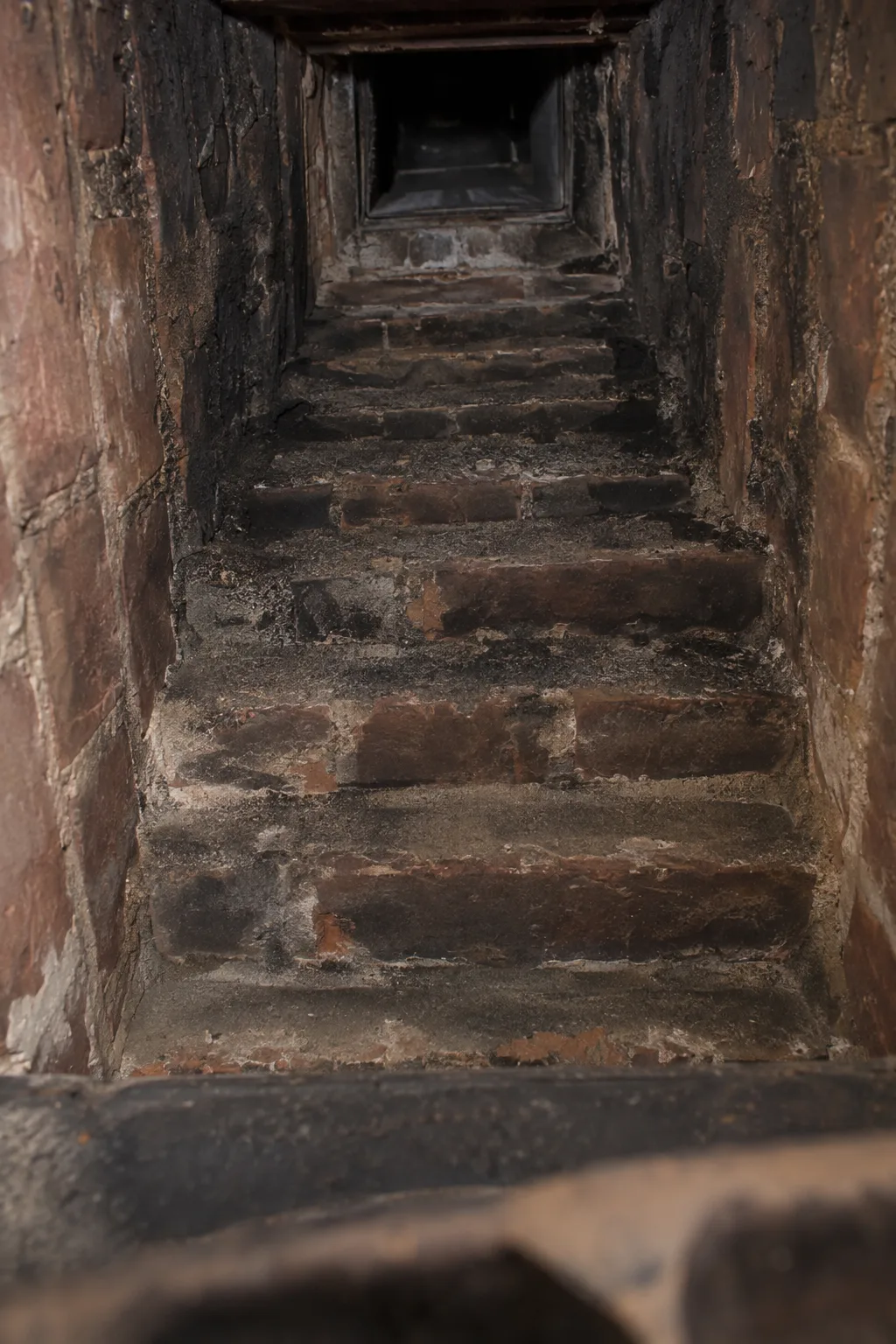
What the repair actually changes
A before and after description of the same chamber.
A corbeled chamber has four exposed brick ledges with creosote packed into every corner, and a stair stepped surface that slows the initial column of hot gas. Cold air from above wins the pressure battle until the fire builds enough heat to overpower it, which is why many of these fireplaces smoke for the first several minutes and then clear on their own.
A flashlight inspection through the throat confirms the smoke shelf is clear and the damper is functional, which rules out those parts and points squarely at the ledges themselves as the obstruction.
Before
- Four ledge corners collecting creosote
- Irregular, stepped surface along the full chamber
- Turbulent gas path and a sluggish draft below 200°F
- Smoke pushes into the room for the first several minutes
After
- A continuous smooth surface from throat to flue entry
- No corners left for gas to pool or cool
- A shorter warm up period before draft establishes
- Documented with inspection imagery at handoff
On a typical Lakewood chamber, a fire lit three days after the refractory cures pulls draft immediately instead of smoking for the first ten minutes.
How we handle the refractory material question
Standard mortar is not rated for the thermal cycling a firebox puts it through every time you light a fire.
We use a pumpable, heat rated refractory mortar built to bond to irregular, corbeled brickwork and hold through hundreds of heat cycles.
The pumpable formulation reaches and fills corners and ledges that a hand troweled application would miss, which matters most on a stair stepped chamber where every ledge needs full infill, not a thin skim coat.
After application, we document the finished surface with inspection imagery so you can see the completed profile, not just a verbal confirmation that the job is done.
That record matters in Lakewood, where many older homes are changing hands and buyers want a repair record they can show a home inspector.
Every repair meets NFPA 211 specifications
We confirm the smooth surface standard before we leave the job, not after an invoice goes out.
Call 720-608-7668- Refractory mortar specification Pumpable, heat rated castable rated for direct flame contact and long term thermal cycling.
- Surface preparation Smoke shelf cleared, loose debris removed, chamber photographed before application begins.
- Application method Pumpable delivery to reach corbeled ledges and irregular masonry profiles, not hand trowel only.
- Coverage confirmation Continuous smooth surface from fireplace throat to flue liner entry, verified by technician inspection.
- Compliance standard NFPA 211 smooth surface requirement for repaired smoke chambers.
- Documentation Before and after inspection imagery provided to the homeowner. Three coats where ledge depth requires it, not a single skim application over a deep corbel.
The repair runs in three phases
Diagnostics, application, and a post cure confirmation, in that order every time.
-
1
Diagnosing the chamber condition
We look before anything gets applied.
A flashlight inspection through the fireplace throat checks the smoke shelf condition, the corbel profile, any existing creosote buildup in ledge corners, and the condition of the throat itself. A damaged or undersized throat, the narrow opening controlling gas flow into the chamber, can affect draft even after parging. We document what we find before any work starts.
-
2
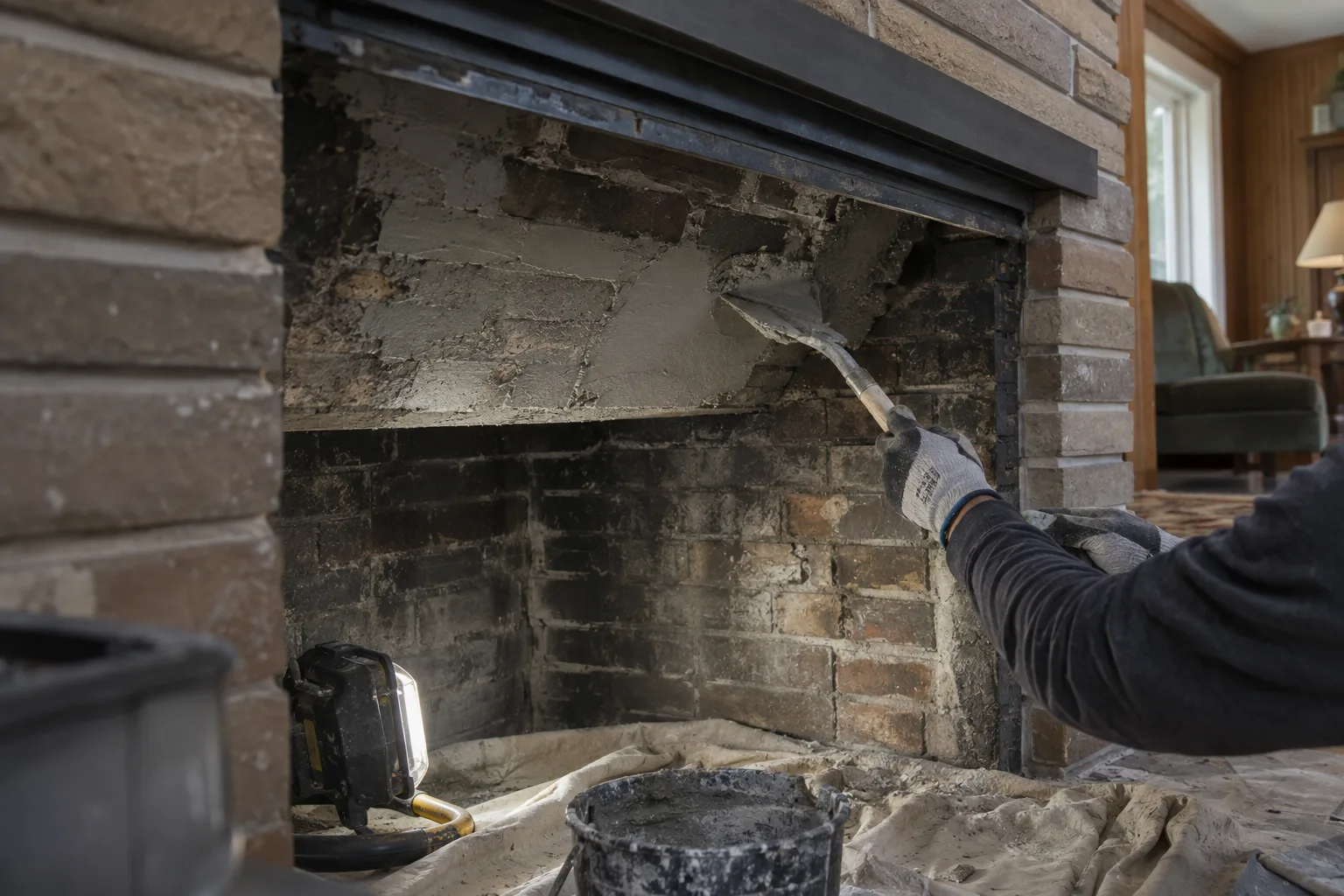
Applying the refractory parge coat
Corbeled ledges get full infill, not a surface coat.
The smoke shelf is cleared and any loose refractory material on the chamber walls is removed. Then the pumpable refractory mortar is applied in passes, working from the throat upward to the flue liner entry. We're building a smooth incline, not painting over steps. Curing time depends on ambient temperature, so we factor in outdoor temps when scheduling work from October through March.
-
3
Confirming the finished surface
The job doesn't close until the surface is checked.
After the refractory reaches initial set, the technician inspects the surface profile against a smooth surface benchmark. Inspection images are captured at this stage. The homeowner receives documentation of the completed chamber interior before we close the job.
See draft analysis
Areas we serve
AR Chimney Pros reaches smoke chamber repair customers across Jefferson County and the broader Denver Metro.
We serve Lakewood, Edgewater, Wheat Ridge, Denver, Arvada, Golden, Morrison, Englewood, Littleton, Sheridan, and surrounding communities. Our dispatch runs from West Cedar Drive in Lakewood, central to the Jefferson County corridor.
Frequently asked questions
Smoke chamber repair questions we answer most often on the phone.
How much does smoke chamber parging cost in Lakewood, CO?
Call 720-608-7668 for a quote specific to your chamber's corbel depth and surface area. Cost varies based on the number of refractory passes needed. Deeper corbeled ledges require more material and application time than shallow step profiles.
Can I use my fireplace while the refractory mortar cures?
No, the chamber must stay cold until the refractory reaches full cure. Cure time depends on ambient temperature, and Colorado winters slow the process significantly between October and March. We factor outdoor temps into scheduling and give you a specific hold off window before the job closes.
What's different about parging a corbeled chamber versus a standard repair?
Corbeled chambers require full ledge infill, not a surface skim coat. Each stepped brick course must be built out to a smooth incline. We use a pumpable refractory formulation that reaches corners hand troweling misses. Standard mortar repairs leave ledge gaps that allow creosote to repack within one season.
How long does a smoke chamber repair take from inspection to finished documentation?
Most smoke chamber repairs complete in one visit, with documentation provided the same day. Inspection runs about 30 minutes. Application time depends on corbel depth. We schedule a post cure confirmation before the job officially closes, typically a follow up 24 to 72 hours after the initial visit.
My fireplace only smokes for the first few minutes, does that still mean the chamber needs parging?
Yes. A slow draft during startup is the primary corbeled chamber symptom. Cold air from above wins the pressure battle until heat builds. The corbeled ledges slow that warm up cycle. Once the chamber is parged smooth, the draft establishes faster and that startup smoke back stops.
Will the parging hold if my chimney had a previous creosote fire?
If a chimney fire occurred, a post fire inspection is required before parging. Thermal shock from a chimney fire can compromise existing masonry that a parge coat would otherwise bond to. Call 720-608-7668 to discuss your specific situation before scheduling.
See post fire inspectionMore questions about your system? Read the full FAQ.
Related chimney repairs
If the smoke chamber inspection turns up a related issue, these are the next steps.
Schedule smoke chamber repair in Lakewood, CO
A smooth smoke chamber starts with a diagnostic visit, and we document everything from the first inspection.
Contact AR Chimney Pros at 720-608-7668 or email info@archimneypros.com to schedule your smoke chamber inspection. Our team covers Lakewood and the full Denver Metro area. You can also reach us through the contact form.