
Stone Veneer Fireplace Remodel & Refacing in Lakewood, CO
Modified thinset and metal lath backing keep the new facing stable through temperature cycles.
Fireplace refacing updates a dated brick surround with stone veneer or tile, without touching the firebox itself. The substrate gets assessed first, before any material is chosen.
Dispatching from 12640 W Cedar Dr, Unit 7, Lakewood.
What stays, what changes
- Firebox and firebrick lining left untouched
- Surround and sometimes the hearth get a new face
- Substrate checked before any stone is ordered
- Modified thinset used throughout, not standard tile adhesive
Refacing replaces the face, not the firebox
Fireplace refacing replaces the visual face of your fireplace without touching the firebox itself.
It's a focused project. The firebox, the combustion chamber lined with firebrick, stays completely intact. What changes is the fireplace surround (the framing structure around the firebox opening) and sometimes the hearth. That's where stone veneer, tile, or other facing material goes on top of an existing brick or concrete substrate.
Here's what most homeowners don't realize: the new facing is only as stable as what's underneath it. A stone veneer fireplace installed over a loose, unlevel, or crumbling brick surround will crack, shift, or separate. The stone isn't the problem. The base underneath wasn't ready for it.
That's why we start every fireplace remodel by assessing what's already there, not by picking finish materials. This matters most for homes in the Lakewood area built before 1985, where the original surround may be structurally fine, or may not be. The only way to know is to look first.
1970s brick is the most common starting point here
Lakewood's established neighborhoods have more dated brick fireplace surrounds per block than almost anywhere in the metro.
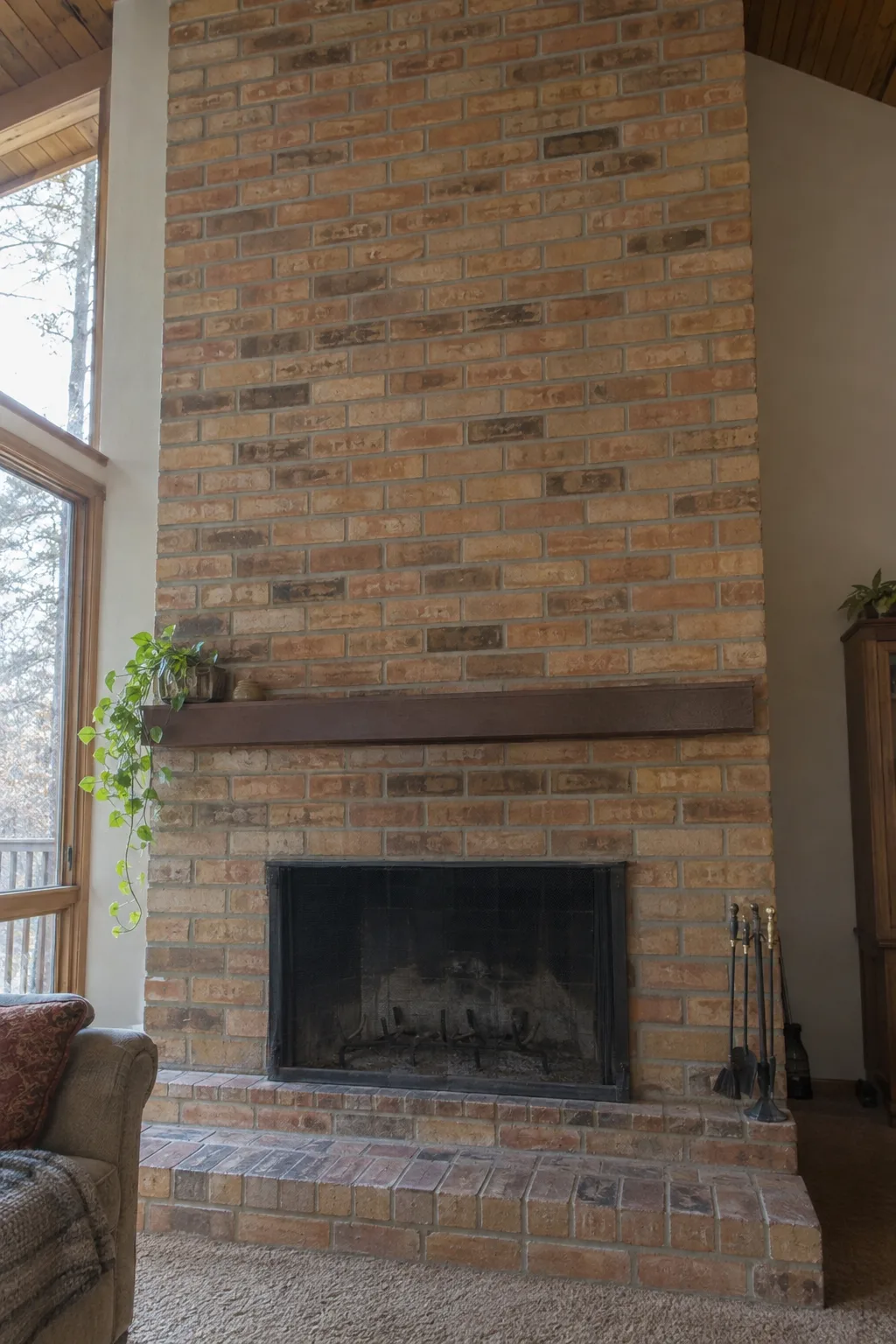
Our office sits off W Cedar Dr, within a short drive of Applewood, Eiber, and the South Lakewood corridor. These neighborhoods were built heavily in the 1960s through early 1980s. The characteristic orange tan brick surround, often running floor to ceiling, was the standard builder finish of that era.
Those surrounds were built to last, and most of them have. But the aesthetic is a common remodel trigger. The brick itself may be sound while the mortar joints have softened, or the surface may have enough variation in plane that a direct stone veneer application needs real prep work first.
Colorado's climate adds another layer. Lakewood sits at roughly 5,500 feet. Nights can drop into the teens in January while a fire inside the firebox pushes the surround face to 200 degrees or more. That daily thermal swing is what stone veneer and modified thinset mortar have to handle for decades, not just one season.
- 5,500 ft
- Elevation in Lakewood
- 200°F+
- Surround face temperature during a burn
- 1,120
- Homes built before 1985 across our primary service area
What the surround is telling you
Every layer behind the finish has a job. When one of them fails, it shows up as one of these signs.
Veneer feels loose or hollow when tapped Thinset bond coat
A hollow sound under the stone usually means the bonding layer never fully gripped, often from standard tile adhesive used instead of fireplace-rated modified thinset. The fix is to pull the affected panels, re-prep the surface and rebond with the correct material.
See full chimney repairCracks keep appearing along the grout lines Stone veneer facing
Grout joints sized for appearance rather than movement will split as the surround heats and cools. Repointing with joints sized for thermal expansion stops the cracks from coming back.
See mortar repointingNew facing looks wavy across the surface Metal lath
A visible wave usually means the plane variation in the original brick wasn't corrected before facing went on. A metal lath overlay gives the mortar bed a true, even surface to build from.
See spalling brick repairWhite chalky residue is bleeding through the stone Brick substrate
That residue is mineral salt moving through from the brick behind the facing, a sign of moisture in the substrate that needs addressing before any new material goes back on.
See efflorescence removalWill the veneer crack once the fireplace gets hot?
The right bonding material handles thermal movement. That's exactly what modified thinset is formulated for.
This is the most common question we hear from homeowners who've seen stone or tile work crack on a fireplace surround. The direct answer: thermal cracking near a firebox is almost always a bonding material problem, not a stone problem.
Standard tile mortar isn't rated for fireplace applications. Modified thinset mortar, a polymer enhanced cement formulation, is. It's designed to move with the thermal expansion and contraction that happens every time a fire runs for a few hours and then dies down overnight. Grout joints (the filled gaps between individual stone or tile pieces) are sized to accommodate that movement too. Too narrow, and the joint fails. Properly sized and sealed, it flexes without cracking.
When the substrate prep is solid and the bonding material is correct, a stone veneer surround handles Colorado's heating season without issue.
Our standards for every surround remodel
Every refacing project follows the same substrate first process. Material quality and installation method don't vary by job size.
Call 720-608-7668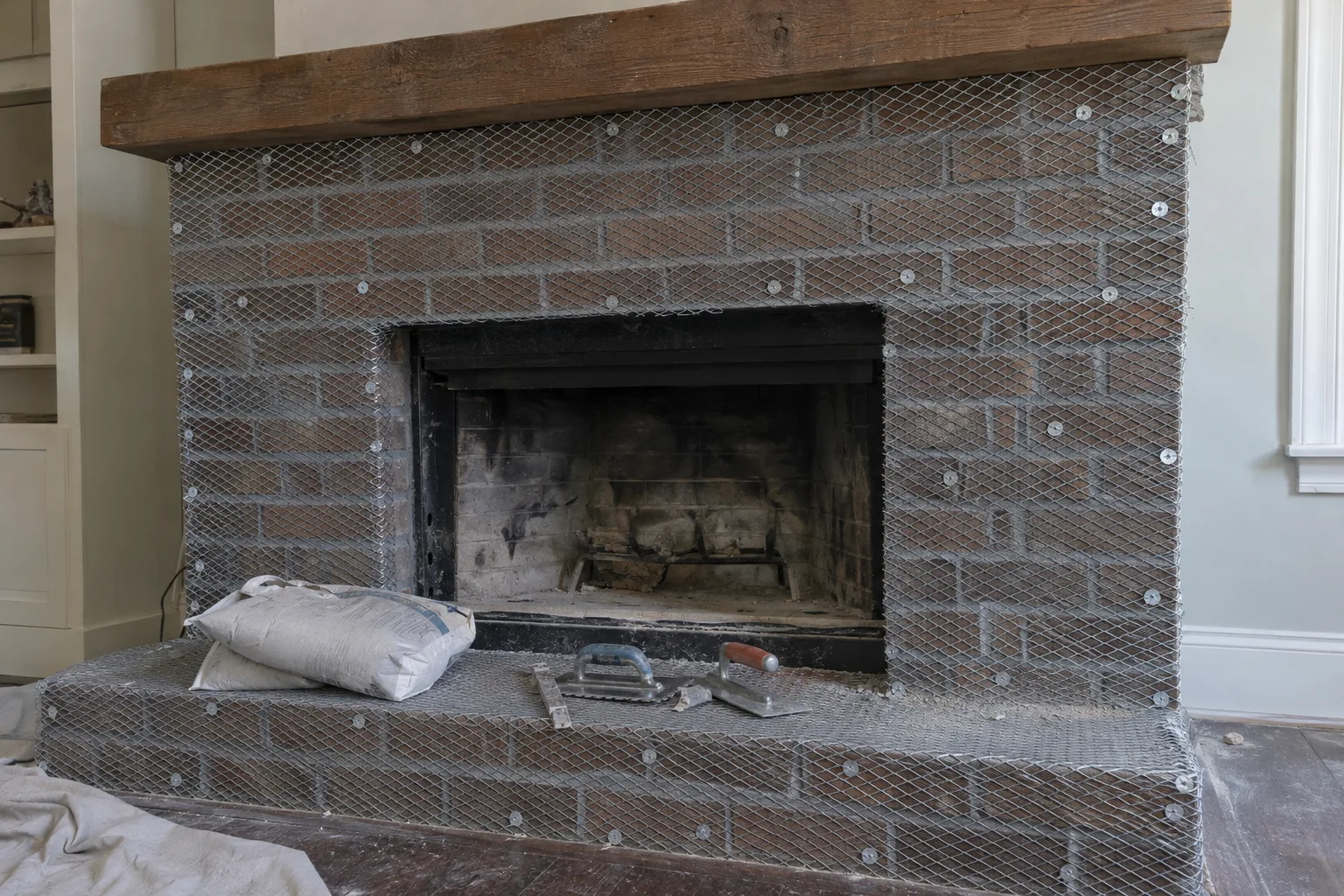
- Substrate assessment first Before any material is selected or ordered.
- Mortar joint inspection and repointing Done where needed, prior to facing installation.
- Metal lath on surfaces that need it Installed on surfaces not suitable for direct bonding.
- Modified thinset mortar throughout No standard tile adhesive near a firebox.
- Grout joints sized for thermal movement Not just sized for appearance.
- Hearth refacing in the same project The non-combustible floor surface in front of the firebox, addressed when needed.
- Correct clearances maintained All facing material kept within required clearances from the firebox opening per manufacturer and code requirements.
- Clean site throughout Surround work generates dust and debris, and we contain it.
How a refacing project runs start to finish
Three phases, in the same order, on every surround we reface.
-
1
Substrate diagnostics
We start on site, not with a material quote. The existing brick surround gets a full hands-on review: mortar joint condition, surface plane measurement, bond surface quality, and any prior repairs that need attention. If metal lath is needed, we mark it at this stage. Material selection follows assessment, not the other way around.
-
2
Refacing installation
Substrate prep comes first: repointing open mortar joints, installing metal lath where required, and establishing a clean bonding surface. Modified thinset mortar is mixed and applied per manufacturer specs for fireplace applications. Stone veneer panels or tile are set with grout joints sized for thermal expansion. Hearth refacing is installed in the same phase when it's part of the project scope.
-
3
Post-installation confirmation
Once the mortar and grout have cured, we walk the surround face and check for soft spots, uneven sections, or grout joint gaps that need attention. We also confirm all clearances from the firebox opening are correct before the fireplace is used. You don't light a fire until we've confirmed the installation is solid.
Related installations
A surround remodel often pairs with work above the roofline or inside the firebox.
Neighborhoods we serve
AR Chimney Pros serves homeowners across the greater Denver metro for fireplace refacing and surround remodel work.
We schedule jobs in Lakewood, Applewood, Eiber, Wheat Ridge, Arvada, Golden, Edgewater, Englewood, Littleton, Denver, Aurora, Westminster, Thornton, Highlands Ranch, and surrounding communities. If your neighborhood isn't listed, call and ask. Our crews cover a wide range across the Front Range.
Frequently asked questions
Refacing questions we answer most often on the phone.
How much does fireplace refacing with stone veneer cost in Lakewood?
Cost varies by project scope and the condition of your existing surround. Call 720-608-7668 for an on-site assessment and a project-specific quote based on your surround's current condition.
Does my existing brick surround have to be perfect before stone veneer can go on?
No, the surround doesn't need to be perfect, but it must be structurally sound. Soft mortar joints, unlevel surfaces, and prior patch repairs all get addressed before any facing material is applied. Metal lath is installed over surfaces that won't support a direct bond. The substrate assessment determines exactly what prep your surround needs before stone is ordered.
How long does a fireplace refacing project take from first visit to finished installation?
Most surround remodels run across two to three visits: assessment, installation, and a post-cure confirmation walk. The assessment happens first, before any material is ordered. Installation timing depends on substrate prep requirements. Once mortar and grout have fully cured, we confirm the surround before the fireplace is used. Expect at least a few days between installation and final sign-off.
Won't the stone veneer just crack once the fireplace gets hot?
Cracking is a bonding material problem, not a stone problem. Standard tile mortar isn't rated for fireplace applications. Modified thinset mortar, formulated for thermal expansion cycles, is what we use on every surround. Grout joints are also sized to flex with temperature swings. When properly set and jointed, stone veneer handles Colorado's heating season without cracking.
Why assess the substrate before picking a material? Can't I just choose the stone I want first?
Material selection follows substrate condition because different facing materials carry different weight loads and thermal characteristics. Choosing stone before assessing the base is what causes premature failure. A surround needing metal lath backing has different material constraints than one suitable for direct bonding. Getting the assessment done first means the facing material chosen will actually hold for decades, not just one season.
What's different about AR Chimney Pros' refacing process compared to a tile contractor or general remodeler?
A tile contractor applies facing material. We assess what the facing has to bond to first. Most refacing failures traced back to a surround remodel come from skipped substrate prep. Our process checks mortar joint integrity, surface plane, and prior repairs before anything is ordered or installed. Every project uses modified thinset and properly sized grout joints rated for fireplace thermal cycles.
More questions about your system? Read the full FAQ.
Ready to update your fireplace surround?
A substrate assessment is the right first step, and that's exactly where we start.
If you have a dated brick fireplace surround and want to understand what updating it with stone veneer or tile would involve, call AR Chimney Pros at 720-608-7668 or email info@archimneypros.com. We'll schedule an on-site assessment, evaluate what your existing surround needs, and walk you through material options that hold up to real Colorado winters.