
Emergency Chimney Services in Lakewood, CO
Assessment and first stage stabilization, completed in the same emergency visit.
Active water intrusion stopped, a displaced cap re-seated, and a written scope of findings delivered before the crew leaves.
Dispatching from 12640 W Cedar Dr, Unit 7, Lakewood.
What counts as an emergency
- Active water inside the firebox
- A cap that has shifted, cracked or blown off
- Mortar debris on the roof or in the gutters
- New water stains near the chimney chase
- A fire or electrical event while the chimney was in use
A real emergency is further damage waiting to happen
A chimney emergency is any situation where further use or delay could make the damage significantly worse.
These are real scenarios Lakewood homeowners face after a Front Range storm: water pooling or dripping in the firebox, a cap that's shifted or missing entirely, mortar debris turning up on the roof or in the gutters, interior stains near the chimney chase, or a chimney that was in use when a fire or electrical event happened.
When any of these happen, the right move is a same-visit assessment and stabilization, not a wait and see approach.
AR Chimney Pros dispatches from Lakewood, directly off West Cedar Drive in the I-70 and US-6 corridor. We reach Jefferson County, Denver, Wheat Ridge and Arvada quickly, without a long staging time from a remote location.
Lakewood's weather makes emergency calls a regular part of our season
The Front Range doesn't give much warning before severe weather arrives.
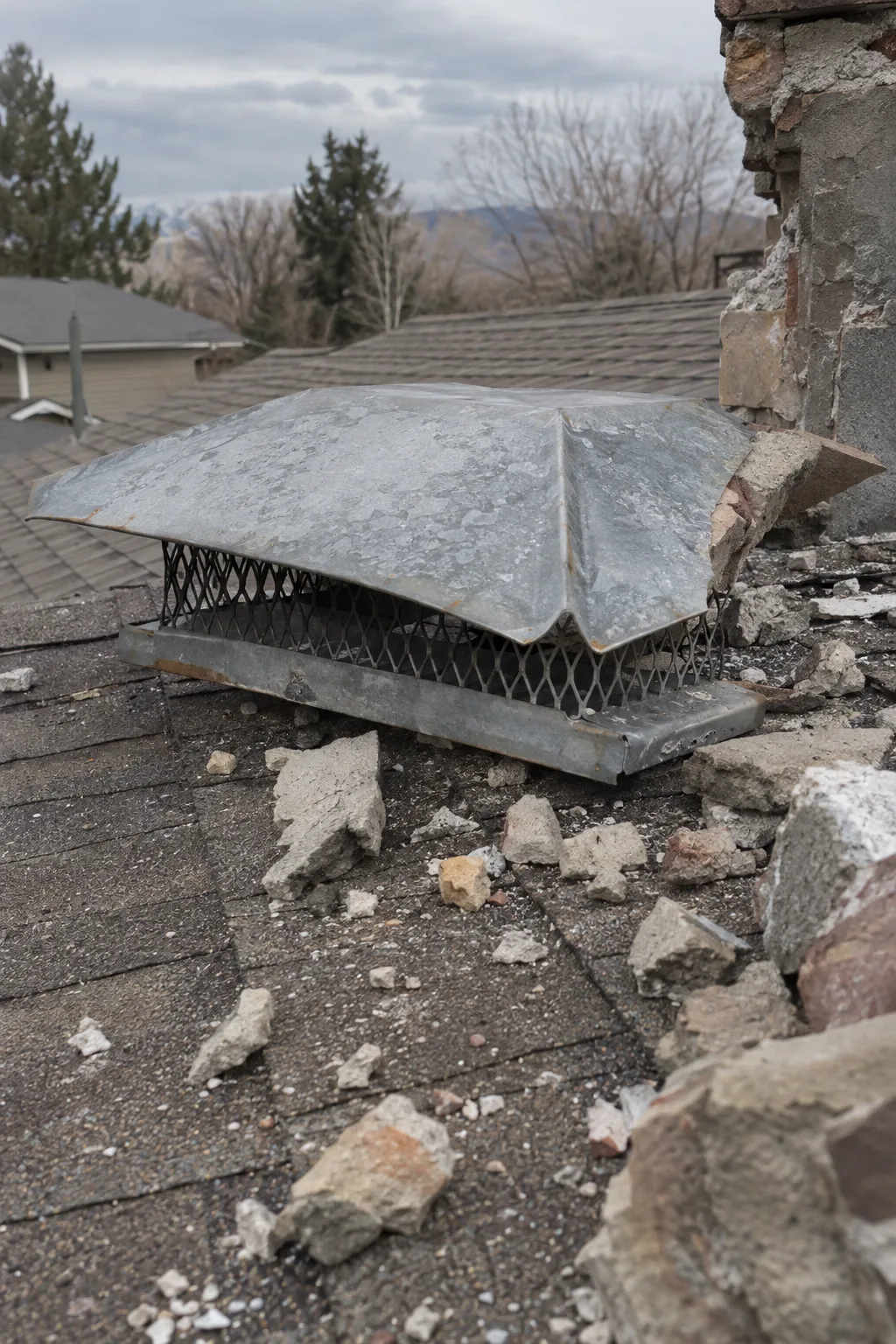
Here's what most homeowners don't realize about Colorado hail: it doesn't just damage the cap. A single hailstorm can fracture the crown, separate the counterflashing from the masonry and crack exposed mortar joints, all at once. Each of those is a separate entry point for water.
Lakewood sits at roughly 5,400 feet. That elevation means freeze and thaw cycles hit harder and faster than at lower elevations. A crack that opens in November can become a full crown displacement, a condition where the crown has cracked, shifted or partially separated from the flue tile, by February. What looked like surface damage in fall becomes a structural issue by winter.
The Chinook winds that accelerate through the I-70 mountain corridor add another layer. High sustained winds can produce cap displacement, where a cap is lifted, cracked or removed by wind impact, even on a crown that otherwise looked secure. The flue is then open to rain, debris and wildlife.
That local pattern shapes how we approach emergency calls across the Denver metro. We don't just address what's visible. We check what the visible damage suggests about what's below.
One storm can make three separate issues visible
A post storm call in Arvada showed exactly how layered chimney storm damage gets.
From the Lakewood crew
A homeowner in Arvada called after a mid summer hailstorm. She'd noticed the chimney cap in the yard, cap displacement is usually the first thing people spot because it's obvious. We got there and re-seated a temporary cap to stop the flue from being open to incoming weather. That took about fifteen minutes.
The impact that displaced the cap had also cracked the chimney crown along the back edge. The crack wasn't visible from the ground, you had to get on the roof and look at the rear face directly. The crown is the concrete or mortar cap that seals the top of the chimney stack, and cracking like this is one of the most common sources of active water intrusion, water entering the system at the time of inspection.
We found active water at two points: the cracked crown edge and a post storm flashing breach, a condition where high winds or hail separate the counterflashing from the masonry at the roof to chimney joint. Water was tracking down inside the chase wall.
We applied temporary crown sealant to the cracked edge and mechanically re-secured the lifted counterflashing. Both stopped the water entry that day. The written scope we delivered documented all three findings with photographs: the displaced cap, the crown crack with dimensions, and the flashing separation. That documentation went directly to her insurance carrier as part of her claim. She didn't have to go back to the roof with a phone camera trying to explain what happened.
Assessment, stabilization and written scope took about two and a half hours.
Your insurer may need documentation before repairs begin
Many insurers require a written, photographed damage assessment before approving storm related chimney repairs.
Every emergency visit from AR Chimney Pros produces insurance documentation, a written and photographic record of observed damage for submission to your carrier.
That record covers what components were inspected, what damage was observed, what was done on site during the emergency visit, and what follow-up repairs are recommended with approximate scope.
Lakewood and Denver metro homeowners sometimes lose coverage disputes because damage wasn't documented before a partial repair was attempted. The insurer needed the original condition on record. We produce that record at the first visit, before anything is permanently repaired. If you're unsure whether your claim will be covered, our documentation gives your adjuster something concrete to review.
Our standards for emergency chimney response
Every emergency call meets the same quality standards as our scheduled appointments.
Call 720-608-7668- Full visual inspection, every component Crown, cap, flashing, mortar joints, firebox and liner opening, all checked in one visit.
- Photographic documentation of every damage point Not just the presenting issue you called about.
- Structural stabilization before we leave Tarping, cap re-seating, temporary crown sealant or flashing re-securing, completed on site.
- Written scope produced at the visit Not sent days later.
- A clear line between what was addressed and what needs follow-up No pressure to approve same-day permanent repairs. Stabilization first, scheduling second.
- 20 dedicated field crew members So emergency dispatch doesn't pull technicians off scheduled work.
Documented findings, not a verbal summary. That's the standard.
How an emergency chimney visit works
Three stages, in the same order, on every emergency call: assess, stabilize, document.
-
1
Roof level diagnostic assessment
We start on the roof, before anything else.
Every accessible component gets a visual inspection: crown condition, cap seating, flashing attachment, exposed mortar joints and the flue opening. Inside, we check the firebox for active water intrusion and look at the smoke chamber above the damper for debris or soot displacement that might indicate flue impact.
For emergency inspections following a fire event, we check the liner opening for cracking or collapse before anything else proceeds.
-
2
On-site stabilization and interim repairs
Once we know the full scope, we stabilize.
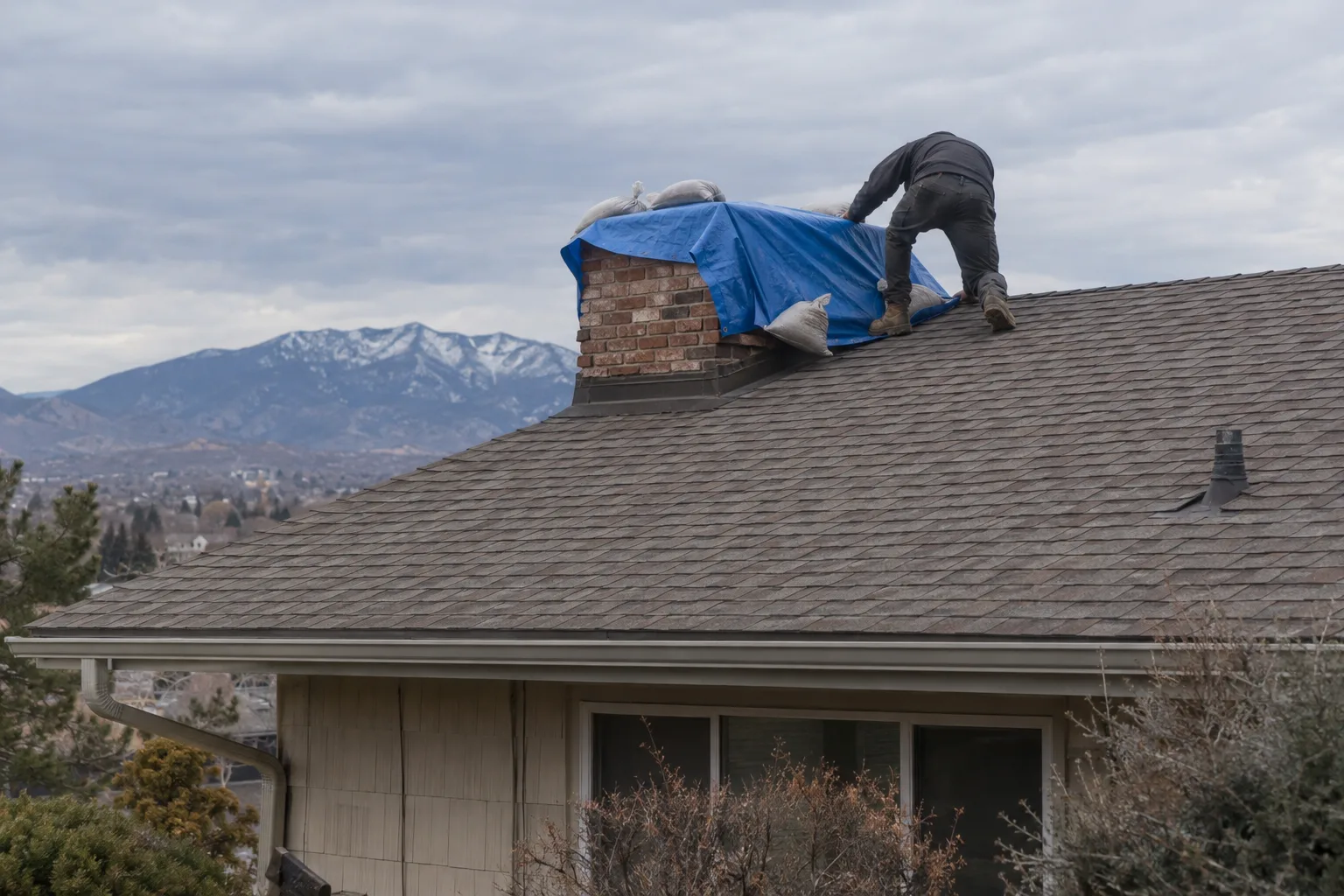
A displaced cap gets replaced or temporarily re-seated. Crown cracks get sealed with a flexible, weather rated compound built to hold through a freeze and thaw cycle. A flashing breach gets mechanically re-secured with the right sealant. If the opening is exposed and no cap is on the truck, we tarp and secure the flue top.
Stability first, permanent fix second.
-
3
Post-visit documentation and next steps
After stabilization, we walk through every finding with you.
You receive a written scope by the end of the visit. It identifies each damage point, what was done, and what the permanent repair requires. If your situation involves an insurance claim, that document is formatted to support your submission. We schedule the follow-up repair before leaving, so there's no gap between emergency service and permanent resolution.
See full chimney repair
Related repair services
Once the flue is stable, these are the next steps for a permanent fix.
Areas we serve for emergency chimney services
AR Chimney Pros serves the full Denver metro from our Lakewood location.
We cover Lakewood, Denver, Wheat Ridge, Arvada, Englewood, Littleton, Edgewater, Morrison, Golden, Sheridan, Glendale, Westminster, Aurora, Thornton, Highlands Ranch, Centennial, Broomfield, Louisville, Superior, Lafayette, Northglenn, Brighton, Parker, Castle Rock, Lone Tree, Greenwood Village and Boulder. We also serve Evergreen, Conifer, Idaho Springs, and surrounding mountain communities along the I-70 corridor.
Frequently asked questions
Emergency service questions we answer most often on the phone.
How much does an emergency chimney visit cost in Lakewood, CO?
Pricing for emergency chimney visits is not published. Call 720-608-7668 for current emergency visit rates. Every emergency call includes assessment, on-site stabilization, and a written scope, not a verbal summary delivered days later.
What actually happens during the emergency visit, and how long does it take?
The visit follows three stages: roof level diagnostic assessment, on-site stabilization, then written documentation. A typical emergency call takes roughly two to three hours from arrival to scope delivery. Stabilization is completed before the crew leaves, and you receive the written scope the same day.
Does the written scope from the emergency visit work for an insurance claim?
Yes. Every emergency visit produces a written and photographic damage record formatted to support a homeowner's insurance submission. It documents the original conditions before any permanent repair begins. Insurers frequently deny storm related claims when damage wasn't recorded before partial repairs. Documentation at the first visit protects your claim.
Can your crew handle both the assessment and the stabilization in one trip?
Assessment and first stage stabilization happen in the same visit. That is the standard approach, not an add-on. Temporary measures like crown sealing, cap re-seating and flashing re-securing are completed before the crew departs. Permanent repairs are scheduled separately, with no pressure to approve same-day permanent work.
What if the storm hit multiple components at once, can you address all of them together?
All accessible components get inspected in a single visit: crown, cap, flashing, mortar joints, firebox and liner opening. Stabilization addresses every active damage point found, not just the issue you called about. AR Chimney Pros operates 20 field crew members, so emergency dispatch doesn't pull technicians off scheduled jobs.
What's different about this emergency response compared to a standard repair appointment?
Standard repair appointments address planned work. Emergency visits prioritize stopping active damage, water intrusion, open flues, displaced flashing, in the same trip as the assessment. Crews dispatch from Lakewood directly off West Cedar Drive, reaching Jefferson County, Wheat Ridge and Arvada quickly. The written scope delivered at the visit is ready for insurance submission before any permanent repair is scheduled.
More questions about your system? Read the full FAQ.
Ready to schedule your emergency chimney assessment?
AR Chimney Pros delivers a same-visit assessment, stabilization and written scope on every emergency call.
Call us at 720-608-7668 or email info@archimneypros.com to reach our Lakewood dispatch directly. You can also use the contact form. Tell us your address, describe what you observed, and we'll get a crew scheduled. The written scope you receive at that visit covers everything your insurance carrier needs to start a claim.