
Fireplace Installation in Lakewood, CO
Adding a fireplace to a Lakewood home requires more than picking a unit off a shelf.
Jefferson County permit requirements and framing clearances get determined in the pre-install assessment, before any material is ordered.
Dispatching from 12640 W Cedar Dr, Unit 7, Lakewood.

The assessment confirms
- The venting path that fits the room
- Framing clearances to combustibles
- Fuel line or electrical access
- Jefferson County permit requirements
A fireplace installation starts with decisions, not a delivery truck
Four decisions determine whether an installation goes smoothly. Open each one to see what we check and where it sits in the system.
Venting path
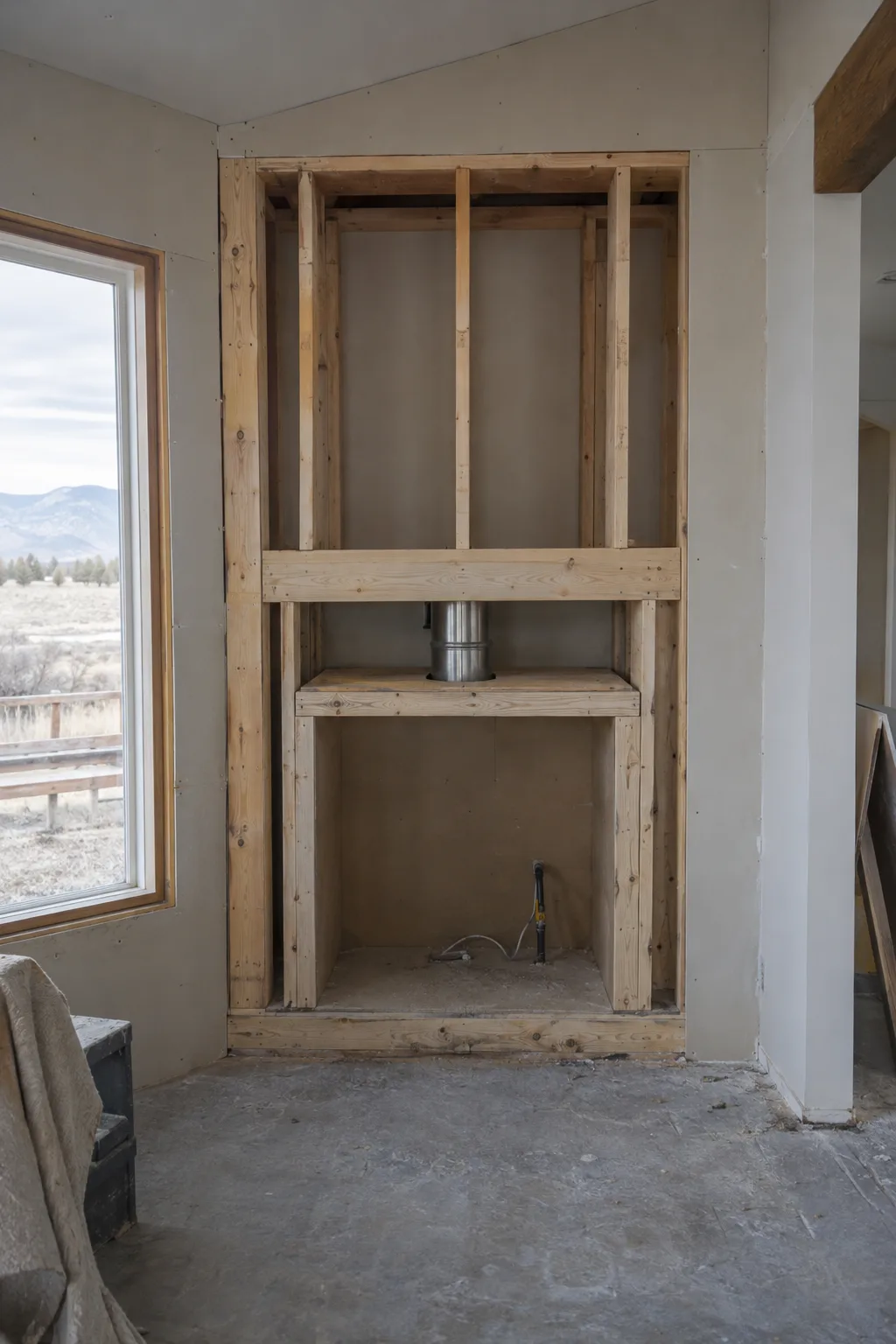
A direct vent unit terminates on an exterior wall through a coaxial pipe. A B-vent or wood-burning unit needs a full vertical flue liner instead. The assessment confirms which path the room allows.
Framing clearance
The firebox cavity needs a verified distance from combustible framing on every side. That number comes from the unit's listing, not a guess made on-site.
Fuel or electrical access
Gas units need a confirmed line route to the firebox. Electric units need a dedicated circuit. Either way, this gets mapped before the wall is opened.
Hearth extension
The non-combustible floor surface in front of the firebox opening has a minimum size set by the unit, not by the room's existing layout.
Lakewood's housing stock creates real scope variables
Homes in Lakewood's 80226, 80227 and 80228 zip codes present specific installation conditions worth knowing.
Jefferson County residential construction from the 1960s and 1970s often used framing layouts that were not designed with fireplace retrofits in mind. Interior walls in those homes may run parallel to roof joists, which limits vertical venting options. Homes built in the 1990s through early 2000s, common in neighborhoods along the West Alameda corridor and near Green Mountain, more often allow for a direct vent run through an exterior wall.
Here is what many Lakewood homeowners do not realize about local installs: the garage-attached ranch floor plan common in this part of Jefferson County often puts the room most homeowners want a fireplace in, the living room or family room, directly adjacent to the garage wall. That matters for venting clearances and termination placement. Knowing that going in saves time on-site.
What a pre-install assessment actually looks like
The scope walk is where the real decisions get made, before any commitment to materials or timeline.
Our team has been on pre-install assessments where the homeowner already had a unit in mind. That is fine. But the room has to cooperate.
From an assessment in Morse Park
The homeowner wanted a gas fireplace installed in a bonus room above the garage. The room looked workable on paper: exterior wall on two sides, gas already stubbed nearby. When we walked the space, we confirmed the exterior wall terminated into a roofline overhang with less than the required clearance for a direct vent fireplace termination. A direct vent fireplace is a sealed combustion unit that draws outside air and exhausts through a coaxial pipe, no traditional chimney needed. But the exhaust termination still has to clear the overhang by a specific distance per the manufacturer spec and Jefferson County code.
We shifted the termination point to a side wall with clear exposure. That changed the unit orientation slightly, which then required us to adjust the framing clearance layout and reposition the hearth extension. None of those changes were major. But every one of them would have caused a delay or a failed inspection if we had not caught them in the walk-through.
The pre-install assessment at AR Chimney Pros covers venting path options, framing clearance confirmation, fuel line or electrical access, permit requirements for the specific Jefferson County address, and the hearth extension spec. We do not hand over a materials list until that walk is done.
The Jefferson County permit process is manageable
Most fireplace installations in Lakewood require a Jefferson County building permit, and that is a straightforward process when it is planned for up front.
A Jefferson County building permit is required for structural and mechanical work including new fireplace installations.
The permit covers the framing modification, the venting installation, and the gas line connection if applicable. Inspections are scheduled at two points: rough-in and final.
We build the permit timeline into the project schedule from day one. The assessment gives us the information needed to submit an accurate permit application. No surprises after approval.
Fuel type and venting method shape everything else
Gas, wood and electric installations each follow a different path. The venting method determines most of what happens structurally.
Gas fireplace installation
The most common retrofit in Lakewood. A direct vent fireplace uses a coaxial pipe, air in, exhaust out, that terminates on an exterior wall. It does not need a vertical flue. A B-vent fireplace draws room air for combustion and exhausts through a vertical metal flue, which means it needs either an existing chimney or a new vertical chase.
Direct vent is the more common choice in retrofit situations because it does not require a new chase. But termination placement has to clear windows, doors and overhangs, exactly the detail the pre-install walk confirms.
Wood-burning fireplace installation
Requires a full vertical flue, either a masonry build or a factory-built metal fireplace with a listed chimney system. These are larger scope projects. In Lakewood, most retrofit wood-burning installs use a factory-built unit with a metal chimney run through a new exterior chase.
Framing clearances are tighter for wood-burning units than for gas.
Electric fireplace installation
No venting required. Installation is primarily framing and finish work. Electrical load and outlet placement are confirmed during the assessment.
These installs are fastest to complete and most flexible for room placement.
How we execute a fireplace installation
Every installation at AR Chimney Pros follows a confirmed sequence: assessment first, permit second, installation third.
-
1
Pre-install diagnostics
We walk the room and identify the venting path, framing clearance requirements, fuel source or electrical access, and hearth extension spec. For gas units, we confirm gas pressure and line sizing. We document the termination point and confirm clearance to combustibles before submitting for permit.
-
2
Installation
Framing modifications happen first, creating the firebox cavity and building the non-combustible surround. The venting system is installed and tested for seal integrity before the unit is set. The hearth extension is installed to meet the code requirement for the specific unit.
For gas installations, the gas line connection is completed and pressure tested as part of the install. We do not proceed to final inspection until that test passes.
-
3
Post-install testing
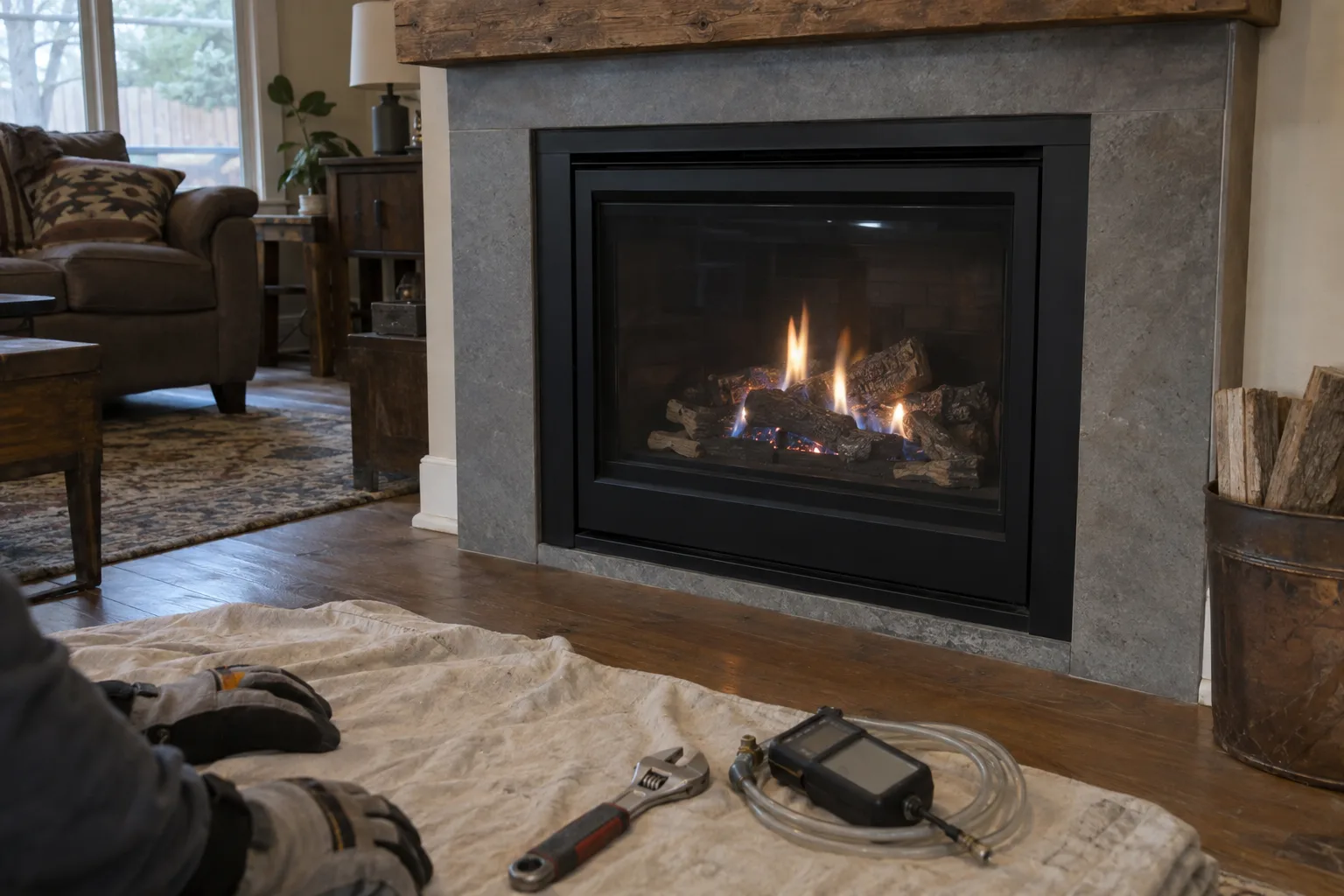
After installation, we run a full operational test. For gas units, we check ignition, burner operation and vent draw. For wood-burning installations, we confirm draft and smoke path before any fire is lit. We walk the homeowner through unit operation before we leave.
Areas we serve
AR Chimney Pros serves Lakewood and the surrounding Denver Metro from our office on West Cedar Drive.
We install fireplaces across Lakewood, Denver, Arvada, Wheat Ridge, Englewood, Littleton, Westminster, Thornton, Aurora, Golden and Highlands Ranch. Our crews work throughout Jefferson, Arapahoe, Adams and Boulder counties. Call us at 720-608-7668 to confirm availability in your area.
- Lakewood
- Denver
- Arvada
- Wheat Ridge
- Englewood
- Littleton
- Westminster
- Thornton
- Aurora
- Golden
- Highlands Ranch
Related installation services
Once the fireplace itself is set, these are the pieces that often come with it.
Frequently asked questions
Installation questions we answer most often on the phone.
How much does a fireplace installation cost in Lakewood, CO?
Fireplace installation costs vary based on fuel type, venting method and room conditions. Electric installs are the least expensive because no venting is required. Gas and wood-burning installations add framing, venting materials and permit costs. A pre-installation assessment gives you an accurate scope before any numbers are committed.
Does a new fireplace installation require a Jefferson County permit?
Yes. Jefferson County requires a building permit for new fireplace installations. The permit covers framing modifications, venting and gas line work. We build the permit timeline into the project schedule from day one. Skipping the permit creates problems at resale and with your homeowner's insurance.
What does the pre-installation assessment actually check?
Our assessment confirms the venting path, framing clearances, fuel source access and hearth extension requirements. It also identifies termination clearance issues before materials are ordered. That walk-through is what keeps the installation on schedule. No materials list is produced until the scope is fully confirmed.
How long does a fireplace installation take from assessment to finished work?
Most installations complete in one to three days once the permit is approved. The assessment itself takes one visit. Permit processing adds time depending on Jefferson County's current queue. The gas line connection is completed and pressure tested before final inspection is requested.
Can I pick my fireplace unit before the assessment, or do I have to wait?
You can have a unit in mind before we arrive, that is common. However, the assessment confirms whether the room supports that unit's venting and clearance requirements. Sometimes the termination point or orientation needs adjusting. Choosing the unit first is fine. Committing to purchase before the walk-through is where problems start.
What's different about AR Chimney Pros' installation process versus a supplier that also installs?
We scope the structural and venting conditions before any unit is selected or ordered. Suppliers often sell a unit first and troubleshoot the install later. Our pre-install assessment identifies framing conflicts, termination clearance issues and permit requirements upfront. That sequence prevents delays, failed inspections and mid-project scope changes.
More questions about your system? Read the full FAQ.
Start with the assessment, then schedule the install
The fastest path to a working fireplace is a confirmed scope walk before anything else is planned.
Call AR Chimney Pros at 720-608-7668 or email info@archimneypros.com to book a pre-installation assessment. Tell us the room, your fuel preference and your address. We'll confirm what's possible and build from there.