
Dryer Vent Cleaning That Covers The Whole Run
Lint is one of the most common causes of dryer fires, and it builds up where you cannot see it.
Dryer vent cleaning in Lakewood, CO and across the Denver metro, from the back of the dryer all the way out to the exterior hood.
Dispatching from 12640 W Cedar Dr, Unit 7, Lakewood.
Included every visit
- The full run cleaned, dryer to outside hood
- Exterior hood and flap cleared by hand
- Airflow checked with the dryer running
- Crushed or disconnected duct flagged for you
Dryer vent cleaning in Lakewood means the whole duct, not just the lint trap
The lint screen catches a share of what comes off your clothes. The rest travels into the duct and settles there.
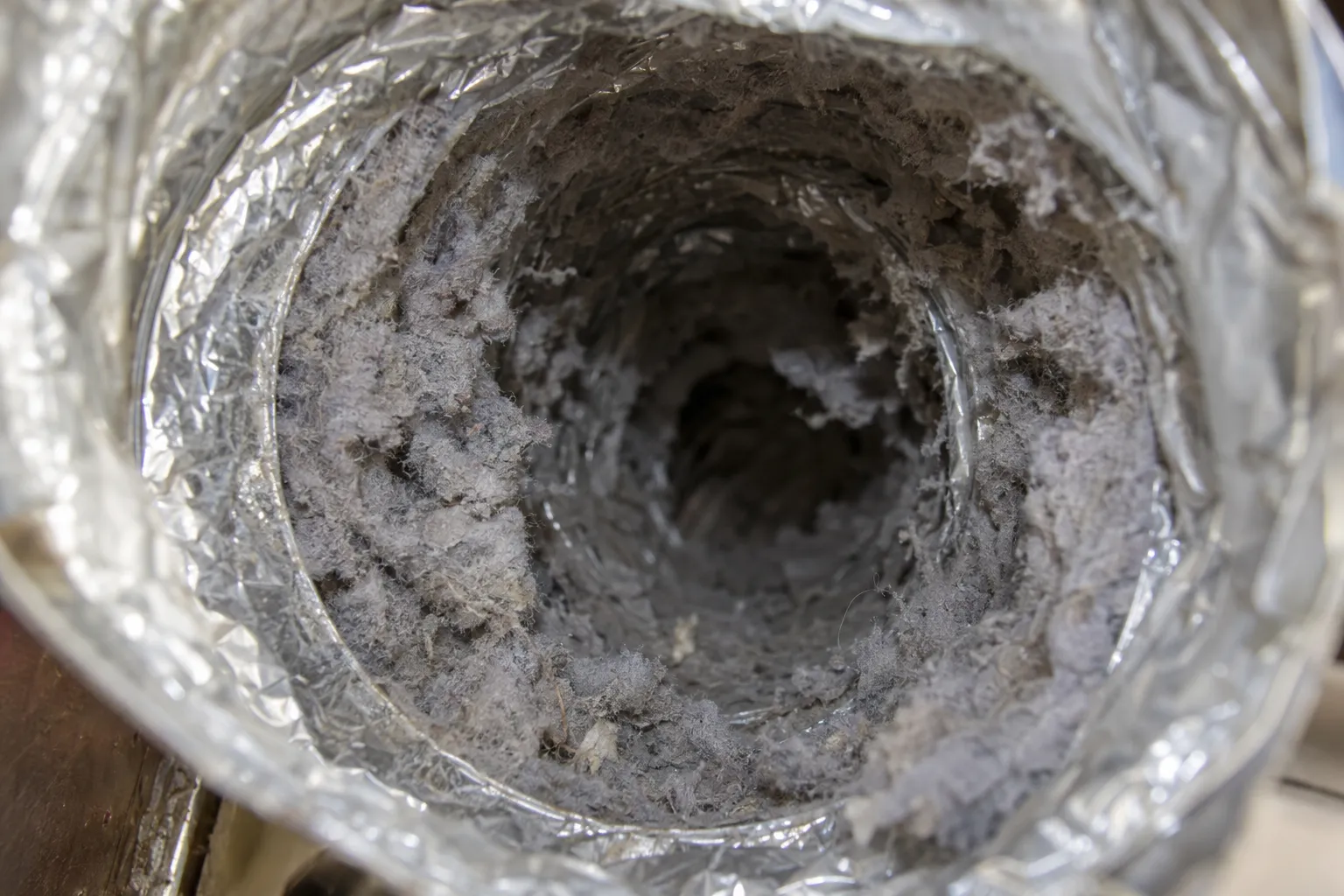
Lint is fine, dry and highly flammable, and a dryer pushes hot air through the same duct every cycle. As the lining of lint thickens, airflow drops, the dryer runs hotter and longer, and the heating element or motor works harder than it was built to. That combination is why lint is such a common cause of dryer fires in homes.
At AR Chimney Pros we treat the vent as one system: the transition hose behind the appliance, the duct hidden in the wall, floor or ceiling, and the hood where it exits the building. If any part of that path is blocked, the rest of the cleaning does not matter much.
Denver metro laundry rooms tend to sit far from the outside wall
Run length is the single biggest factor in how fast lint piles up.
In older Lakewood and Denver homes the dryer often sits in a basement or a tucked-away utility room, and the duct snakes a long way before it reaches daylight. In newer builds across Arvada, Westminster, Broomfield and the Front Range suburbs, the laundry is frequently on an upper floor with the vent running up and out through the roof. Both setups mean more feet of duct and more elbows, and every bend is a place lint grabs hold.
Colorado's dry air adds to it. Lint here is light and static-prone, so it clings to duct walls instead of blowing clear. Add winter, when the dryer runs more and cold outside air meets warm moist exhaust at the hood, and the end of the run can pack tight while the first few feet still look fine from behind the dryer.
Our crews dispatch from our Lakewood office at 12640 W Cedar Dr and from our Arvada office, so Jefferson County and north metro appointments stay local. Tell us where the dryer sits and where the hood comes out, and we can plan the visit before we arrive.
- Once a year
- Typical cleaning interval for most homes
- Full run
- Dryer connection to exterior hood
- Sun to Fri
- 8am to 5pm scheduling, closed Saturday
What we find inside Denver metro dryer vents
Two spots cause most of the trouble: the few feet directly behind the dryer and the hood where the duct exits the house.
Crushed foil behind the dryer
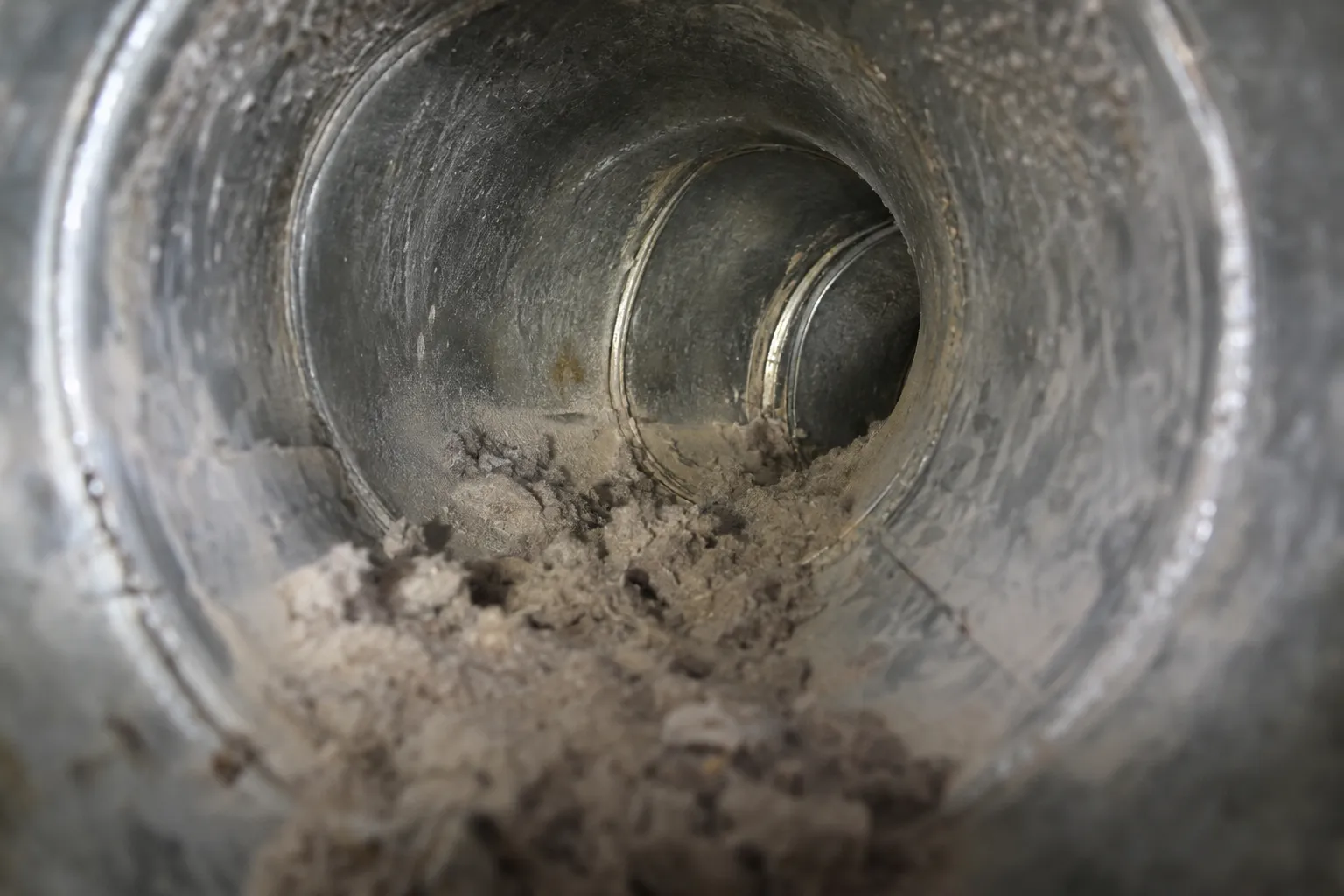
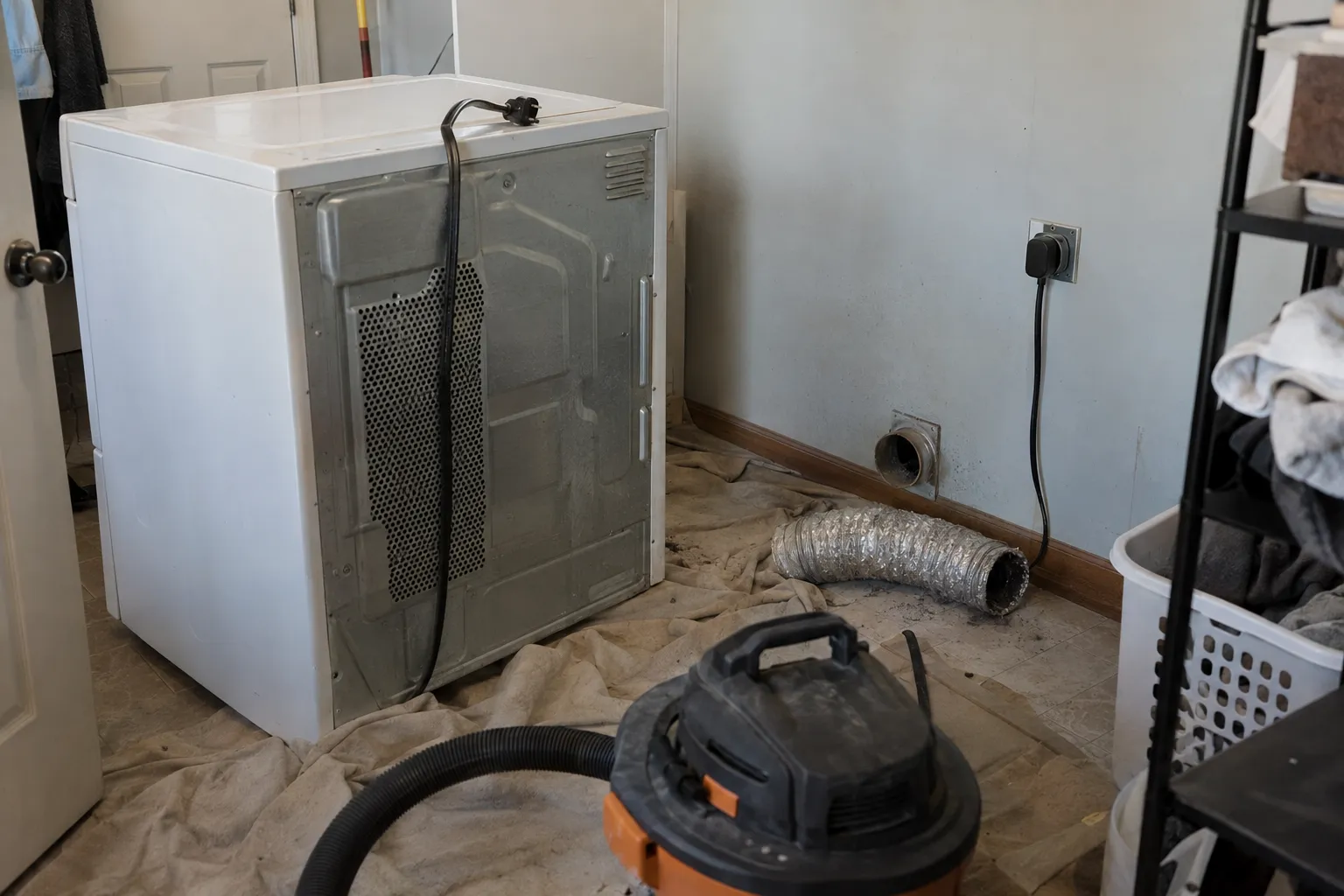
Flexible foil or plastic transition hose gets squashed flat when the dryer is pushed back against the wall. The ribs trap lint, the kink chokes airflow, and sometimes the hose has pulled off the collar entirely and is venting hot, damp, lint-filled air straight into the laundry room. We check that connection on every visit and reseat or recommend replacing it with smooth, rigid or semi-rigid duct.
A hood that cannot open
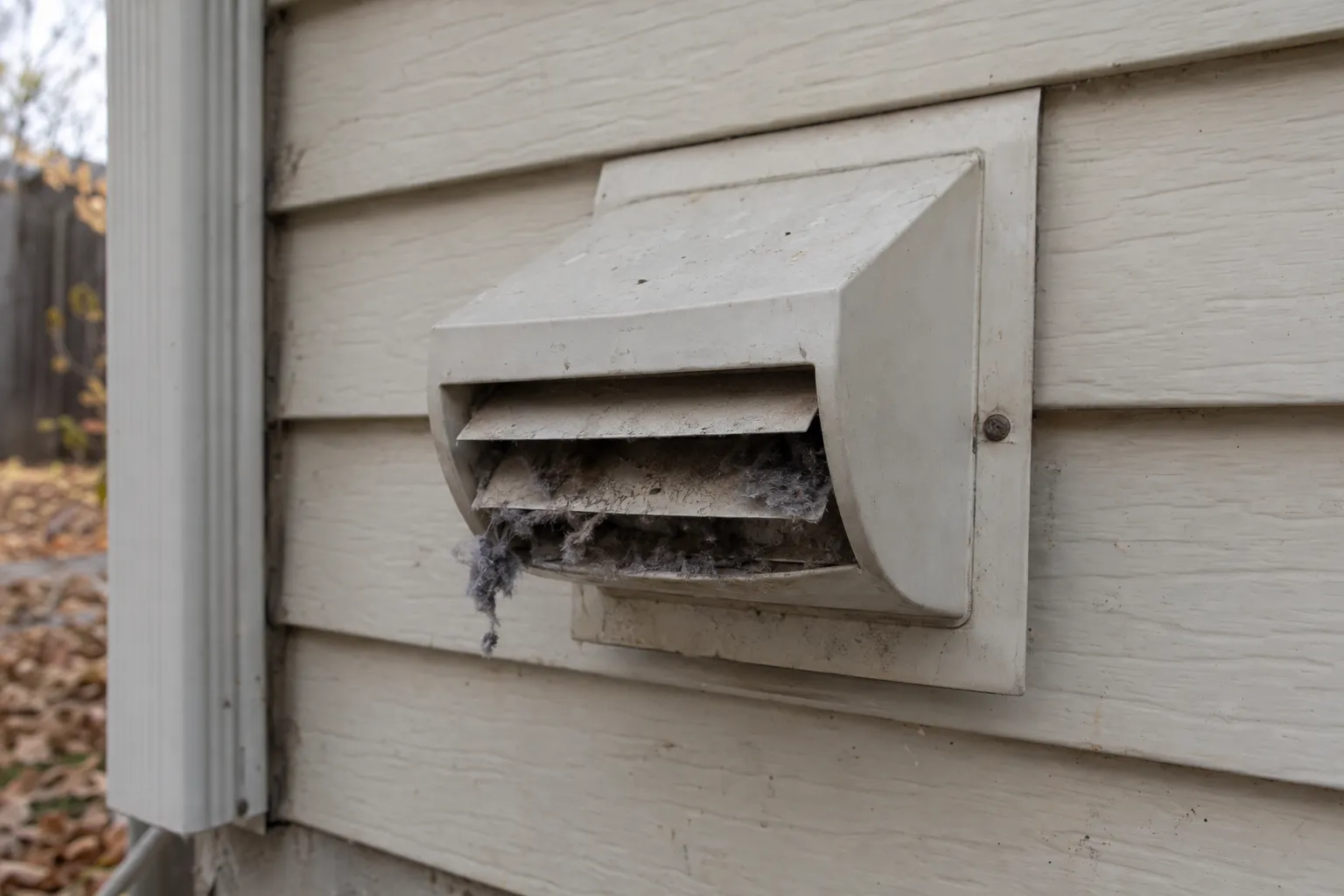
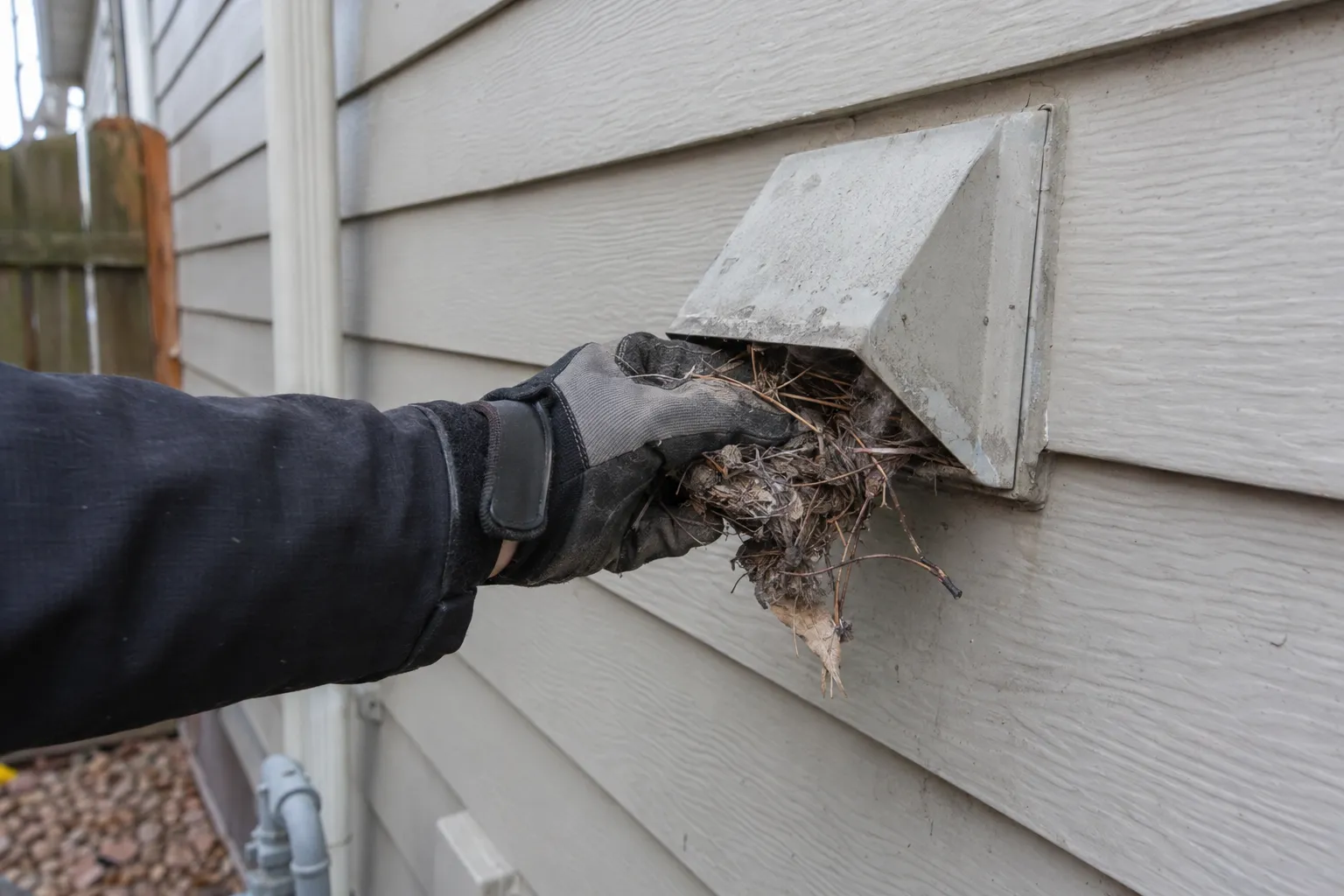
The exterior hood is where lint, damp residue and nesting material collect. Flaps get stuck shut with a felted mat of lint, screens behind the louvers clog solid, and birds build nests in wall and roof terminations during spring. From inside the house everything looks normal. From outside you can see the flap barely twitch while the dryer runs.
From the Lakewood crew
The call we take most often is not about fire risk. It is about laundry taking two or three cycles to dry. The homeowner has already replaced a heating element or had an appliance tech out, and nobody looked at the duct.
When a run that long has not been cleaned in years, the lint comes out in sheets rather than loose fluff, and the dryer is suddenly quieter and finishes a load in one cycle. That is why we check airflow at the hood with the dryer running before we pack up, instead of just brushing the duct and calling it done.
AR Chimney Pros field technician, Lakewood dispatch
Our standards for every dryer vent cleaning
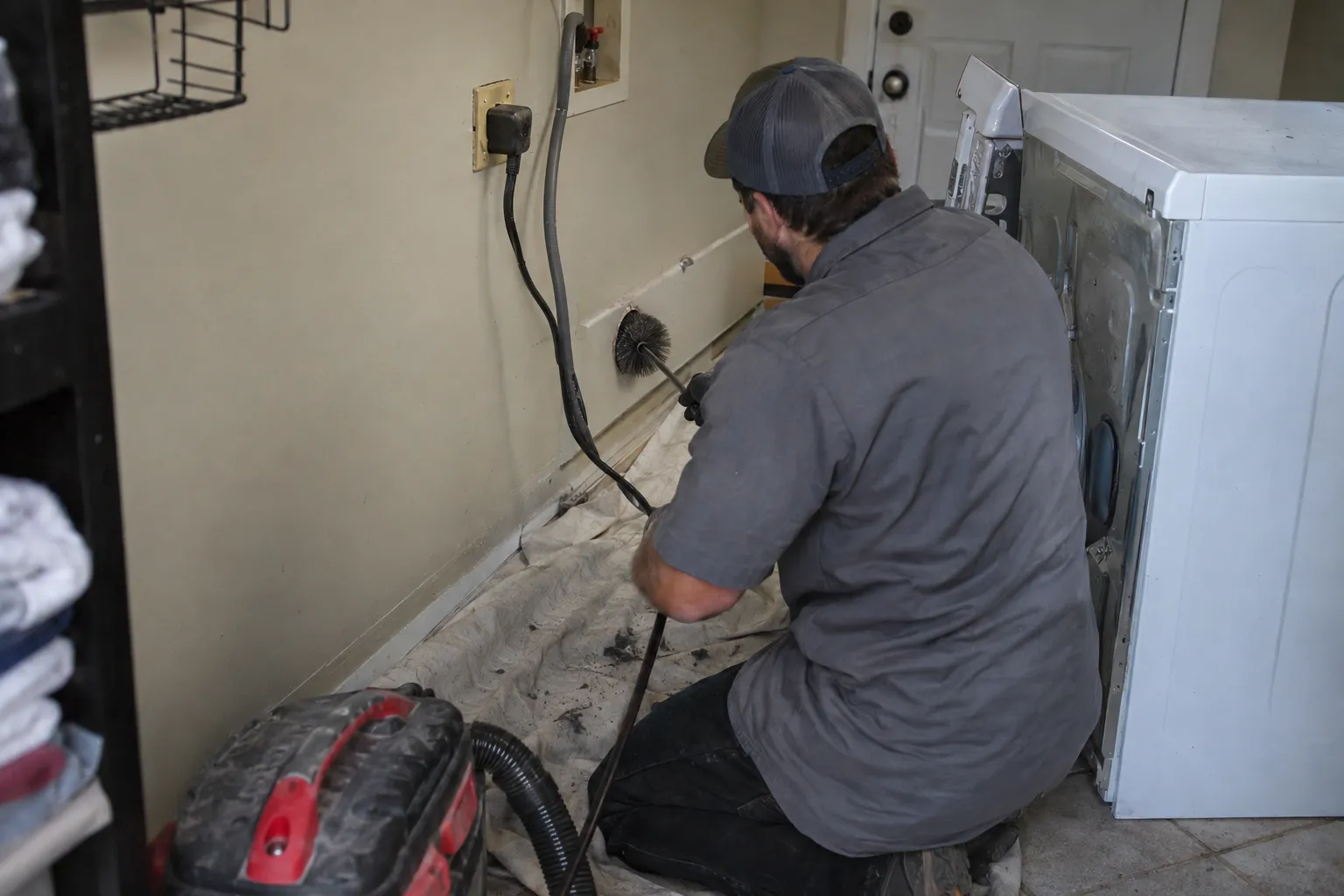
Every dryer vent appointment we run in Lakewood and the Denver metro follows the same order, whether the run is six feet or sixty.
- The dryer is pulled out and the connection checkedWe look at the transition hose, the collar and the wall opening before any brush goes in.
- The full run is cleaned, end to endRotary brush on a flexible rod with vacuum capture, worked through the duct rather than only the first accessible stretch.
- The exterior hood is cleared by handLouvers, flap and any screen behind it, plus anything nesting in the termination.
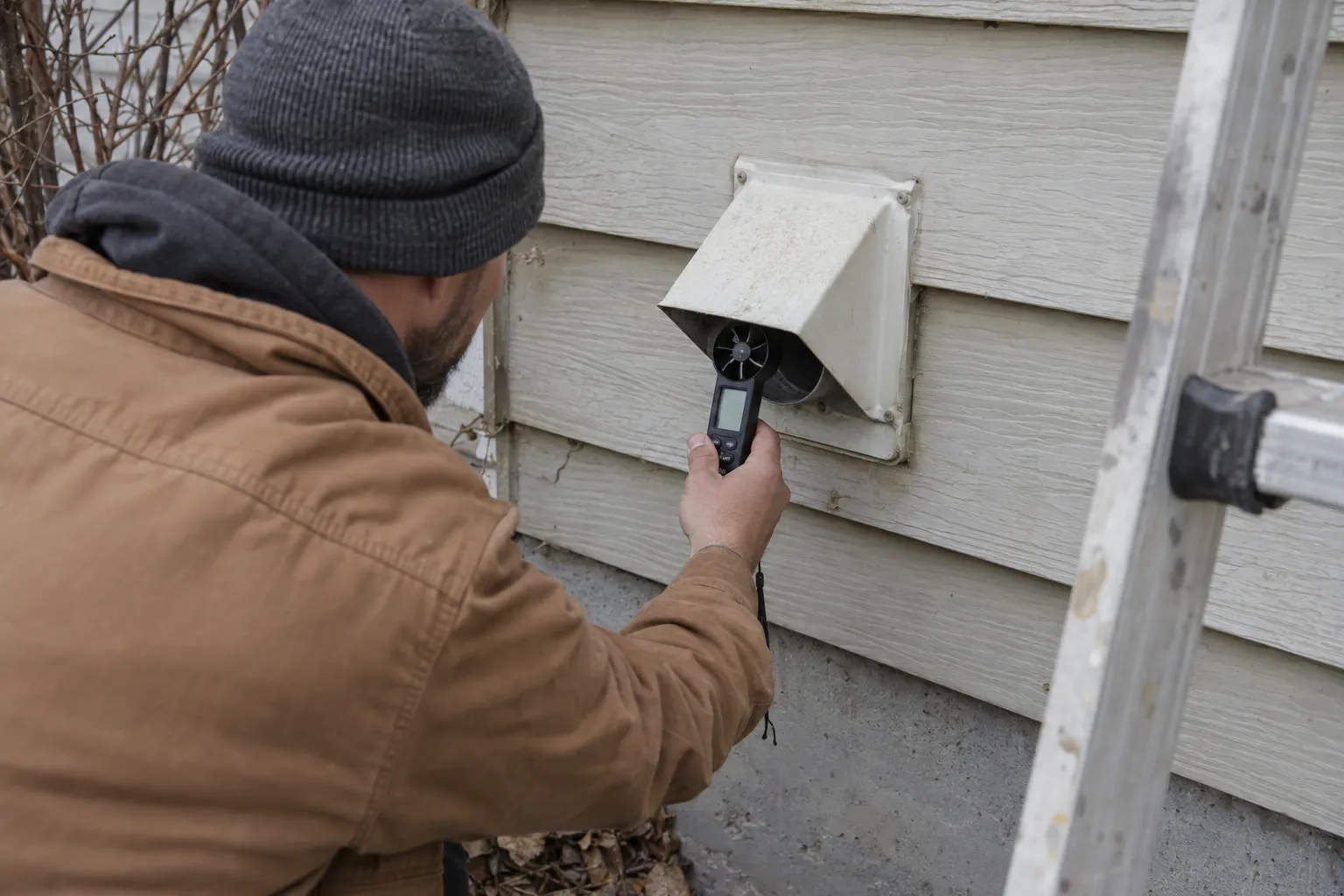
- Airflow checked with the dryer runningWe confirm the flap opens and air is moving out of the hood with real force before we leave.
- Duct problems shown, not just mentionedCrushed foil, disconnected joints inside a cavity and improper materials get pointed out so you can see them yourself.
- Clean-up before we goDrop cloths behind the appliance, lint vacuumed up, dryer pushed back without pinching the new connection.
How a dryer vent appointment actually runs
Three stages, in the same order, on every vent we clean.
-
1
Access and a look at both ends
We find out what the run actually looks like before cleaning it.
The technician pulls the dryer forward, disconnects the transition hose, and checks the wall or floor collar. Then we locate the termination outside, whether it is a sidewall hood, a roof cap or a vent under the eaves, and see how the flap is moving.
That tells us the length of the run, roughly how many bends it has, the duct material, and whether the blockage is lint, a nest or a collapsed section. If something is disconnected inside a wall or ceiling, we want to know before we push a brush into it.
-
2
Brushing and vacuum removal
The duct is cleaned through its whole length, not just the reachable part.
We run a rotary brush on a flexible rod sized for your duct, working it past elbows while a vacuum captures what comes loose. Lint that falls back toward the dryer end is collected there. The hood or roof cap is cleaned by hand so the flap moves freely and nothing is left packed behind the louvers.
Long runs, vertical runs and ducts that have gone several years without service take more passes. We keep going until what comes out is clean air rather than packed lint.
-
3
Airflow check and reconnection
The dryer goes back on and we verify the result outside.
We reconnect the dryer, run it on a heat cycle, and check the discharge at the exterior hood. Strong, steady airflow and a flap that opens fully means the run is clear. Weak flow after a full cleaning points to a crushed or collapsed section, and we tell you where we think it is.
Before we leave you get a plain summary of what came out, what shape the ducting is in, and when to book the next cleaning based on how much laundry your household runs.
See chimney cleaning
When to book, and how often to repeat it
Once a year suits most households. Heavy laundry use, long ducts and pets move that up.
If drying times have crept up, that is the signal, whatever the calendar says.
Large families running several loads a day, homes where the vent travels a long way to reach outside, and households drying pet bedding or heavy towels all load the duct faster. In those cases we often suggest a check partway through the year rather than waiting a full twelve months.
Plenty of homeowners pair the dryer vent with their annual chimney visit so one appointment covers both. We are booking Sunday through Friday, 8am to 5pm, and we are closed Saturday. Tell us where the dryer sits and where the vent exits and we will confirm a slot and the crew covering your area.
Related services
Most homeowners book the dryer vent alongside one of these while we are already at the house.
Areas we serve
AR Chimney Pros cleans dryer vents across the Denver metro and the Front Range from our Lakewood and Arvada locations.
We cover Lakewood, Arvada, Denver, Westminster, Broomfield, Thornton, Littleton, Englewood, Aurora, Parker, Centennial, Longmont, Loveland, Greeley and Colorado Springs.
- Lakewood
- Arvada
- Denver
- Westminster
- Broomfield
- Thornton
- Littleton
- Englewood
- Aurora
- Parker
- Centennial
- Longmont
- Loveland
- Greeley
- Colorado Springs
Frequently asked questions
Dryer vent questions we answer most often on the phone.
How much does dryer vent cleaning cost in Lakewood?
Cost depends on how long the vent run is, where it terminates, and whether the ducting needs repair or replacement. Call 720-608-7668 and describe where your dryer sits and where the outside hood is, and we will give you a direct quote.
Book a visitHow often should a dryer vent be cleaned?
Once a year works for most households. Clean more often if you run several loads a day, have a large family, dry pet bedding, or have a long vent run with several bends, since those collect lint faster.
What are the signs my dryer vent needs cleaning?
Clothes take two cycles to dry. The dryer cabinet or the laundry room feels hot while it runs. Loads come out smelling musty or scorched. The flap on the outside hood barely moves with the dryer going. Lint collects around the hood or behind the appliance. Any one of those is worth a look.
How long does a dryer vent cleaning visit take?
A short, straight run is usually done in a single visit without much disruption. Long runs, roof terminations and ducts packed solid with lint take longer. If we find crushed or disconnected ducting, we stop and show you before any extra work is discussed.
See chimney cleaningCan you clean a dryer vent that exits through the roof?
Yes. We work the run from the dryer end and from the termination, clear the cap, and check that the flap opens freely. Roof terminations collect more lint because the run is longer and often vertical, and they are a common spot for bird nests.
See animal removalWhat should I do before the technician arrives?
Clear a path to the dryer and move laundry baskets, shelving and storage away from behind it so the appliance can be pulled forward. If you know where the vent exits the house, point it out. We bring the brushes, rods, vacuum and drop cloths.
More questions about your system? Read the full FAQ.
Book your Lakewood dryer vent cleaning
Shorter drying times, a cooler dryer and a vent you can stop thinking about for the year.
Call us at 720-608-7668 or email info@archimneypros.com to schedule. You can also use the booking form on our contact page. Tell us your address, where the dryer sits and where the vent comes out, and we will confirm your slot and the crew covering your area.