
Odor Source Confirmed Before Any Sealing Product Is Applied
Creosote, moisture, animal debris and negative pressure each require a different treatment path.
Fireplace odor removal and chimney odor sealing in Lakewood, CO, built around finding the source first instead of masking the smell.
Dispatching from 12640 W Cedar Dr, Unit 7, Lakewood.
Four odor sources we treat
- Creosote off-gassing
- Moisture-activated debris
- Animal or nesting material
- Negative air pressure
Fireplace odor removal that starts with a diagnosis, not a product
Fireplace odor removal works when the source is identified first, every time.
It's July. No fire has burned in that fireplace since February. But the smell is back, settled into the sofa cushions, hanging in the hallway. You turned on the air conditioning two weeks ago. That's not a coincidence.
The moment your HVAC kicks on, it changes the pressure balance inside your home. Negative air pressure, a condition where your home's interior pressure drops below the pressure inside the flue, pulls chimney air down into the living space. It carries everything the flue has been holding: creosote vapors, moisture-activated debris, decomposed animal matter, ash.
AR Chimney Pros treats four distinct odor sources: creosote off-gassing, moisture-activated organic debris, animal or nesting material, and negative pressure conditions. Each one has a different fix. Applying a chimney odor barrier sealant, a product applied to the firebox and smoke chamber walls to block odor migration, before identifying which source is active will send that odor back within one season.
We confirm the source first. Then we treat it. Then we seal.
Why Lakewood homes experience this every summer
Lakewood's building stock and climate create a specific, predictable odor pattern each year.
Here's what many homeowners don't realize about older Lakewood neighborhoods: homes along the Morrison Road corridor and into Englewood were built with throat dampers, the original cast-iron type that sit just above the firebox. They don't seal completely.
Our crews dispatch from the W Cedar Dr office and reach those neighborhoods fast. We see the same pattern every June: AC season starts, interior pressure drops, and the odor calls begin. It's not random. It's physics.
Denver's late-summer monsoon adds another layer. After months of the dry spring air that characterizes Colorado's Front Range, outdoor humidity spikes in August. That humidity activates creosote off-gassing, the release of volatile compounds from creosote deposits that sat quiet and dry all spring. Creosote that smelled like nothing in April suddenly smells like a campfire in August. The home hasn't changed. The humidity has.
Altitude matters too. At Lakewood's elevation, roughly 5,400 feet, air density is lower. Downdraft conditions, where flue airflow reverses and pushes air into the living room, are more common here than at sea level. Wind patterns off the foothills amplify it.
- 5,400 ft
- Elevation in Lakewood
- 4 sources
- Of odor we diagnose on every call
- 3 coats
- Standard on smoke chamber wall sealant
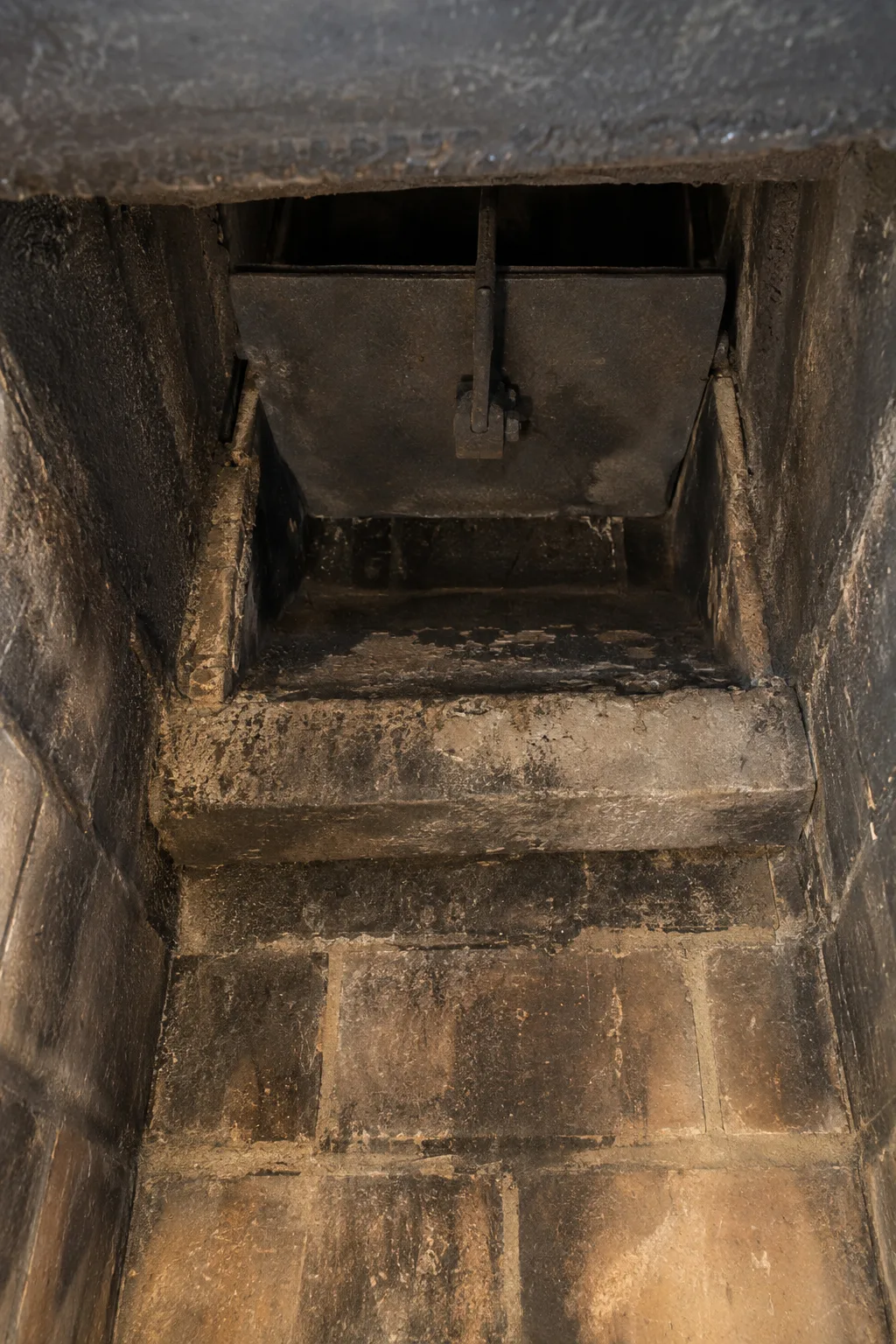
What we found behind the damper on a Lakewood call last summer
The odor source is almost never where the homeowner expects it to be.
On a call to a 1970s ranch with a corner fireplace in Lakewood, the kind where the firebox is set at an angle, the homeowner had already had the fireplace cleaned the previous fall. The odor was back four months later, stronger than before. She assumed the cleaning hadn't worked.
Opening the damper revealed the smoke shelf, the horizontal shelf that sits directly above the damper throat. That shelf held a full layer of debris: compacted ash, what appeared to be old nesting material from a previous bird or squirrel, and a patch of moisture-activated residue on the back wall. The fall cleaning had addressed the flue above it. The shelf itself had not been touched.
The smell wasn't creosote. It was decomposed organic debris sitting on a damp surface with nowhere to go.
The crew cleared the shelf, treated the firebox surround, and applied a chimney odor barrier sealant to the smoke chamber walls above the damper. The pressure issue was addressed as well. That home had a whole-house fan running daily, pulling air through every available opening, including the flue. The homeowner was walked through a damper sealing option: a top-sealing damper that closes the flue at the top of the chimney, cutting off that air pathway entirely.
Three weeks later, she called back. The smell was gone. The cleaning from the year before wasn't wrong. It just wasn't complete.
AR Chimney Pros field technician, Lakewood dispatch
One question we hear every season, answered directly
A lot of homeowners ask whether we can seal the fireplace to stop the smell without a full cleaning first. It's a fair question.
Odor sealing applied without cleaning will not hold, and it's not meant to.
A chimney odor barrier sealant works by blocking vapor migration through porous firebox surfaces and smoke chamber walls. It's effective. But it requires a clean, dry surface to bond to. If creosote, ash, or organic debris is still present underneath, the sealant traps moisture against those materials. The odor finds another path, often forward through the damper throat or through gaps in the firebox mortar.
We apply odor sealing only after the source has been confirmed, removed, and the surfaces are prepared correctly. That sequence is not negotiable at AR Chimney Pros. It's why the result lasts.
If the source is negative air pressure rather than debris, we address that separately, through damper air sealing, top-sealing damper installation, or a chimney balloon as a temporary measure. The sealant is one tool. Knowing when to use it is the skill.
Our standards for odor removal and chimney odor sealing
Every odor call follows the same confirmed-source-first standard, no exceptions.
Call 720-608-7668- Source identification before treatment No sealant, no product, no service is applied until the odor source is confirmed through inspection.
- The smoke shelf is always checked It is one of the most common and most overlooked odor sources in Lakewood-area homes.
- Creosote concentration is documented Off-gassing intensity relates directly to deposit depth and coverage. We note both before recommending treatment.
- Moisture conditions are assessed Active moisture infiltration from the crown, cap, or flashing is identified and flagged. Sealing over a wet surface fails.
- Negative air pressure is tested We check for downdraft conditions and HVAC-driven pressure reversal before closing out any odor call.
- Sealant goes on prepared surfaces only Clean, dry, structurally sound firebox and smoke chamber walls, three coats on smoke chamber walls as standard.
- Top-sealing damper options are discussed Raised whenever pressure reversal is identified as a contributing factor.
How we run a fireplace odor removal appointment
The appointment has three phases: find it, fix it, seal it.
-
1
Odor diagnostics
Every appointment opens with a damper-down airflow check.
We note which direction air is moving before we touch anything. Then we open the damper and examine the smoke shelf for debris: ash, nesting material, organic residue. The firebox walls, smoke chamber, and lower flue liner section are inspected visually and with a light source. A camera is used when the inspection warrants it.
We're looking for four things: creosote deposit depth and coverage, evidence of active or historical moisture infiltration, animal or nesting debris, and damper seal condition. We document what we find. You see it before we start.
-
2
Source treatment and implementation
Once the source is confirmed, treatment follows in sequence.
Organic debris on the smoke shelf is removed and the surface is cleaned. Creosote deposits in the firebox and accessible flue section are addressed. If moisture intrusion is contributing, through a cracked crown, failed cap, or open flashing, that's documented for repair scheduling.
Air sealing through damper replacement or top-sealing damper installation is completed in the same appointment when components are in stock. This step matters in tightly sealed Lakewood homes where AC-driven negative air pressure pulls odor down the flue.
-
3
Post-treatment sealing and testing
Sealant goes on only after surfaces are confirmed clean and dry.
Chimney odor barrier sealant is applied to the firebox surround and smoke chamber walls once surfaces are prepared. A final airflow check is run at the damper. We do a draft check to confirm air movement is outward, not down into the home.
Before we leave, you know what the source was, what we did, and what to watch for next season.
See draft analysis
Related repair services
If the diagnostic turns up a moisture source behind the odor, these are the next steps.
Areas we serve near Lakewood, CO
AR Chimney Pros serves Lakewood and the full Denver Metro area.
We serve homeowners across Lakewood, Denver, Englewood, Littleton, Wheat Ridge, Arvada, Morrison, Golden, Edgewater, Sheridan, Westminster, Aurora, Thornton, Centennial, Highlands Ranch, Commerce City, Broomfield, Boulder, Evergreen, and surrounding Front Range communities. If you're within the Greater Denver Metro, we can reach you.
Frequently asked questions
Odor questions we answer most often on the phone.
Why does my fireplace smell worse when the air conditioning is on?
Your AC creates negative air pressure inside the home. That pressure drop pulls chimney air, carrying creosote vapors, ash, and debris, down into your living space. Tightly sealed Colorado homes with whole-house fans make this worse. A top-sealing damper blocks the flue opening at the top, cutting off that air pathway completely.
Will odor sealing work if the fireplace was cleaned last fall?
Sealing can still fail if the smoke shelf wasn't cleared during that cleaning. The smoke shelf, the horizontal ledge above your damper, holds ash, nesting material, and organic debris that cleaning crews sometimes skip. Odor barrier sealant applied over that residue will not hold. We inspect the shelf on every odor call before any product is applied.
How long does a fireplace odor removal appointment take?
Most appointments run two to three hours, start to finish. The first phase is diagnosis: airflow check, smoke shelf inspection, creosote documentation. Treatment and surface preparation follow. Odor barrier sealant is applied last, only after surfaces are confirmed clean and dry. Same-day completion is standard when no additional structural repairs are needed.
What makes this process different from just having the fireplace cleaned?
Cleaning removes debris. Our process confirms which odor source is active before any treatment starts. Creosote off-gassing, moisture-activated debris, animal matter, and pressure reversal each require a different fix. Applying sealant to the wrong source, or skipping the source diagnosis entirely, sends the odor back within one season. We do not seal until the source is confirmed and removed.
Can a chimney odor problem be fixed without replacing the damper?
Yes, if negative pressure is not the cause. Damper replacement or top-sealing installation is only recommended when airflow testing confirms pressure reversal is pulling odor into the home. If creosote or smoke shelf debris is the source, cleaning and odor barrier sealant alone resolve the problem. You get a clear explanation of the cause before any repair option is discussed.
More questions about your system? Read the full FAQ.
Ready to find the source of that smell?
The odor has a source. We find it, treat it, and seal it, in that order.
Call AR Chimney Pros at 720-608-7668 or email info@archimneypros.com to schedule your fireplace odor removal appointment. Our crews dispatch from Lakewood and serve homes across the Denver Metro. Tell us when the smell started and where it's strongest, and we'll take it from there.