
Firebox Rating, Flue Sizing and Damper Condition Confirmed Before Any Log Set Is Ordered
Vented and vent-free options are assessed based on what your existing firebox can support.
Gas log installation in Lakewood, CO starts with what your fireplace can actually handle, not what the box says on the showroom shelf.
Dispatching from 12640 W Cedar Dr, Unit 7, Lakewood.
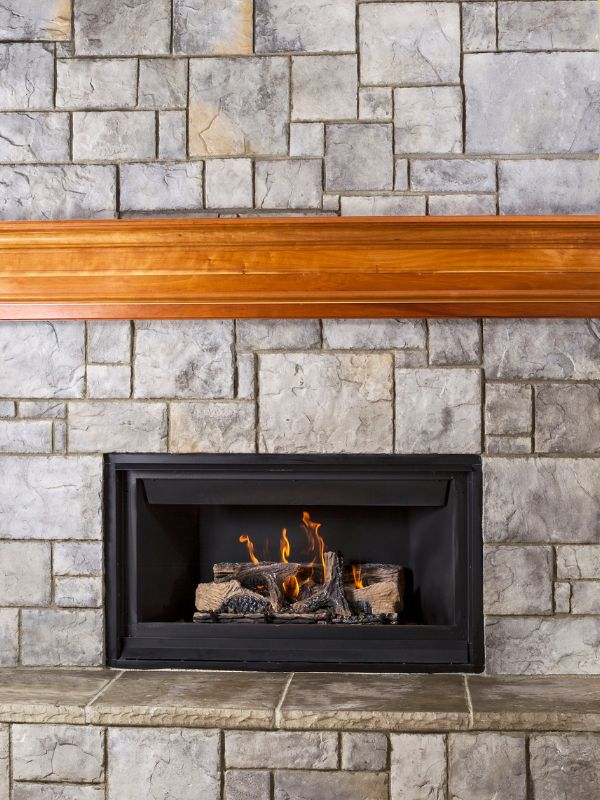
Part of every visit
- Firebox rating confirmed before any set is ordered
- Vented versus vent-free determined by your flue
- Gas supply line checked the same appointment
- Full burn cycle test before we leave
How we diagnose it
The swap most homeowners expect is not the job we actually do
Pull out the wood grate, drop in a gas log set, done. That is not how it works. Six places in your chimney decide what we can safely install.
Flame burns too hot along the back wallPoints to: firebox rating
The firebox opening is smaller than the log set's rated minimum, so combustion concentrates against the back wall instead of spreading evenly. We measure the opening before any set is ordered, not after it won't fit.
A vent-free set won't pass codePoints to: damper
Colorado code requires the damper to be permanently blocked open or fitted with a clip before a vent-free set can burn safely. A functional damper that closes normally fails this check.
A vented set won't draft properlyPoints to: flue liner
Flue liner type and diameter determine whether a vented gas log set will draft correctly with the damper open. We check the liner before recommending vented over vent-free.
Soot builds up fast on a new setPoints to: smoke chamber
An obstructed or oversized smoke chamber changes how combustion byproducts clear the firebox. We check this path during the same visit as the firebox and flue assessment.
No gas supply at the fireboxPoints to: gas supply line
Gas log installation needs a dedicated fuel line run to the firebox location. Where one isn't already stubbed in, we identify the routing before any log set is ordered.
A log set already bought doesn't fitPoints to: firebox opening
We verify whether a pre-purchased set matches the firebox specs before installation day. If it doesn't, the exchange happens before the appointment, not mid-install.
Lakewood homeowners are converting to gas at a steady pace
Front Range air quality rules are moving Lakewood homeowners toward gas.
Colorado's CDPHE, the Colorado Department of Public Health and Environment that governs indoor gas appliance use and sets vent-free log restrictions on the Front Range, actively limits when wood-burning is permitted during high-pollution days. That is driving demand for gas log sets across Edgewater, Wheat Ridge and Englewood, an area we see directly from our dispatch location at 12640 W Cedar Dr, just minutes from all three.
The homes we visit most often were built in the 1970s and 1980s. Their masonry fireplaces were designed for wood. Gas combustion behaves differently, especially in a sealed modern living space. Firebox depth, opening width and BTU output, the heat measurement used to size a gas log set to the firebox opening and room volume, all factor into what set suits that specific opening. Bringing the wrong set into that conversation creates real problems.
A Wheat Ridge conversion that changed the whole appointment
Two issues surfaced on one job that a standard installation would have skipped.
From a Lakewood dispatch appointment
We were dispatched to a 1978 ranch-style home in Wheat Ridge. The homeowner had already picked out a vent-free gas log set online, a good-looking set with a reasonable BTU rating on paper.
When the firebox inspection opened up, the damper was fully functional, which sounds fine, but on a vent-free installation that is the issue. Vent-free gas logs, a set designed to burn without an open flue, relying on oxygen-depletion sensors, require the damper to be permanently blocked open or fitted with a clip to prevent accidental closure. Colorado code requires it. The homeowner had no idea.
The second issue: the firebox opening measured 38 inches wide. The set she had chosen was rated for a 42-inch opening minimum. Drop that set into the smaller box and the flame pattern runs too hot along the back wall, a firebox rating problem, the structural and thermal certification that determines what gas combustion the firebox can safely contain.
We measured the room volume, confirmed the ODS, the oxygen depletion sensor that shuts off the burner if room oxygen drops below a safe threshold, was properly calibrated on her replacement set, and selected a correctly sized vent-free log that fit the actual opening. The installation took about two hours once we had the right set on-site. She was burning that evening.
Getting the right set matched to the right firebox before installation day keeps everything on schedule.
Your gas supply line gets handled the same visit
If your home doesn't already have a gas supply line at the firebox, we coordinate that as part of the installation plan, not as a surprise.
Gas log installation requires a dedicated fuel line run from your home's main gas supply to the firebox location.
Some Lakewood homes already have this. Many don't. Either way, it gets confirmed during the initial assessment so there are no surprises on installation day.
If a new gas supply line is needed, we identify the routing before any log set is ordered. That affects timeline and installation day logistics, and you know it all upfront. If an existing line is already stubbed in, we verify pressure and connection integrity before any burner is lit. The same visit that covers firebox rating and flue sizing covers the gas line situation.
Our standards for gas log installation in Lakewood
Every installation follows the same assessment-first sequence, regardless of how simple the job looks from the outside.
- Firebox rating confirmationMasonry and prefab fireboxes are checked for gas combustion suitability before any set is selected.
- Vented versus vent-free determinationVented gas logs, which burn with the flue damper open and vent combustion byproducts up the chimney, are the default recommendation where flue size supports it.
- BTU output sizingThe gas log set is matched to the actual firebox opening and room volume, not the general category on the product label.
- CDPHE compliance reviewVent-free log sets in Front Range jurisdictions are subject to room-volume and ODS requirements. We confirm compliance before installation.
- Gas supply line checkExisting lines are pressure-tested. New lines are coordinated as part of the pre-installation plan.
- Damper modificationPermanently blocked or clipped open as required for vent-free applications, documented at completion.
How gas log installation works at AR Chimney Pros
Assessment, selection confirmation and setup, all in one visit.
-
1
Firebox diagnostics
We check before anything is installed.
The appointment opens with a full firebox inspection. We check the firebox depth and opening width, pull the damper and confirm its condition and travel, and note the flue liner type and diameter, which determines whether a vented gas log set will draft correctly or whether vent-free is the appropriate path. We confirm the gas supply line status before anything else happens.
In homes where a gas log set has already been purchased, we verify whether it matches the firebox specs before proceeding. If the set needs to be exchanged, that happens before installation day rather than mid-install.
-
2
Log set installation
Installation proceeds once the correct set is confirmed.
The log set is positioned per the manufacturer's pattern: ember bed distributed, logs placed in the sequence that affects both flame appearance and safe combustion clearance. The gas line connection is made and tested for pressure integrity. On vent-free installations the ODS is confirmed operational. The damper is modified or blocked as required, and pilot ignition is tested and adjusted for reliable startup.
-
3
Post-installation testing
We run a full burn cycle before leaving.
Flame height, pilot stability and burner response are all checked. On vent-free sets we confirm the ODS trips correctly at the low-oxygen threshold. The homeowner gets a walkthrough on operation, pilot relighting and annual maintenance timing. Nothing is left running unobserved.
See gas fireplace inspection
Related installations and upgrades
If your fireplace needs work beyond the log set, these are the related services.
Areas we serve for gas log installation
AR Chimney Pros serves Lakewood and the surrounding Greater Denver Metro area.
We install gas log sets across Lakewood, Wheat Ridge, Edgewater, Arvada, Englewood, Littleton, Denver, Golden, Morrison and Westminster. Our crews also reach Aurora, Thornton, Broomfield, Boulder, Highlands Ranch, Centennial and Evergreen. If you're within the Greater Denver Metro, we can get there.
- Lakewood
- Wheat Ridge
- Edgewater
- Arvada
- Englewood
- Littleton
- Denver
- Golden
- Morrison
- Westminster
- Aurora
- Thornton
- Broomfield
- Boulder
- Highlands Ranch
- Centennial
- Evergreen
Frequently asked questions
Installation questions we answer most often on the phone.
How much does gas log installation cost in Lakewood, CO?
Cost depends on firebox size, vented versus vent-free configuration, and whether a new gas supply line is needed. All three factors are confirmed during the assessment visit, which is built into the installation appointment rather than billed separately. Call 720-608-7668 for a quote based on your specific firebox.
Can I install gas logs in any wood-burning fireplace?
Not every wood-burning fireplace is rated for gas combustion. Masonry fireboxes built before modern gas appliance codes may lack the structural certification required. Firebox depth, opening width and BTU capacity all determine what set, if any, fits safely. AR Chimney Pros confirms firebox rating before any log set is ordered.
Do I need a permit for gas log installation in Lakewood?
A gas supply line extension typically triggers a permit requirement in most Colorado jurisdictions. Whether your specific job needs one is confirmed during the pre-installation assessment so there are no surprises on installation day. Call 720-608-7668 to discuss your setup.
What's the difference between vented and vent-free gas logs, and which one do I need?
Vented gas logs burn with the flue damper open and vent combustion gases up the chimney. Vent-free logs burn without an open flue but require strict room-volume and oxygen-depletion sensor compliance under Colorado code. The correct type is determined by your flue dimensions and room size, not personal preference. Both options are assessed before any set is selected.
How long does a gas log installation take from the first call to actually burning?
Most installations complete in a single visit of two to three hours once the correct log set is confirmed. If a new gas supply line is needed, that affects the timeline and is identified during the initial assessment, before installation day. Selecting the right set before arrival keeps the appointment on schedule.
What happens if the gas log set I already bought doesn't match my firebox?
Mismatched sets are verified before installation begins, not discovered mid-install. A log set sized for a 42-inch opening will run dangerously hot in a 38-inch firebox. If the set needs to be exchanged, that gets resolved before the installation appointment so the job completes in one visit rather than two.
More questions about your system? Read the full FAQ.
Schedule your gas log installation assessment
The firebox assessment is built into the installation appointment. It is not a separate charge.
Call us at 720-608-7668 or email info@archimneypros.com to book. Tell us what you have, wood-burning, prefab, or unsure, and we'll walk you through what comes next.