Signs You Need Chimney Leak Repair in Colorado (And When You Don't)
The short answer
Water stains on the firebox wall, a damp smell after rain, efflorescence on the exterior masonry, or a deteriorating crown are all signs you need chimney leak repair in Colorado. A single white stain after one storm probably isn't. Colorado's freeze-thaw cycles make masonry leaks worse fast, so early inspection matters more here than in milder climates.
Learn more about chimney cleaning Denver Metro
Learn more about chimney cap installation Denver in Arvada, CO
Learn more about fireplace inspection Lakewood CO in Denver, CO
Answered by AR Chimney Pros, Chimney specialists dispatched from Lakewood, CO
| Most common leak source | Cracked or missing chimney crown |
|---|---|
| Second most common | Failed flashing at the roofline |
| Colorado-specific risk | Freeze-thaw cycles expand water in masonry cracks |
| When it can wait | Single light stain, no recurring moisture, crown intact |
| When to act fast | Active dripping, efflorescence, spalling brick, damp firebox lining |
Seeing moisture in your fireplace? Call 1 720-608-7668
What are the clear signs you need chimney leak repair?
Water stains inside the firebox, a persistent musty smell, spalling brick on the exterior, or rust on the damper or firebox components all point to an active moisture problem that needs professional attention.
These signs generally mean you need chimney leak repair in Colorado:
- Water stains or dripping inside the firebox: moisture is getting past the crown, flashing, or liner joints and running down into the firebox.
- Spalling brick: the face of the brick is flaking or popping off, which means water has entered the masonry and frozen inside it.
- Efflorescence (white mineral deposits) on the chimney exterior: water is moving through the masonry and depositing minerals on the surface as it evaporates.
- Rust on the damper, firebox walls, or fireplace doors: consistent enough moisture to oxidize metal components.
- Damp or deteriorating mortar joints: soft, crumbling, or recessed mortar lets water travel straight down the chimney wall.
- Stains on the ceiling or wall near the chimney: water has worked its way into the structure of the house itself.
Any one of these is worth a professional look. More than one at the same time means the problem has been building for a while.
When does moisture in a chimney not need immediate repair?
Condensation inside a flue during the first few uses of the season, or a faint watermark after a single heavy storm with no recurring moisture, often isn't a sign of structural damage.
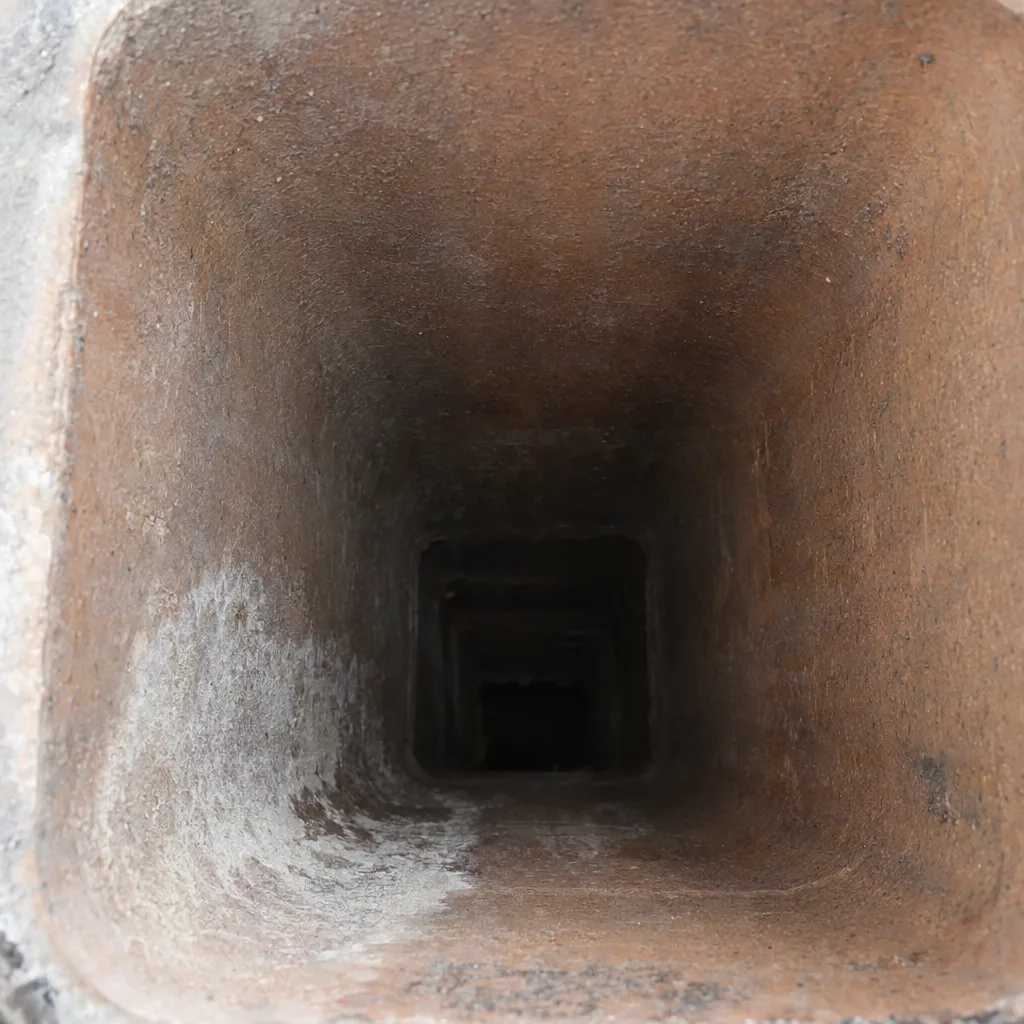
Gas fireplace flues are particularly prone to condensation. When warm combustion gases hit a cold liner, moisture condenses on the tile surface. This is normal during the first burn of a cold season and usually clears after the flue warms up.
A single faint stain on the firebox back wall that hasn't reappeared after several rains is worth monitoring, not necessarily repairing. That said, the only way to know for sure is to have someone look at the crown, flashing, and liner from above. Our chimney leak inspection in Lakewood covers all entry points so you're not guessing.
Why are Colorado chimneys especially vulnerable to leaks?
Colorado's freeze-thaw cycles are the main reason. Water enters a hairline crack in mortar or a crown, freezes overnight, expands, and forces the crack wider. After enough cycles, what started as a cosmetic crack becomes a structural opening.
The Denver Metro area can cycle through freezing and thawing temperatures dozens of times between October and April. Each freeze-thaw event puts mechanical stress on masonry that was already under pressure from UV exposure, hail, and high winds. Colorado's season-by-season freeze-thaw damage guide covers how this progresses year by year.
Altitude also plays a role. At Denver's elevation, UV radiation is more intense than at sea level, and that breaks down mortar and sealants faster than homeowners expect. A crown waterproofing product that might last five years on the Front Range often needs attention sooner on homes above 6,000 feet.
Hailstorms, which are common in Jefferson and Denver counties between May and September, can crack a crown or dislodge flashing in a single event. If your area took hail, checking the chimney is worth doing before winter sets in.
Where do chimney leaks actually come from?
Most chimney leaks come from one of four places: the crown, the flashing, the mortar joints, or a missing or damaged chimney cap. Each one requires a different fix.
Chimney crown: the concrete or mortar cap that covers the top of the chimney stack. Crowns crack from freeze-thaw stress and UV exposure. A cracked crown lets water run directly into the brick below the crown line.
Flashing: the metal seal where the chimney meets the roofline. If the counter-flashing pulls away from the mortar joint, or the step flashing rusts through, water runs into the attic or wall cavity rather than the firebox. This is often what causes ceiling stains near the chimney.
Mortar joints: open or recessed joints between bricks allow capillary absorption of water. Tuckpointing -- removing the deteriorated mortar and replacing it -- is the fix. It's time-consuming work but straightforward when caught before the brick itself starts to deteriorate.
Missing or damaged cap: a chimney cap covers the flue opening. Without one, rain falls directly into the flue. It also keeps animals and debris out. Caps are the simplest problem to fix and one of the most cost-effective preventive measures available.
The Chimney Safety Institute of America (CSIA) outlines all these entry points as part of standard chimney inspection protocols. A Level 1 inspection covers the accessible portions of the crown, cap, and exterior masonry; a Level 2 adds the flue interior, which is where liner joint failures appear.
What happens if you ignore a chimney leak?
Water damage to a chimney compounds quickly. What costs a few hundred dollars to fix at the crown stage can become a full chimney rebuild if the masonry is allowed to spall through several winters.
Water that reaches the firebox liner degrades the flue tiles. Cracked tiles are a fire hazard because combustion gases can escape through the crack into the wall framing. The National Fire Protection Association (NFPA) 211 standard requires chimneys to have a sound liner before they're used. A leaking chimney often fails this standard before the homeowner knows there's a structural problem.
Mold is the other consequence. Persistent moisture in the chimney chase or wall cavity around the chimney creates conditions for mold growth, which is expensive to remediate and can affect air quality throughout the house.
The practical trade-off: a crown repair or recoat is a relatively contained job. Replacing spalled brick, rebuilding a damaged crown, and relining a deteriorated flue costs significantly more and requires more time off the fireplace. Catching it early is almost always the better financial decision.
Other questions we get
Can I waterproof my chimney myself?
You can apply chimney waterproofing sealer to sound masonry yourself, but it only works if the crown is intact, the mortar joints are solid, and the flashing is sealed. Applying sealer over damaged masonry traps moisture inside and accelerates the freeze-thaw damage. Have the structure assessed first.
How often should a Colorado chimney be inspected for leaks?
Once a year, before the heating season starts. After a hailstorm or a severe winter, a mid-year check is worth doing. Annual inspections are the standard recommended by the CSIA and NFPA 211.
Does homeowner's insurance cover chimney leak repair?
It depends on the cause. Sudden damage from a storm or hail is often covered. Gradual deterioration from deferred maintenance typically isn't. Document any storm damage with photos before calling your insurer, and ask your technician for a written assessment of the cause.
Sources and how we know
The repair thresholds and inspection intervals above follow NFPA 211 and CSIA published standards. The Colorado-specific observations on freeze-thaw damage and UV degradation come from field work on chimneys across the Denver Metro area, including Jefferson and Denver County properties.
- NFPA 211: Standard for Chimneys, Fireplaces, Vents, and Solid Fuel-Burning AppliancesNational Fire Protection AssociationSets the minimum requirements for chimney liner integrity and inspection levels.
- Chimney Safety Institute of America (CSIA)CSIAIndustry standards for chimney inspection, moisture intrusion, and repair protocols.
- Burn Wise ProgramU.S. Environmental Protection AgencyWood-burning appliance safety and maintenance guidance, including chimney system integrity.
Who wrote this
AR Chimney Pros
Chimney specialists, Lakewood CO
We inspect and repair chimneys across the Denver Metro area, dispatching from Lakewood. Our own team answers when you call -- no call centers, no subcontractors on standard jobs.
- Chimney leak inspection and repair, Lakewood and surrounding Denver Metro communities
- Wood-burning, gas, and pellet appliance chimney systems