
Commercial Chimney Cleaning Scheduled Across the Full Denver Metro Without Subcontracting
A 20 person crew handles multi-unit and multi-property scheduling from our Lakewood office.
Every commercial chimney cleaning visit ends with a written service record, formatted for health and fire inspection review.
Dispatching from 12640 W Cedar Dr, Unit 7, Lakewood.
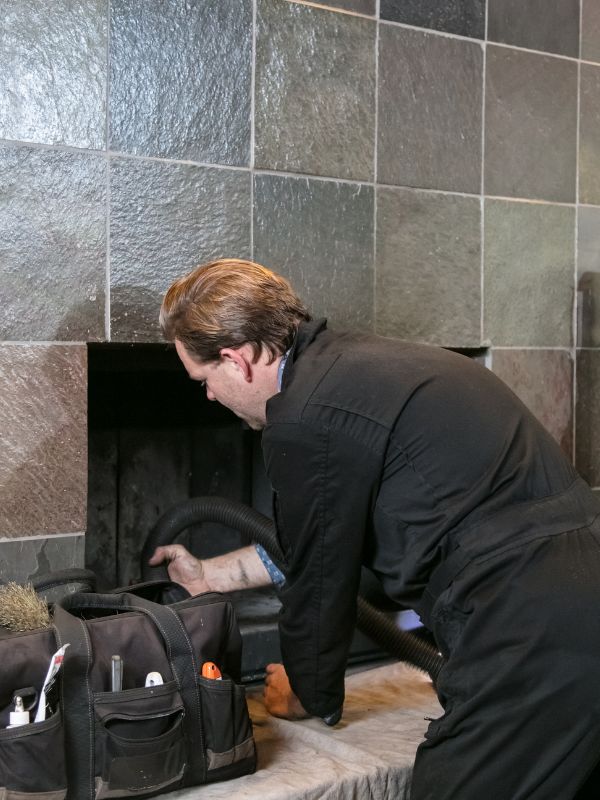
Included every visit
- Pre and post service flue condition documented
- Grease accumulation measured, not estimated
- NFPA 96 interval guidance applied per flue
- One record per flue, not one per building
Every visit ends with a written service record
Commercial chimney cleaning at AR Chimney Pros produces documented proof, not just a cleaned flue.
Property managers and facility directors need more than a technician showing up with a brush. They need a paper trail. After every commercial chimney cleaning visit, AR Chimney Pros delivers a written service record. That document captures the flue condition before and after cleaning, any deficiencies observed, and the recommended next service interval. It is formatted for health and fire inspection use, ready when a fire marshal or health department asks for it.
This is commercial exhaust flue service built around compliance, not just maintenance.
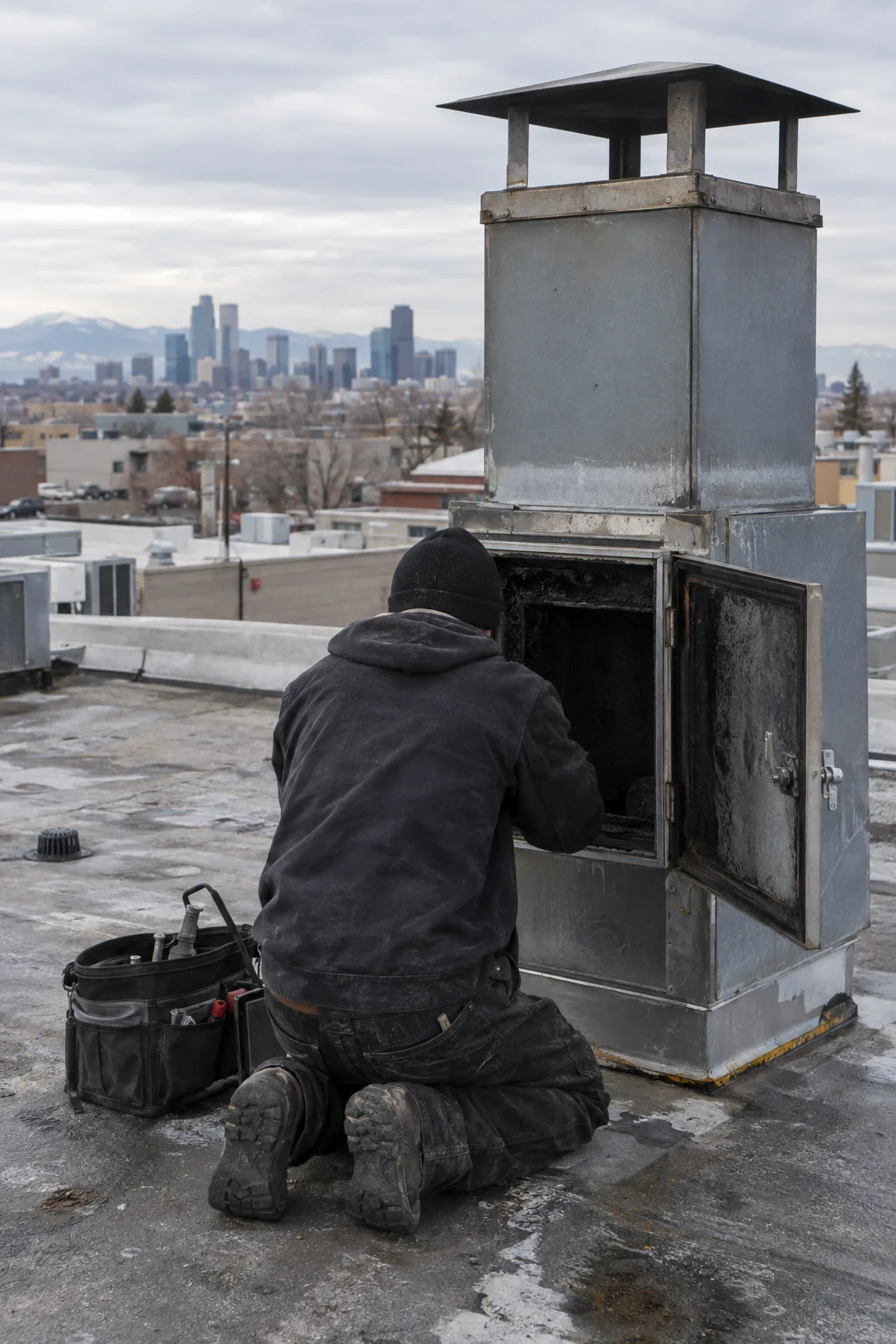
Denver Metro buildings create specific exhaust demands
Colorado's commercial building stock creates exhaust challenges that call for a different approach.
Denver and its surrounding metros, including Lakewood, Arvada, Westminster and Aurora, include a dense mix of mixed use buildings. Many were built between the 1960s and 1990s, when multi-unit chimney systems were commonly configured to serve multiple tenants or multiple commercial appliances through a shared flue. That design creates cleaning complexity that a standard residential sweep does not account for.
Here is what many facility managers don't realize about older Denver Metro commercial buildings. A multi-unit chimney system, a chimney configuration serving multiple commercial tenants through shared vertical venting, may accumulate grease at different rates in different flue segments. Grease accumulation is the buildup of cooking byproducts inside exhaust flues that creates a fire hazard when not cleaned on schedule. That means service intervals often need to be calibrated per segment, not applied uniformly across the whole system.
AR Chimney Pros dispatches from its Lakewood office and runs a 20 person crew. That capacity allows multi-unit commercial properties to be serviced without compressing the project into a single rushed visit.
What a multi-property schedule actually looks like
The following scheduling scenario comes up regularly with commercial accounts across the Denver Metro.
It illustrates why documentation and crew capacity matter in practice.
A property management group overseeing a mixed use building in Westminster reached out. The building had four separate commercial tenant spaces: two restaurant adjacent kitchens and two office suites with gas fireplace heating appliances. All four were vented through different flue configurations in the same chimney structure.
The challenge was that each tenant had different occupancy patterns and different cooking volumes, which meant different grease accumulation rates in each flue. NFPA 96, the National Fire Protection Association standard governing commercial cooking exhaust maintenance, sets cleaning frequency requirements based on cooking volume, not just the calendar. High volume cooking operations require quarterly cleaning. Medium volume requires semi-annual. Low volume, annual.
The property manager had been applying a single annual schedule across all four spaces. That was not adequate for the kitchen tenants.
A full pre-service assessment was completed, documenting the existing flue condition in each of the four commercial exhaust flues, the vertical duct systems removing combustion gases and cooking exhaust from commercial appliances. A differentiated service cycle was built from that assessment. Each tenant's interval was tied to their actual output. The written service records delivered covered all four spaces individually, giving the property manager one consolidated compliance file for the building.
That is what a documented service cycle looks like in practice: not one sweep per year, but a calibrated schedule with paper behind every visit.
One crew, one contact for multi-unit scheduling
AR Chimney Pros handles large scope commercial scheduling from a single point of contact.
Facility directors managing multiple buildings sometimes need a multi-unit project handled without splitting work across separate vendors or separate documentation sets.
With a 20 person crew operating out of Lakewood, AR Chimney Pros can dedicate multiple technicians to a single commercial property when the scope requires it. A four unit building does not require four separate appointment windows. Scheduling happens through one contact, documentation is consolidated, and the service record reflects the full scope of work.
Inspection compliance, the condition of a commercial property's exhaust and chimney systems being within standards required by local fire marshals or health departments, stays organized because the paperwork is organized.
Our standards for commercial exhaust cleaning
Commercial flue cleaning at AR Chimney Pros follows structured protocols.
- NFPA 96 interval guidanceUsed to set cleaning frequency by cooking volume.
- Pre-service documentationFlue condition documented before any tools enter the system.
- Flue sizing assessedCommercial flue sizing, the diameter and height specifications of a commercial flue relative to the BTU output of the appliances it serves, is checked to confirm correct cleaning method.
- Grease levels measured, not estimatedEvery deposit level is recorded, not guessed at.
- Inspection-ready recordsA written service record is delivered at visit completion, formatted for health and fire inspection review, with the recommended next service interval included.
- Per-unit documentationMulti-unit systems get per unit documentation. One record per flue, not one record per building.
How a commercial cleaning visit is executed
Three stages, documented at every step.
-
1
Pre-Service Diagnostics
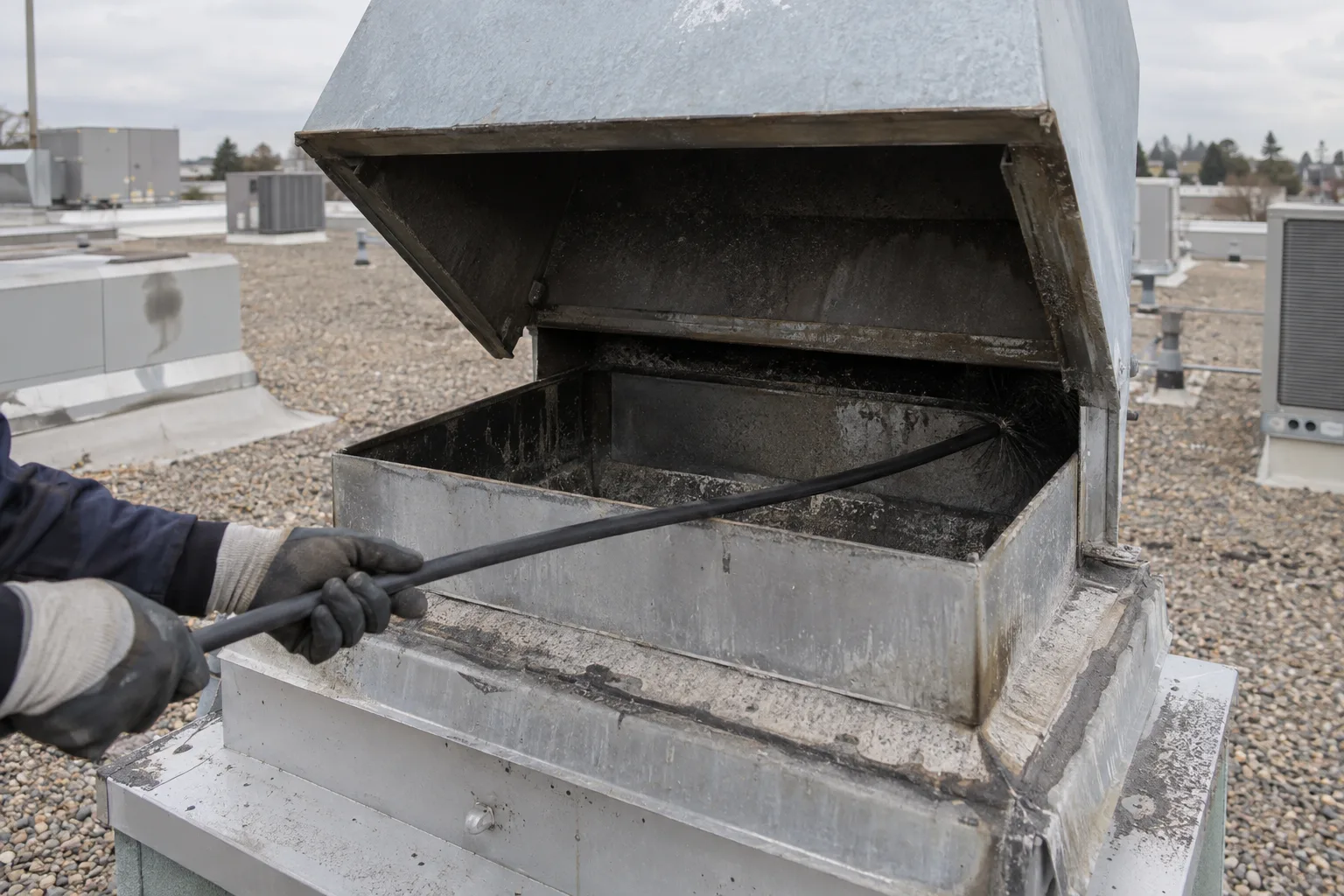
Before cleaning begins, the technician inspects each commercial exhaust flue for grease accumulation level, obstructions, liner condition and access point configuration. Commercial flue sizing is confirmed against the appliance output it serves. This step determines the cleaning method and documents the baseline condition for the service record.
-
2
Implementation
Cleaning is performed using tools and methods appropriate to the flue's commercial classification. Restaurant chimney cleaning in Lakewood and across Denver Metro kitchens involves heavier grease deposits than residential work. High temperature commercial equipment produces carbon and grease byproducts that bond to flue walls differently than wood combustion residue. For multi-unit chimney systems, each segment is addressed individually.
-
3
Post-Service Testing and Documentation
After cleaning, the flue is reinspected to confirm deposit removal. Any deficiencies, liner damage, deteriorating mortar joints, improper commercial flue sizing, are noted in the service record with photographs when applicable. The completed written record is provided to the facility director or property manager on the same visit, including pre and post service condition, scope of work performed, deficiencies noted and the recommended next service interval.
Areas we serve
AR Chimney Pros provides commercial chimney cleaning and commercial exhaust cleaning across the full Denver Metro.
Service covers Lakewood, Denver, Arvada, Westminster, Aurora, Thornton, Littleton, Englewood, Wheat Ridge, Golden, Highlands Ranch, Broomfield, Centennial, Commerce City and Greenwood Village. Multi-property commercial accounts spanning multiple locations across the metro are welcome.
- Lakewood
- Denver
- Arvada
- Westminster
- Aurora
- Thornton
- Littleton
- Englewood
- Wheat Ridge
- Golden
- Highlands Ranch
- Broomfield
- Centennial
- Commerce City
- Greenwood Village
Related commercial services
If cleaning uncovers structural deficiencies, these are the next steps.
Frequently asked questions
Commercial cleaning questions we answer most often from property managers.
How much does commercial chimney cleaning cost for a multi-unit property in Lakewood?
Cost varies by flue count, grease accumulation level, and cleaning method required per commercial flue classification. AR Chimney Pros assesses each flue individually before quoting. Contact 720-608-7668 to discuss your property's scope and get a documented estimate.
How long does a commercial exhaust flue cleaning take for a building with multiple tenants?
A single flue commercial cleaning typically takes two to four hours. Multi-unit properties with four or more flue segments may require a full day or a scheduled multi-day project. AR Chimney Pros' 20 person crew allows multiple technicians to work a single property simultaneously, reducing total site time without compressing the cleaning process.
Does AR Chimney Pros follow NFPA 96 cleaning intervals, or does every property just get annual service?
Service intervals are set by cooking volume, not the calendar. NFPA 96, the federal standard governing commercial cooking exhaust maintenance, requires quarterly cleaning for high volume operations and semi-annual for medium volume. AR Chimney Pros builds each property's service cycle around those thresholds, documented per flue, not applied uniformly across the building.
What's actually in the written service record you deliver after every commercial visit?
Each record includes pre and post service flue condition, grease accumulation level, deficiencies observed, photographs where applicable, and the recommended next service interval. It is formatted for health department and fire marshal review. One record is generated per flue, not one document for the entire building.
Can AR Chimney Pros handle commercial cleaning for properties spread across multiple Denver Metro locations?
Yes. Multi-property commercial accounts across the Denver Metro are handled through a single point of contact. Scheduling, documentation, and service records are consolidated so facility directors managing multiple buildings don't need to coordinate separate vendors or maintain separate compliance files for each address.
My building passed its last health inspection. Why does the exhaust flue still need cleaning now?
Passing an inspection confirms compliance at that moment, not ongoing safety. Grease accumulation, the buildup of cooking byproducts inside commercial exhaust flues, continues between inspections and creates a fire hazard when not cleaned on schedule. Inspection compliance and actual flue condition are two different things. Regular documented service keeps both aligned.
More questions about your system? Read the full FAQ.
Schedule your commercial flue cleaning
Documented commercial chimney cleaning in Lakewood and across the Denver Metro. Call to schedule.
Contact AR Chimney Pros at 720-608-7668 or email info@archimneypros.com to schedule a site assessment or discuss a multi-property service cycle. Bring the service record requirement to the conversation. That is where the scheduling process starts.