
Carbon Monoxide Safety Inspection in Lakewood, CO
We check the combustion appliance, flue connector, liner and draft path as one system, not as a single test.
Open-combustion fireplaces and sealed gas appliances on shared flues are both covered on the same visit.
Dispatching from 12640 W Cedar Dr, Unit 7, Lakewood.
What's checked
- Combustion appliance condition
- Flue connector joints and pitch
- Liner condition and shared flue mapping
- CO instrument readings at spillage points
What a CO risk actually looks like in your house
Carbon monoxide itself is invisible, but the chimney problems that cause it usually leave a sign somewhere in the system. Open a row to see which part we check and what the fix involves.
A sooty smell drifts into the room on quiet days Cap and draft path
A damaged or undersized cap limits draft, letting combustion gases settle instead of exiting at the top of the flue. We check cap condition, terminal obstruction and downdraft potential as part of the draft path evaluation.
See draft analysisThe furnace shuts off and restarts on its own Flue liner
Short cycling can point to backpressure from a cracked or deteriorated flue liner pushing exhaust the wrong way. We inspect the liner by camera or direct access depending on the chimney configuration.
See Level 2 inspectionSmoke rolls back into the room when a fire is lit Smoke chamber
An oversized or poorly parged smoke chamber disrupts the draft pattern right above the firebox. If the shape or condition looks like the cause, it often needs more than a surface fix.
See Level 3 inspectionThe damper won't stay open, it drifts shut on its own Damper
A warped or misaligned damper can create a pressure imbalance in the combustion appliance zone. We check damper operation and fit alongside the appliance condition check.
See full chimney repairSoot builds up heavier than normal around the firebox opening Firebox
Excess soot often means combustion isn't completing cleanly, which raises CO output. We check burner performance and firebox condition for both open-combustion and sealed gas appliances.
See gas fireplace inspectionA faint gas smell lingers near the cleanout door Cleanout
Debris or blockage at the cleanout can affect pressure through the whole flue system. We check every accessible area, including the cleanout, as part of every inspection.
See Level 1 inspectionTight construction and shared flues change the risk
Homes built after 2000 in Lakewood and Jefferson County are sealed for energy efficiency, and that changes how CO behaves indoors.
Tight construction, modern building practice using air sealing and insulation that reduces natural ventilation, means there's less passive air movement to dilute flue gases that escape from a compromised liner.
The Combustion Appliance Zone (CAZ), the area inside a home where combustion appliances operate, matters more in tightly sealed homes. In older homes, gaps in construction provided accidental dilution. In newer ones, even a minor draft failure creates a measurable CO accumulation problem.
Lakewood and Wheat Ridge also carry significant housing stock from the 1950s through 1970s. Many of those homes have a shared flue configuration, where multiple appliances such as a furnace, water heater and fireplace vent through a single chimney. A problem in one appliance can affect the exhaust pathway for all of them. We serve this corridor from our Cedar Drive office, same crew, no cross-metro rerouting.
- 3 readings
- Minimum taken at spillage points
- 60 to 90 min
- Typical appointment length
- 1950s to 1970s
- Housing stock most likely to share a flue
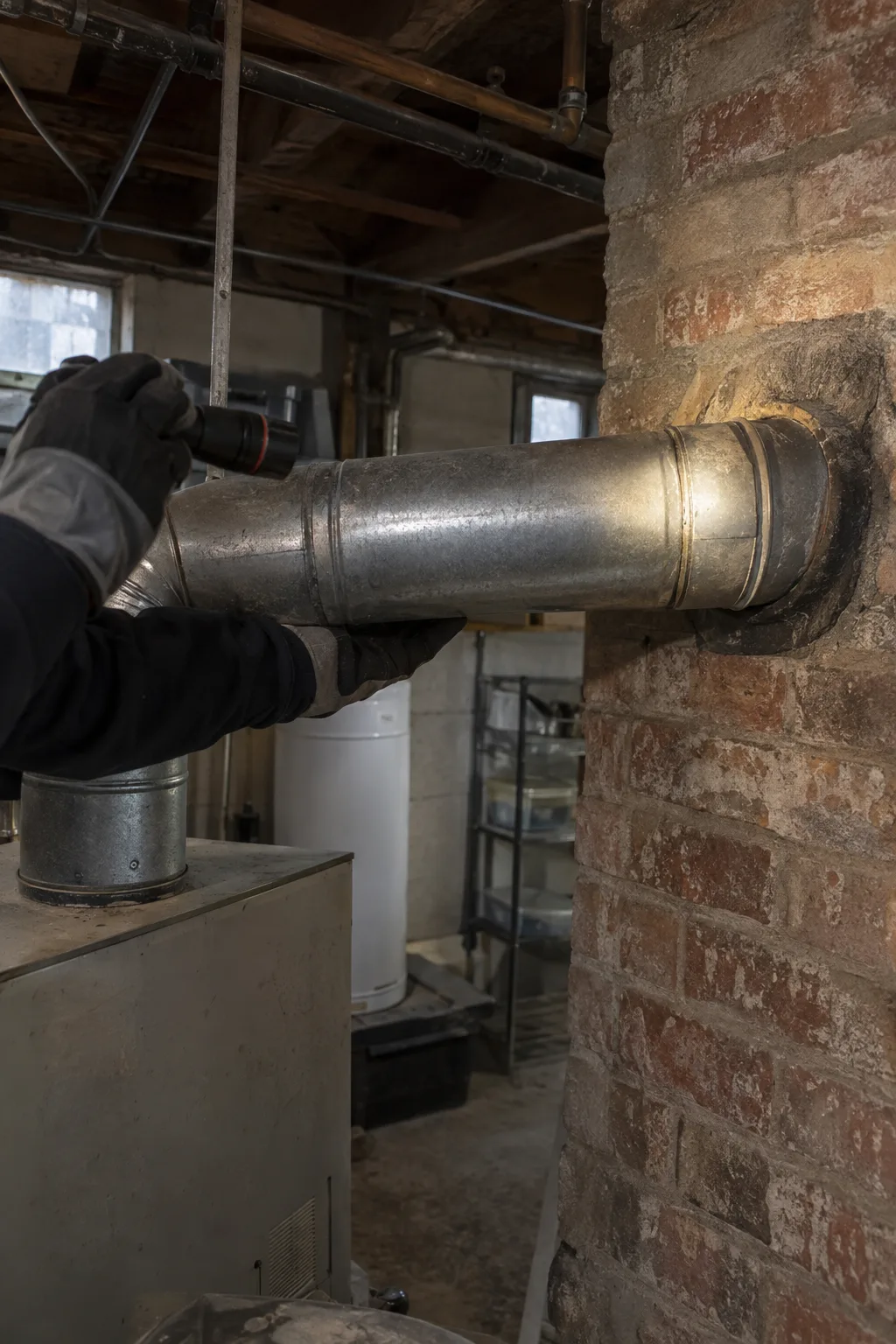
Every CO inspection starts with the appliances
Not the liner, not the cap. The appliances first.
A call came from a home on the Lakewood to Wheat Ridge border, a 1967 ranch style house with a gas furnace, a gas water heater and a wood burning fireplace, all three venting through a single masonry chimney. A classic shared flue configuration, no CO detector alerts, no symptoms. Just an overdue safety check before winter.
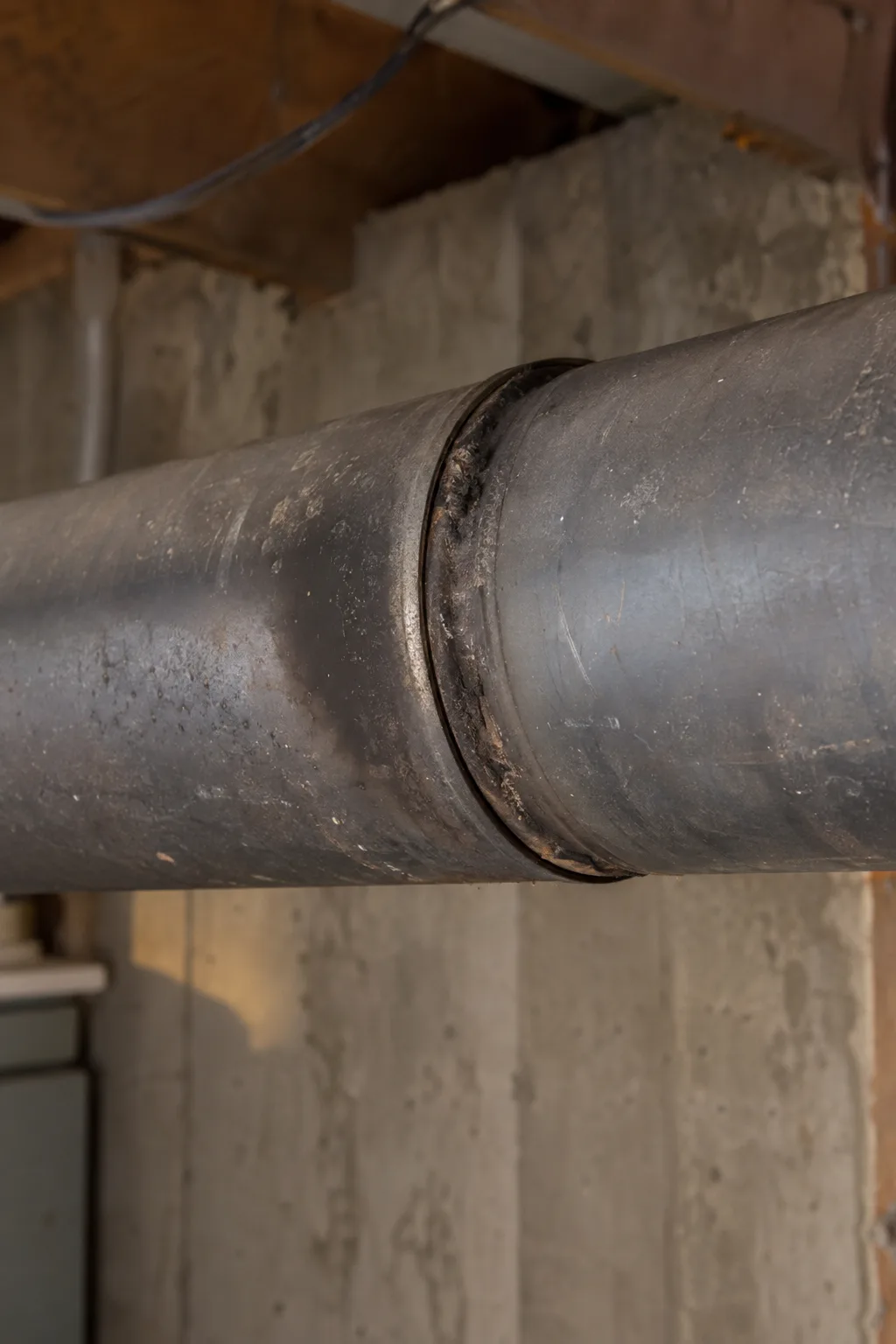
The flue connector
The inspection started in the basement. The flue connector, the pipe linking the furnace to the chimney, had a slight separation at one joint. Not collapsed, not obviously damaged, but enough of a gap that under certain pressure conditions, combustion gases could push back into the mechanical room instead of drafting upward.
The liner
Next was the liner. One section had a cracked flue liner, a fracture that allows exhaust gases, including CO, to migrate through the masonry into living spaces. At altitude, combustion runs slightly richer in CO output because lower oxygen density affects burn efficiency, so a cracked liner in that context isn't a minor issue.
Every finding was documented with photos. The homeowner understood exactly what they were looking at. They knew why the repair sequence mattered before the heating season started.
Is this really different from a standard inspection?
Yes, and the difference comes down to what the technician is specifically looking for.
A Level 1 or Level 2 inspection is essential annual maintenance that checks the structural and operational condition of the chimney. It isn't built to trace a CO spillage pathway across multiple appliances on a shared flue, that's what this inspection adds.
| What's checked | Level 1 or 2 | CO safety inspection |
|---|---|---|
| Structural condition | Yes | Yes |
| CO instrument readings at spillage points | Not included | Included |
| Combustion Appliance Zone pressure check | Not included | Included |
| Shared flue appliance mapping | Not included | Included |
If your home has a sealed gas fireplace and a gas furnace sharing a flue, a standard inspection may not assess how those two appliances interact under simultaneous operation. Our CO inspection does.
Our standards for every CO safety inspection
We document every component before and after. Nothing is assumed serviceable.
Call 720-608-7668- Combustion appliance condition Burner performance, visible exhaust signs and equipment age.
- Flue connector integrity Joints, separation points, corrosion and pitch toward the chimney.
- Liner assessment Clay tile, metal or cast-in-place: cracked sections, deterioration and debris.
- Draft path evaluation Chimney height, cap condition, terminal obstruction and downdraft potential.
- Shared flue mapping Which appliances share the flue and in what sequence.
- CAZ pressure check Combustion Appliance Zone assessment for depressurization conditions.
- CO instrument reading Direct measurement at key spillage points, three readings minimum.
How the inspection runs, start to finish
The appointment follows a fixed sequence: diagnostics first, then assessment, then report.
-
1
Diagnostics
Outside first, then inside.
The technician starts outside: cap, crown, masonry condition and any visible flue obstruction from the roofline. Then inside, the combustion appliance zone is mapped, the flue connector is traced from appliance collar to chimney entry, and CO instrument readings are taken at the appliance draft hood before anything is disturbed. This baseline reading captures existing conditions before any test pressure is introduced.
-
2
Assessment
The liner and shared flue get traced in detail.
The liner is inspected via camera or direct access depending on chimney configuration. Shared flue configurations get traced for each appliance's entry point and evaluated for backpressure risk. Any flue blockage, a partial or full obstruction from debris, animal nests or collapsed liner sections, is documented with photos. At altitude, combustion appliances run in thinner air, which affects combustion efficiency and increases CO output relative to sea level performance. This factor is assessed explicitly during the evaluation.
-
3
Post-service testing and report
A second round of readings confirms what changed.
After the full assessment, the technician takes a second round of CO instrument readings. This confirms baseline conditions and identifies any change during the inspection process. The homeowner receives a written report with photos, findings categorized by urgency, and a plain language explanation of what each finding means for their household's CO risk.
See draft analysis
Related inspections
If the CO check turns up a liner or draft issue, these are the next steps.
Areas we serve
AR Chimney Pros covers Lakewood and the surrounding Jefferson County corridor.
We serve Lakewood, Wheat Ridge, Englewood, Sheridan, Edgewater, Morrison, Golden and Arvada. We also cover Denver, Littleton, Westminster, Aurora, Thornton, Highlands Ranch, Centennial and Broomfield. Our Cedar Drive office dispatches to all of these areas without rerouting through other metro dispatch points.
Frequently asked questions
CO inspection questions we answer most often on the phone.
How much does a carbon monoxide safety inspection cost in Lakewood?
Call 720-608-7668 for current pricing before scheduling. Cost depends on the number of combustion appliances and whether the home has a shared flue configuration.
How is this different from the standard Level 1 or Level 2 inspection?
A CO safety inspection specifically traces every exhaust pathway for conditions that cause CO spillage. Standard Level 1 and Level 2 inspections assess structural and operational chimney condition. A CO inspection also evaluates the Combustion Appliance Zone for depressurization conditions that push flue gases back into living spaces, a step standard inspections don't include.
Can a working CO detector replace this inspection?
No. Household CO detectors alarm at sustained high concentrations, not low-level accumulation. A cracked flue liner or a separated flue connector can push small amounts of CO into your home for hours without triggering an alarm. The inspection uses direct instrument readings at multiple spillage points, with three readings minimum.
My home is newer and well insulated. Does that actually increase my CO risk?
Tighter construction increases CO risk when a combustion appliance is present. Newer Lakewood homes use air sealing that reduces passive ventilation, so flue gases escaping through a cracked liner have fewer air exchanges to dilute them. Older homes had accidental dilution through construction gaps. Newer ones do not.
How long does a CO safety inspection take from start to finish?
Most appointments run 60 to 90 minutes depending on the number of combustion appliances and whether a shared flue configuration is present. The technician takes baseline CO readings before disturbing anything, runs the full liner and draft path assessment, then takes a second round of readings. A written report with photos is provided before the technician leaves.
What happens if the inspection finds a CO risk? Do you repair it the same day?
Minor flue connector issues can sometimes be addressed at the same appointment. Liner repairs, smoke chamber work or shared flue corrections require a separate scheduled visit. Every finding is documented with photos and categorized by urgency, so you leave knowing exactly what needs to happen next and in what order.
More questions about your system? Read the full FAQ.
Schedule your CO safety inspection in Lakewood
A CO inspection tells you exactly what your flue system is doing and where the risk points are.
Call AR Chimney Pros at 720-608-7668 or email info@archimneypros.com to schedule. Tell us your appliance types and approximate chimney age, and we'll put the right technician on the job and give you a clear picture before heating season puts your system under load.
info@archimneypros.com