
Chimney Damper Problems: Why Yours Sticks, Leaks Heat, and What to Do About It
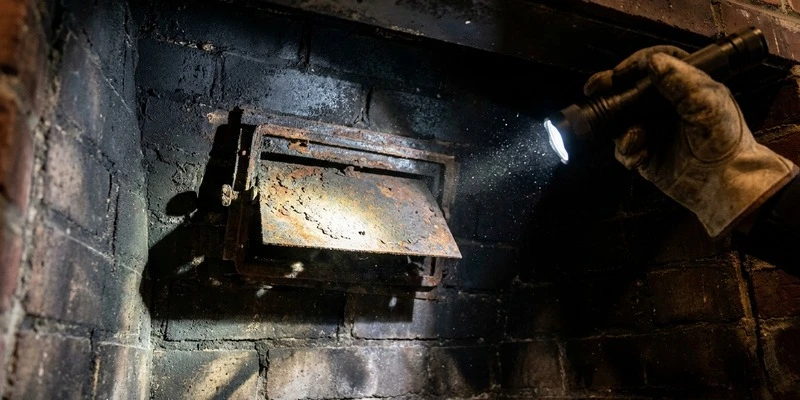
The damper is a metal plate sitting in the throat of your chimney, and its whole job is to be open when there is a fire and closed when there is not. It is a simple device that lives in the worst possible environment: hot smoke from below, rain and snow from above, and years of soot and rust accumulating on every moving part. Then one October evening the handle will not budge, and the fireplace becomes unusable until someone climbs up and looks.
Dampers also quietly cost Colorado homeowners money all year. A traditional throat damper is a rough steel plate resting on a rough steel frame. Even a new one does not seal tightly, and a corroded one may not seal at all. That gap sits open to the sky above your living room, letting heated air escape in January and letting hot air and humidity in during July.
How to Tell Your Damper Is Failing
- It sticks or will not move. Rust, warping from heat, or creosote buildup has seized the mechanism.
- You feel a draft with the fireplace closed. Stand near the hearth on a cold day. Noticeable cold air means the damper is not sealing.
- Smoke enters the room when you light a fire. A damper that is not opening fully restricts the flue.
- You hear the plate rattle in the wind. Warping or a broken hinge.
- Water sounds or a damp smell. Moisture is getting past the top of the chimney and pooling on the damper plate.
- Animal noises. Birds and raccoons that get past a missing cap often end up on the damper shelf, and their nesting material blocks it.
The Repair Options, Cheapest to Best
Cleaning and Adjustment
Plenty of stuck dampers are simply filthy. Years of soot bind the pivot points, and a thorough cleaning with a wire brush and a high-temperature lubricant on the hinges frees the plate. If the metal underneath is sound and the frame is not warped, this is the whole repair, and it is generally done during a routine sweep.
Replacing Parts of the Throat Damper
Handles, pivot pins, and the plate itself can sometimes be replaced individually if the frame is still solid. The limiting factor is that the frame is mortared into the masonry. Once the frame has rusted through or cracked, replacing it means masonry work in the throat of the chimney, which is labor-intensive enough that most homeowners choose a different route.
Upgrading to a Top-Sealing Damper
This is the option we recommend most often, and it solves several problems at once. A top-sealing damper mounts at the very top of the flue rather than in the throat. It has a silicone rubber gasket that seals against the crown, and it is operated by a stainless cable that runs down the flue to a small handle inside the firebox.
Because it seals with a rubber gasket rather than metal on metal, a top-sealing damper closes far more tightly than any throat damper can, and it caps the flue against rain, snow, and animals at the same time. You are effectively getting a damper and a chimney cap in one assembly. For homeowners who use the fireplace occasionally but pay to heat the house all winter, this upgrade usually pays for itself faster than expected.
Two things to know. The cable and gasket are serviceable parts that need occasional attention, and you must open the damper before lighting a fire, exactly as with a throat damper. Leaving it closed with a fire burning fills the room with smoke.
Why This Matters More at Altitude
Colorado gives dampers a hard time. Our freeze-thaw cycles drive water into small cracks and expand it overnight, which is what turns a hairline crack in a crown into an open path to the damper shelf. Our temperature swings are large, so the seasonal energy loss through a leaking damper is significant in both directions. And our dry, thin air means draft behaves differently than it does at sea level, so a damper that only opens part of the way has a more noticeable effect on how a fire performs.
There is also a safety dimension. A damper that has rusted partially shut restricts the flue while still appearing open to the homeowner. Restricted venting is one of the conditions that allows combustion byproducts to spill into the room, which is why working carbon monoxide alarms matter on every level of a home with any fuel-burning appliance. The Consumer Product Safety Commission publishes clear guidance on carbon monoxide alarm placement and testing.
What Homeowners Can Safely Check
You can do a reasonable amount yourself with a flashlight and no ladder:
- Open the damper fully and look up. You should see a clear opening and, ideally, daylight at the top.
- Close it and feel for airflow at the hearth on a cold day.
- Work the handle a few times. Note whether it moves smoothly or has to be forced.
- Look for rust flakes, nesting material, or water staining on the smoke shelf.
What is not a homeowner job is climbing on the roof, breaking free a seized plate with force, or installing a top-sealing unit. Forcing a corroded damper commonly snaps the pivot and turns a cleaning into a replacement. Roof work on a Colorado chimney in shoulder season is genuinely hazardous, and the National Fire Protection Association recommends annual professional inspection of chimneys and venting systems precisely because so much of the system is not visible from inside the house.
Where the Damper Fits in the Bigger Picture
A damper rarely fails alone. When we find one rusted through, we usually also find a cracked crown, a missing or damaged cap, or flashing that has been letting water in for years. Water is the common cause, and fixing the damper without fixing the water source just resets the clock on the same failure.
That is why a damper complaint starts with an inspection of the whole system rather than a parts quote. Our chimney inspection service identifies what is actually driving the problem, and if the entry point is at the top of the stack, our chimney cap work addresses it properly so the new damper is not exposed to the same conditions that destroyed the old one.
If your damper sticks, rattles, or lets a draft into the living room all winter, have it looked at before the heating season. Contact AR Chimney Pros to schedule an evaluation, and we will tell you whether yours needs cleaning, parts, or a top-sealing upgrade.






Leave A Comment