
How to Fix a Smoky Fireplace and Resolve Chimney Draft Problems
Lighting a fire on a chilly evening in Colorado should fill your living space with warmth and a relaxing ambiance. However, that comforting experience can quickly turn frustrating if your fireplace begins billowing smoke back into the room. A smoky fireplace is more than just a nuisance that leaves your furniture and clothing smelling like a campfire. It is a clear indicator of an underlying mechanical or environmental issue within your venting system. A properly functioning chimney draft is essential for exhausting harmful combustion gases safely out of your home.
If you are struggling with smoke spillage in your Lakewood home, understanding the physics behind chimney airflow is the first step toward finding a lasting solution. Chimneys operate on the principle of the stack effect, which relies on the fact that hot air is lighter and less dense than cold air. When you build a fire, the heated air rises naturally, creating an updraft that carries smoke and toxic byproducts out the top of the flue. When this draft is interrupted, weakened, or reversed, smoke has nowhere to go but back into your living space. Fortunately, most drafting problems can be identified and corrected with a logical troubleshooting approach.
The Cold Flue Phenomenon
One of the most frequent causes of a smoky fireplace, particularly during the freezing winter months in the Denver metro area, is a phenomenon known as the cold plug. Many chimneys are constructed on the exterior walls of a house. When the masonry is exposed to freezing outdoor temperatures, the air inside the flue becomes extremely cold and dense. This heavy air acts like an invisible stopper, pushing down into the firebox.
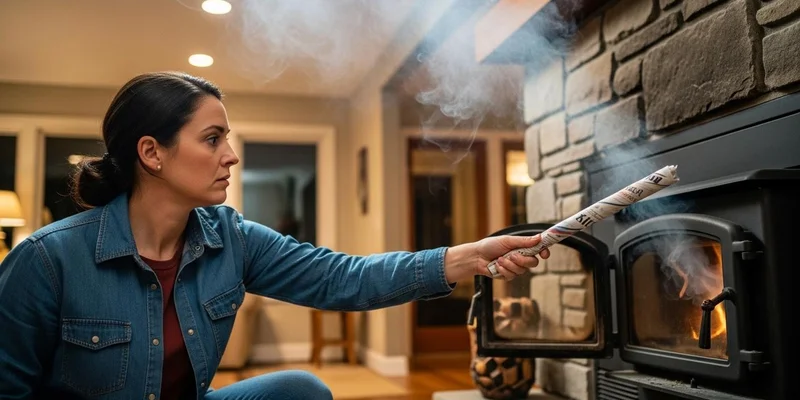
When you strike a match and light your kindling, the initial heat is often not strong enough to push through that heavy column of cold air. As a result, the smoke hits the cold plug and spills directly back into the room. To overcome a cold flue, you must prime the chimney before establishing your main fire. You can achieve this by lighting a tightly rolled newspaper wand and holding it carefully near the open damper for a few minutes. The concentrated heat will gradually warm the trapped air, reversing the downdraft and establishing a proper upward flow before you ignite your primary logs.
Negative Indoor Air Pressure
Modern homes are built with advanced insulation and tight seals to maximize energy efficiency and reduce heating costs. While this is excellent for your utility bills, it can wreak havoc on your fireplace draft. A fireplace consumes a massive volume of air to sustain combustion. If your house is tightly sealed, the fire will struggle to pull enough replacement air from the surrounding environment.
This problem is heavily compounded by other household appliances. Bathroom exhaust fans, kitchen range hoods, and clothes dryers all actively pull air out of your house. When these appliances run simultaneously, they create negative pressure indoors. The house will naturally attempt to equalize this pressure by pulling air in from any available opening, and the chimney is often the largest open vent available. According to the Department of Energy ventilation guidelines, managing indoor air pressure is critical for healthy indoor air quality. If you suspect negative pressure is causing your smoky fireplace, try cracking a window in the same room slightly open before lighting your fire to provide a dedicated source of makeup air.
Hidden Blockages and Flue Obstructions
Even if your air pressure is balanced and your flue is warm, smoke cannot escape if the pathway is blocked. Chimneys are highly susceptible to hidden obstructions that accumulate over time. Birds, squirrels, and raccoons often find the warmth and shelter of an uncapped chimney highly appealing, building thick nests inside the masonry. Additionally, severe weather can blow leaves, twigs, and debris down the flue stack.
Beyond external debris, the internal buildup of creosote is a major culprit for restricted airflow. As wood burns, it releases tar and moisture that condense on the inner walls of the liner. Over time, this thick, crusty buildup narrows the diameter of the flue, choking off the exhaust pathway. Because these blockages occur deep within the dark vertical shaft, they are impossible to diagnose from the living room. Scheduling an advanced camera inspection allows a certified technician to run a high-definition lens up the entire length of the chimney, pinpointing exact blockages and ensuring the pathway is completely clear.
Damper Malfunctions and Operational Errors
The damper is the heavy metal or ceramic valve located just above the firebox, acting as the gateway between your living room and the flue. Its primary job is to seal the chimney when not in use, preventing conditioned air from escaping. A surprising number of smoke issues are caused simply by a damper that is fully closed or only partially open during a fire.
Even if you remember to use the handle, dampers can degrade over time. The extreme heat of a wood fire can warp the metal tracks, causing the plate to stick halfway. Rust from moisture intrusion can also seize the hinges, making it impossible to open the valve completely. A warped or rusted damper restricts the critical exhaust opening, forcing smoke to billow backward out of the firebox. If the handle feels stiff, grinds, or fails to lock into place securely, the mechanism likely needs professional adjustment or replacement.
Structural Flaws and Chimney Height
Sometimes, the cause of a smoky fireplace is baked into the original construction of the home. For a chimney to draft effectively, there must be a mathematically precise ratio between the square footage of the fireplace opening and the cross-sectional area of the flue. If the firebox is too large for the flue diameter, the chimney simply cannot process the volume of smoke being produced fast enough. In these scenarios, homeowners often have to install a smoke guard across the top of the firebox opening to reduce its size and correct the drafting ratio.
Furthermore, the overall height of the chimney stack plays a vital role in its performance. The National Fire Protection Association structural standards mandate the 10-foot, 2-foot rule. This rule dictates that a chimney must extend at least three feet above the roof penetration point and must be at least two feet taller than any part of the building within a ten-foot radius. If your chimney is too short, wind patterns deflecting off the steep pitch of your roof can create high-pressure zones that physically force smoke back down the stack.
When to Call in the Professionals
Troubleshooting a smoky fireplace often involves a process of elimination. You can start by checking the damper, cracking a window, using only dry seasoned hardwood, and priming the flue on cold nights. If you follow these operational best practices and still face persistent smoke spillage, the issue is likely structural or involves a dangerous internal blockage.
Continuing to use a poorly drafting fireplace exposes your family to hazardous particulate matter and increases the risk of a dangerous creosote fire. Instead of enduring the smell of stale smoke, reach out for expert chimney repair solutions to accurately diagnose the root cause. Professional technicians have the diagnostic tools, the airflow knowledge, and the masonry expertise to transform a frustrating, smoky fireplace into a safe, efficient, and enjoyable centerpiece for your home.






Leave A Comment