
The Complete Guide to Chimney Masonry Repair and Tuckpointing
A classic brick or stone fireplace adds timeless beauty and significant value to any home in Colorado. However, while masonry structures are incredibly durable, they are not invincible. The exterior of your chimney stack is constantly exposed to harsh environmental elements, battling wind, rain, snow, and extreme temperature fluctuations day in and day out. Over time, these relentless weather conditions break down the materials that hold your chimney together, leading to severe structural vulnerabilities. Addressing masonry decay early is the most effective way to prevent catastrophic water damage to your home.
For homeowners in Lakewood and the greater Denver area, understanding how local weather impacts brick and mortar is crucial. Ignoring the early warning signs of masonry degradation will inevitably lead to expensive reconstruction projects. When the structural integrity of a chimney is compromised, it stops being a safe exhaust system for toxic combustion gases and becomes a dangerous liability. This guide will walk you through the mechanics of masonry damage, the crucial process of tuckpointing, and how to protect your chimney stack for decades to come.
The Destructive Power of the Freeze-Thaw Cycle
The primary enemy of any masonry chimney in Colorado is water. Bricks and mortar are naturally porous materials, meaning they act like rigid sponges that absorb moisture from rain, melting snow, and ambient humidity. Under normal, mild conditions, this moisture simply evaporates back into the air when the sun comes out. However, the winter climate in our region introduces a highly destructive process known as the freeze-thaw cycle.
When water penetrates the porous surface of your chimney and the temperature drops below freezing, that trapped water turns into ice. As water freezes, it expands by approximately nine percent. This internal expansion exerts immense pressure on the surrounding brick and mortar. When the temperature rises the next day, the ice melts, leaving behind micro-cracks. The next time it rains or snows, water fills those newly formed cracks, freezes, and expands again. This continuous cycle of expansion and contraction literally tears your chimney apart from the inside out.
Identifying Brick Spalling
One of the most obvious visual indicators of severe freeze-thaw damage is a condition known as spalling. Spalling occurs when the outer face of a brick begins to flake, crumble, or pop off entirely, exposing the softer, highly vulnerable interior of the masonry unit. Once a brick loses its fired outer shell, it deteriorates at an exponentially faster rate.
You might notice pieces of red brick scattered on your roof, laying on your driveway, or accumulating around the base of your chimney stack. Spalling is not merely a cosmetic issue. It is a major structural failure. When enough bricks spall and crumble, the chimney loses its load-bearing capacity and can begin to lean or even collapse under its own weight. Replacing spalled bricks requires careful extraction to avoid disturbing the surrounding healthy masonry, a task that demands professional expertise.
Efflorescence: The Early Warning Sign
Before spalling occurs, your chimney will often give you an early warning sign that water is infiltrating the system. This sign presents itself as a powdery, white residue coating the exterior of the brickwork, known as efflorescence. As water moves through the masonry, it dissolves natural salts found within the brick and mortar. When the water reaches the surface of the chimney and evaporates, it leaves those white salt deposits behind.
While efflorescence itself is relatively harmless and can often be washed away, it is a glaring red flag. The presence of white staining proves definitively that excess moisture is traveling through your chimney walls. If you spot this powdery residue, it is time to schedule an inspection before the trapped moisture has a chance to freeze, expand, and trigger irreversible spalling damage.
The Critical Role of Mortar and Tuckpointing
While bricks are designed to last for a century or more, the mortar holding them together has a much shorter lifespan, typically deteriorating after twenty to thirty years. Mortar is intentionally designed to be softer than the bricks it binds. It acts as the sacrificial element in the masonry system, absorbing the brunt of the structural stress and thermal expansion so the bricks do not crack.
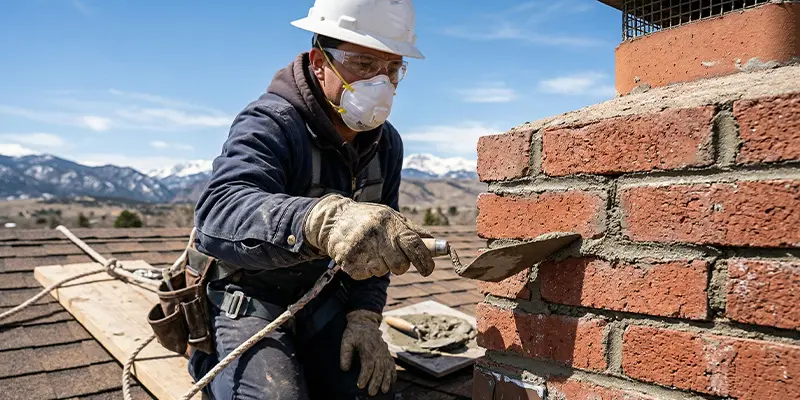
When the mortar joints begin to recede, crack, or wash away entirely, the chimney is left completely exposed to water intrusion. The solution to failing mortar joints is a specialized restoration process called tuckpointing. Tuckpointing involves using specialized masonry routers to safely grind out the decayed mortar to a uniform depth. Once the damaged material is removed, technicians carefully pack fresh, color-matched mortar into the joints, sealing the gaps and restoring the structural integrity of the chimney stack. Proper professional masonry repair stops water leaks immediately and dramatically extends the life of the entire fireplace system.
Why DIY Masonry Repair Often Fails
It can be tempting for handy homeowners to purchase a bucket of pre-mixed cement from a local hardware store and attempt to patch their own chimney joints. However, DIY masonry repair routinely causes far more damage than it prevents. The most common mistake is using a mortar mix that is physically harder than the surrounding bricks, such as a modern Portland cement blend.
If the new mortar is harder than the brick, the natural thermal expansion of the chimney will be forced into the bricks themselves, causing them to shatter and crack. The Brick Industry Association guidelines strictly emphasize the importance of matching the compressive strength and permeability of the replacement mortar to the original historical materials. A trained technician knows exactly how to formulate the correct mortar mixture to ensure the repaired joints perform exactly as intended without causing collateral damage to the masonry units.
Protecting the Top of the Stack
While vertical brickwork is vulnerable, the horizontal surfaces of your chimney take the hardest beating from the elements. The chimney crown is the concrete slab that seals the top of the stack, sloping downward to direct water away from the flue opening and the vertical brickwork. Because it sits completely exposed, the crown is highly susceptible to cracking from weather exposure and building settling.
A cracked crown allows water to pour directly down into the internal core of the chimney, saturating the masonry from the inside and rusting the damper mechanism below. In many cases, homeowners mistake a masonry leak for a roof leak. Investing in robust chimney crown services, which can include sealing hairline fractures with flexible elastomeric compounds or pouring a completely new reinforced concrete cap, is a vital step in comprehensive masonry protection.
Long-Term Defense: Professional Waterproofing
Once your chimney has been professionally tuckpointed and any spalled bricks have been replaced, you want to protect that investment. The final and most effective step in masonry defense is applying a professional-grade waterproofing treatment to the entire exterior stack.
It is critical to note that you should never use standard paint or generic clear sealers on a brick chimney. Masonry needs to breathe. If you apply a non-breathable sealant, you will trap the internal moisture generated by your home and your fireplace inside the bricks, accelerating the freeze-thaw destruction. Professionals only use 100-percent vapor-permeable siloxane water repellents. These advanced treatments penetrate deep into the brick to block external water droplets from entering, while still allowing internal water vapor to safely escape. Following standard safety codes, keeping the structural column dry ensures the chimney will vent properly without collapsing.
Securing Your Home for the Future
Your chimney is a heavy, complex architectural feature that requires specialized care to remain safe and functional. Ignoring crumbling mortar or flaking bricks will not make the problem go away, it will simply increase the scale and cost of the inevitable repair. By staying proactive, watching for the signs of efflorescence, and trusting certified technicians to perform proper tuckpointing, you can preserve the safety, efficiency, and classic beauty of your fireplace for generations to come.






Leave A Comment