
How to Identify and Eliminate Bad Chimney Odors in Your Home
During the freezing winter months in Colorado, the scent of a wood-burning fireplace is comforting and nostalgic. However, when the seasons change and the weather warms up, that pleasant aroma can quickly transform into a foul, pungent stench that permeates your entire living space. If your living room smells like a stale campfire, a damp basement, or something even worse, you are experiencing a common but highly frustrating issue. A foul-smelling fireplace is not just an annoyance, it is a clear symptom of a larger moisture or ventilation problem within your flue.
Homeowners in Lakewood and the surrounding Denver areas often notice these bad chimney odors most prominently during the spring and summer. This timing is not a coincidence. The combination of rising temperatures, increased humidity, and changes in home air pressure creates the perfect environment for trapped smells to be pulled downward into your house. Masking the issue with air fresheners or scented candles is only a temporary band-aid. To permanently eliminate the stench, you have to understand the root cause of the odor and address the mechanical or environmental failure causing it.
The Acrid Campfire Smell: Creosote and Humidity
The most frequent complaint from homeowners is a strong, acrid smell that resembles stale asphalt or a wet campfire. This specific odor is almost always caused by the presence of creosote inside the chimney liner. Creosote is the natural, highly combustible byproduct of burning wood. While you might not notice its smell during the winter when the warm draft carries the exhaust up and out of the house, the summer months change the dynamic.
Creosote is highly porous and readily absorbs moisture from the humid summer air. When this soot and tar mixture becomes damp, it emits a deeply pungent odor. The more creosote buildup you have in your flue, the stronger and more offensive the summer smells will be. If you burn unseasoned or wet wood during the winter, you will accumulate a thicker, more tar-like creosote glaze, which exponentially worsens the odor problem. The only effective way to stop this specific smell is to have the combustible residue physically removed from the masonry walls before the summer heat bakes it into the air.
The Musty, Damp Odor: Water Infiltration
If your fireplace smells less like smoke and more like a mildewy basement or wet dog, you are likely dealing with active water infiltration. Chimneys are exposed to heavy rain, snowmelt, and severe weather year-round. If the protective components of your chimney fail, water will seep directly into the porous bricks, the mortar joints, and the firebox itself.
Once moisture is trapped inside the dark, poorly ventilated shaft of your chimney, mold and mildew begin to grow rapidly. This biological growth produces a strong, musty stench. Water can enter your system through a rusted flashing seal, a severely cracked concrete crown, or simply because the chimney lacks a protective metal cap. Preventing water intrusion at the top of the stack is the most effective way to stop musty chimney odors at their source. Allowing a moisture problem to persist will not only ruin the air quality in your home but will also lead to devastating structural decay as the masonry begins to rot from the inside out.
The Decomposition Smell: Wildlife Intruders
Perhaps the most alarming and unpleasant odor you can encounter is the smell of decomposition or strong ammonia coming from the hearth. Unfortunately, the dark, sheltered environment of an uncapped chimney is highly attractive to local wildlife. Birds, raccoons, and squirrels frequently build nests inside the flue to protect their young from predators and the elements.
The presence of wild animals introduces a host of foul odors, primarily from accumulated droppings and nesting materials blocking the draft. In tragic circumstances, animals can become stuck and pass away inside the narrow flue, leading to an unbearable decomposition smell that will quickly overtake your home. If you hear scratching noises or detect these severe biological odors, you must immediately seek humane animal removal services. Attempting to smoke out an animal is illegal, cruel, and can easily result in a dangerous house fire if the nest ignites and blocks the exhaust pathway.
How the Summer Stack Effect Drags Smells Indoors
You might wonder why you only smell your chimney during the summer when you are not even using it. The answer lies in the physics of household air pressure, specifically a phenomenon known as the reverse stack effect. In the winter, the warm air inside your home rises and escapes through the upper levels, pulling cold air in from the bottom. This natural updraft helps pull fireplace odors up and out.
In the summer, the process reverses. You are likely running your air conditioning, making the air inside your home much cooler and denser than the hot outdoor air. Because cold air sinks, the heavy conditioned air drops to the lower levels of your home, creating negative pressure. The house then acts like a vacuum, sucking hot air down through the most massive vent available, which is your chimney. As this hot outdoor air rushes down the flue, it picks up the scent of every ounce of creosote, mold, and damp brick along the way, dumping the stench directly into your living room. Following Department of Energy ventilation guidelines can help you balance your home’s air pressure, but the chimney draft must still be controlled mechanically.
The Ultimate Solution: Top-Sealing Dampers
If your chimney is clean but the reverse stack effect is still pulling odors into your home, the problem likely lies with your damper. The standard throat damper, located just above the firebox, is essentially a metal plate resting on a metal frame. It is physically impossible for metal-on-metal to create an airtight seal. Conditioned air easily escapes up the chimney, and foul odors easily slip down into the room.
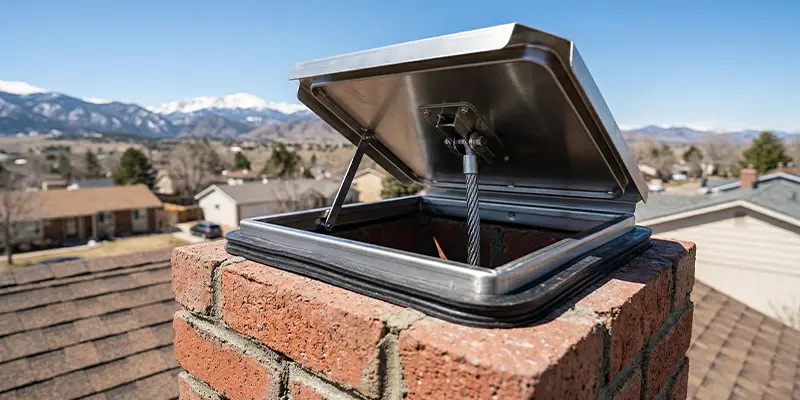
The most effective mechanical upgrade to eliminate draft-related odors is installing a top-sealing damper. Unlike a throat damper, a top-sealing damper is installed at the very peak of the chimney stack. It features a heavy-duty rubber or silicone gasket that creates an absolutely airtight, weatherproof seal when closed. A top-sealing damper acts like a storm door for your chimney, locking out moisture, animals, and downdrafts completely. By sealing the flue at the top rather than the bottom, the entire column of air inside the chimney remains separated from the air inside your home.
Professional Cleaning and Deodorizing
Tackling severe chimney odors requires a multi-step approach. First, you must correct the moisture leaks and draft issues. Second, you must eliminate the source of the smell. Scheduling comprehensive routine chimney sweep services is the only way to effectively strip away the moisture-absorbing creosote and hidden soot deposits.
In cases of severe mildew or animal intrusion, certified technicians do more than just brush the flue. They utilize commercial-grade, specialized odor neutralizers and sanitizing agents designed specifically for porous masonry. These treatments do not just mask the smell, they break down the odor-causing bacteria at a molecular level, restoring healthy air quality to your living space in accordance with EPA standards for indoor air quality.
Reclaim Your Clean Air
You should not have to avoid your living room or keep your windows open all summer just to tolerate a smelly fireplace. Bad odors are your home’s way of telling you that the chimney system requires immediate attention. By addressing water leaks, upgrading your damper system to control airflow, and ensuring the flue is free of absorbent combustible buildup, you can permanently banish those nasty smells. Investing in proper maintenance guarantees that your fireplace remains a beautiful, functional asset rather than a stinking nuisance.






Leave A Comment