
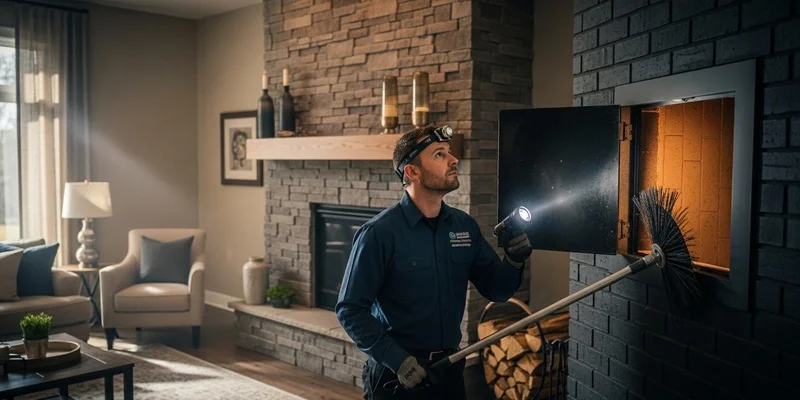
Understanding the Three Stages of Creosote Buildup in Your Chimney
There is nothing quite like the comfort of a crackling fire during a cold winter evening in Colorado. However, every time you burn wood in your fireplace, a chemical process takes place that leaves behind a potentially dangerous byproduct. That byproduct is creosote, and understanding how it accumulates is essential for the safety of your property. Ignoring the internal health of your flue can lead to devastating consequences, including restricted airflow, toxic gas exposure, and severe chimney fires. Preventing creosote buildup is the most important maintenance task for any wood-burning fireplace owner.
To keep your Lakewood home safe and your heating system efficient, you need to understand the science of wood combustion. When wood burns, it releases a mixture of smoke, water vapor, gases, and unburned wood particles. As this hot mixture travels up your relatively cooler chimney, condensation occurs. The resulting residue that sticks to the inner walls of your flue is creosote. While a small amount is inevitable, creosote is highly combustible. If allowed to accumulate and reach higher internal temperatures, it can ignite, causing a chimney fire that can quickly spread to the combustible framing of your home.
The Chemistry Behind the Buildup
Creosote is not a uniform substance. It changes physical form depending on how long it has been left inside the flue, the temperature of your fires, and the amount of moisture present in your firewood. As it evolves, it becomes increasingly difficult to remove and significantly more hazardous. Industry professionals categorize this residue into three distinct stages. Knowing which stage your chimney is currently experiencing will determine the exact removal techniques required.
Stage 1 Creosote: The Velvety Soot
The first stage of creosote development is the most common and, fortunately, the easiest to address. At this phase, the buildup consists of a high percentage of soot. It appears as a dark, velvety, and powdery coating on the inside of the chimney liner. Stage 1 creosote usually occurs when you have good drafting and burn properly seasoned wood. Because the smoke is moving relatively quickly up the flue and contains minimal moisture, the resulting condensation is light.
Even though it is the least dangerous of the three stages, stage 1 creosote is still combustible and must be removed. The good news is that this powdery substance can be effectively brushed away using standard professional chimney brushes. Scheduling annual routine chimney sweeping services ensures that this velvety soot is cleared out before it has the opportunity to harden, absorb more moisture, and progress to the next, more dangerous stage.
Stage 2 Creosote: The Crunchy, Flaky Tar
If stage 1 creosote is not removed, or if your burning habits change, the substance will evolve into stage 2. This middle phase looks like shiny black flakes. It is crunchy to the touch and contains hardened tar. Stage 2 typically develops when incoming air is restricted. For example, if you have glass doors on your fireplace and keep them closed tightly while burning, or if you use a wood stove with the dampener turned down low, the smoke lingers in the flue longer. This lingering allows the smoke to cool and condense more heavily.
Removing stage 2 creosote is significantly more challenging than sweeping away stage 1 soot. Standard brushes will simply glide over the hardened, tar-like flakes without removing them from the liner. To safely extract this buildup, technicians must utilize specialized equipment, such as rotary loops. These stainless steel cables are attached to a high-powered drill, spinning rapidly to break up the crunchy tar without fracturing the underlying clay or metal chimney liner. Attempting to remove stage 2 creosote with DIY tools often results in permanent damage to your internal flue structure.
Stage 3 Creosote: The Glazed, Hardened Menace
The final stage is the most severe and presents an immediate, critical danger to your home. Stage 3 creosote looks like dark, shiny, melted black glass or thick tar dripping down the inside of your chimney. It is highly concentrated fuel. This severe buildup occurs when unburned wood particles constantly coat previous layers of creosote, baking into a dense, solid mass over time. Burning unseasoned, wet, or green wood is the primary culprit, as the excess moisture cools the flue gases rapidly, causing massive condensation.
When stage 3 creosote catches fire, it burns at extreme temperatures, often exceeding 2,000 degrees Fahrenheit. This intense heat can easily melt metal liners, crack masonry, and ignite the wooden framework of your roof. Removing stage 3 creosote requires industrial-grade chemical treatments to break down the hardened glaze. In some severe cases, the glaze is so thick and bonded to the flue that the entire chimney liner must be removed and replaced to restore the safety of the fireplace. Following the Chimney Safety Institute of America guidelines, professionals will not certify a fireplace for use until all stage 3 glazing is completely eradicated.
How the Colorado Climate Accelerates the Problem
Homeowners in the Denver and Lakewood areas need to be particularly vigilant about fireplace maintenance due to our specific local climate. During our frigid winter months, the masonry on the outside of your home becomes ice cold. When you start a fire, the hot smoke hits this freezing cold flue. This extreme temperature differential causes rapid and heavy condensation, accelerating the formation of creosote much faster than in warmer climates.
Furthermore, homes at higher elevations often face unique drafting challenges due to air pressure differences, which can cause smoke to linger longer in the chimney stack. It is highly recommended to perform an advanced camera inspection to properly evaluate the interior walls of your chimney. A high-definition camera feed allows technicians to pinpoint exactly where the cold spots are and determine the exact stage of buildup hidden in the dark recesses of the masonry.
Proven Strategies to Minimize Future Buildup
While you cannot completely stop creosote from forming, you can drastically slow down the accumulation rate by adopting better burning habits. The type of wood you choose is the biggest variable you can control.
- Burn Only Seasoned Hardwood: Firewood should be split and left to dry for at least six to twelve months before use. Its moisture content should be below 20 percent. Wet wood burns at cooler temperatures and produces excessive, heavy smoke.
- Ensure Proper Airflow: Fires need oxygen to burn hot and clean. Keep your damper fully open while burning, and make sure your chimney cap is clear of debris or snow.
- Avoid Artificial Logs for Primary Heating: While convenient, many artificial logs contain waxes and binders that can contribute to rapid tar buildup if used excessively in wood-burning stoves or older masonry setups.
- Follow Environmental Guidelines: Adapting to modern, efficient burning techniques helps reduce emissions and buildup. Review the EPA recommendations for burning wood safely to maximize heat output while minimizing harmful byproducts.
Protecting Your Home with Professional Expertise
Chimney maintenance is not an area where trial and error is acceptable. Chemical sweeping logs purchased from hardware stores may cause a minor amount of flaking, but they absolutely will not clear out stage 2 or stage 3 creosote, nor will they alert you to structural cracks hidden beneath the soot. Your fireplace is a complex system of venting and heat management that requires a trained eye to evaluate properly.
A thorough, professional inspection is the only way to accurately determine the condition of your flue. Certified technicians have the diagnostic tools and the specialized rotary and chemical equipment to strip away dangerous glaze without compromising the integrity of your chimney walls. As the winter season approaches, taking proactive steps to clear out combustible residue will give you peace of mind, allowing you to safely enjoy the warmth and ambiance of your fireplace all season long.






Leave A Comment