
The Hidden Danger of a Rusted Chimney Chase Cover on Prefabricated Fireplaces
When most people picture a chimney, they imagine a massive column of traditional red brick extending from the foundation to the roof. However, the reality of modern residential construction is quite different. Many homes built over the last few decades in Colorado do not have traditional masonry chimneys at all. Instead, they feature factory-built, prefabricated metal fireplaces. These metal exhaust systems are housed inside a wooden frame structure built on the outside of the house, which is then covered with siding or a thin brick veneer to mimic the look of a traditional masonry stack. This wooden enclosure is known as a chimney chase.
Because the chase is framed with standard wood and drywall, the top of this structure must be completely sealed to prevent water from pouring straight down into the interior walls of your home. The critical component that seals this opening is a flat sheet of metal called a chimney chase cover. Replacing a rusted chimney chase cover is a critical maintenance task for Lakewood homeowners with prefabricated fireplaces. When this vital metal lid fails, it sets off a chain reaction of hidden water damage that can completely destroy the structural integrity of your fireplace and the surrounding wooden framework.
What Exactly is a Chimney Chase Cover?
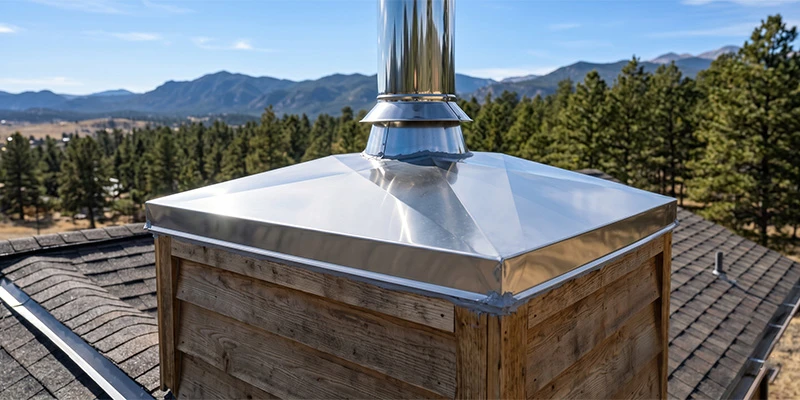
To understand the function of a chase cover, you can compare it to the lid of a shoebox. The chimney chase is the vertical wooden box attached to the side of your house, and the metal flue pipe runs straight up through the center of it. The chase cover is a custom-fitted piece of metal that sits flat on top of the wooden box. It features a perfectly cut hole in the center to allow the metal exhaust pipe to pass through and vent safely into the atmosphere.
On a traditional masonry chimney, this flat top surface is created by pouring a thick layer of concrete known as a chimney crown. Because factory-built chimneys lack the structural strength to support hundreds of pounds of solid concrete, a lightweight metal cover is used instead. The cover is designed with downward-facing lips that overlap the top edges of the wooden siding, forcing rainwater to shed outward and away from the vulnerable wooden framing below. If the cover is intact, the wood inside the chase remains bone dry regardless of the weather outside.
Why Builder-Grade Galvanized Steel Fails
If the chase cover is so important, why do they fail so frequently? The answer lies in the materials chosen during the original construction of the house. During housing booms, residential builders are always looking for ways to cut costs and maximize efficiency. To save money, the vast majority of new homes are fitted with cheap, builder-grade galvanized steel chase covers.
Galvanized steel is simply standard steel that has been dipped in a thin layer of zinc to prevent rust. While this sounds effective in theory, the zinc coating is notoriously fragile. Over time, the intense ultraviolet radiation at our high Colorado altitude degrades this protective coating. Furthermore, the constant barrage of freezing rain, sleet, and melting snow strips the zinc away, exposing the raw, vulnerable steel underneath. Once the raw steel is exposed to moisture, aggressive oxidation begins immediately. Within just a few years of exposure to the Lakewood climate, a galvanized steel chase cover will begin to rust and deteriorate rapidly.
The Warning Sign: Rust Stains on Your Siding
Because the chase cover sits high up on your roofline, you will rarely see the actual rust holes forming on the flat top surface. However, gravity provides a glaring visual warning sign. As the metal cover rusts, rainwater washes across the oxidizing steel, picking up the reddish-brown iron oxide. The water then drips over the edge of the cover and runs straight down the side of your chimney enclosure.
If you stand in your yard and look up at your chimney, pay close attention to the siding, stucco, or brick veneer. If you see streaks of orange, brown, or red rust stains running vertically down the exterior of the chase, your cover is actively failing. This rust staining is the equivalent of a structural check engine light. It means the metal is breaking down and losing its ability to repel water. Ignoring these prominent rust stains will inevitably lead to severe internal leaks and costly renovations.
The Devastating Impact of Internal Water Intrusion
Once rust eats completely through the galvanized steel, or once the metal warps and breaks the caulk seal around the center exhaust pipe, water has a direct path into the interior of your home. Unlike a roof leak that might pool on your attic floor, a chase cover leak drops water straight down the vertical shaft of the chimney enclosure.
This water quickly saturates the wooden studs, plywood sheathing, and drywall that make up the framing of the chase. Because this space is dark, enclosed, and completely unventilated, the wet wood never dries out. This creates a perfect breeding ground for toxic black mold and severe wood rot. The Department of Housing and Urban Development moisture guidelines emphasize that stopping exterior water intrusion is the only way to prevent rapid structural decay and preserve indoor air quality. As the wooden studs rot, the entire chimney chase can begin to lean, warp, or even detach from the main structure of the house.
Protecting the Metal Fireplace Insert
The water falling through a rusted chase cover does not just damage the wood, it also strikes the actual factory-built metal fireplace insert located at the bottom of the shaft. Prefabricated fireboxes are constructed from sheet metal. When they are subjected to constant water dripping from above, the top of the firebox and the internal metal panels will begin to rust heavily.
You may start to notice a strong, musty metallic odor coming from your living room hearth, or you might see flakes of rust falling onto your decorative gas logs. Once a metal firebox begins to rust through, the unit is entirely compromised and becomes a major fire hazard. In these severe cases, homeowners are forced to seek comprehensive expert firebox repair solutions, which often involves tearing out the drywall and completely replacing the entire fireplace unit at a significant cost.
The Solution: Custom Stainless Steel Fabrication
The only permanent way to fix a failing galvanized lid is to completely remove it and upgrade to a material designed to withstand the harsh Colorado elements. When professional chimney technicians perform a replacement, they throw the rusted galvanized metal away entirely. Instead, they install a custom-fabricated cover made from thick, heavy-duty stainless steel or high-grade copper.
Stainless steel does not rely on a fragile chemical coating to resist rust, it is inherently rust-proof throughout the entire alloy. A high-quality replacement cover is measured specifically for your unique chimney dimensions. More importantly, it is fabricated with diagonal creases known as cross-breaks. These cross-breaks form a subtle X shape across the flat surface, creating a slight dome effect. This dome ensures that rainwater and melting snow instantly shed off the sides of the cover, eliminating the flat spots where water used to pool and cause corrosion.
Professional Installation and Storm Collars
Installing a new chase cover is a highly technical process that requires specialized roofing knowledge. The intersection where the round metal exhaust pipe passes through the flat metal cover is highly vulnerable. A professional technician will seal this gap using a specialized, high-temperature silicone sealant. To add a secondary layer of protection, they will install a metal storm collar around the pipe just above the cover, acting like a tight metal umbrella that deflects water away from the sealed joint.
According to safety mandates outlined in the National Fire Protection Association structural codes, all components of a factory-built chimney system must be installed with precision to ensure toxic gases cannot slip back into the wall cavities. Proper installation guarantees that high winds will not tear the new cover off the wooden framing.
Taking Proactive Measures for Your Home
If you own a home with a prefabricated chimney wrapped in siding or stucco, your chase cover is the primary line of defense against devastating water damage. Do not wait for water to pool in your firebox or for black mold to colonize your drywall. If you spot exterior rust stains, or if your home is more than fifteen years old, it is time to have the top of your stack evaluated.
Booking a thorough professional chimney inspection allows certified technicians to get up on the roof and assess the exact condition of your metal cover. Upgrading a failing galvanized lid to a custom stainless steel cover is an upfront investment that pays massive dividends in the long run. It permanently waterproofs the wooden framework of your chimney chase, protects your expensive fireplace insert, and provides you with total peace of mind during every heavy rainstorm and winter blizzard.






Leave A Comment