
The Ultimate Guide to Choosing Safe Firewood for Your Chimney
There is an undeniable charm to building a crackling wood fire in your home when the snow begins to fall across Colorado. The radiant heat and the rhythmic sound of burning logs create a cozy atmosphere that modern heating systems simply cannot replicate. However, many homeowners mistakenly believe that any piece of wood they can fit into their firebox is suitable for burning. This dangerous misconception can lead to severe structural damage, poor indoor air quality, and catastrophic flue fires. The reality is that the specific type of fuel you choose to burn directly dictates the safety and efficiency of your entire exhaust system.
For residents in Lakewood and the surrounding Denver metropolitan area, sourcing good firewood is generally easy. But understanding the crucial differences between varying wood species, moisture levels, and preparation methods is essential. Choosing safe firewood for chimney health in Lakewood is the single most effective way to prevent rapid creosote buildup. If you want to maximize the heat output of your fireplace while minimizing the risk of a dangerous chimney fire, you must become highly selective about what you bring onto your hearth. This comprehensive guide will explain the physics of wood combustion and help you identify the best fuel for your home.
The Thermodynamics of Moisture Content
The absolute most important factor in choosing firewood is not the species of the tree, but rather the moisture content of the wood. When a tree is freshly cut, the wood is classified as green. Green wood is essentially a water-saturated sponge, often containing a moisture content of 45 percent or higher. If you attempt to burn green wood, the fire must expend a massive amount of its own thermal energy just to boil the water inside the log before the actual wood fiber can ignite.
Because so much energy is wasted boiling water, the resulting fire burns at a remarkably low temperature. This low-temperature fire produces an excessive amount of dense, heavy smoke. As this cool smoke travels up your chimney stack, it hits the cold masonry and immediately condenses. This condensation forms a thick, highly combustible tar known as creosote. Burning unseasoned, wet wood guarantees rapid and dangerous creosote accumulation within your flue. To ensure clean combustion, firewood must be properly seasoned for at least six to twelve months, bringing the internal moisture content down to an optimal range of 15 to 20 percent.
How to Identify Properly Seasoned Wood
If you are purchasing a cord of wood from a local Lakewood supplier, you cannot simply take their word that the logs are fully seasoned. You need to verify the condition of the wood yourself before making a purchase or tossing a log onto the grate. Fortunately, there are several visual and physical cues that indicate wood is ready to burn safely.
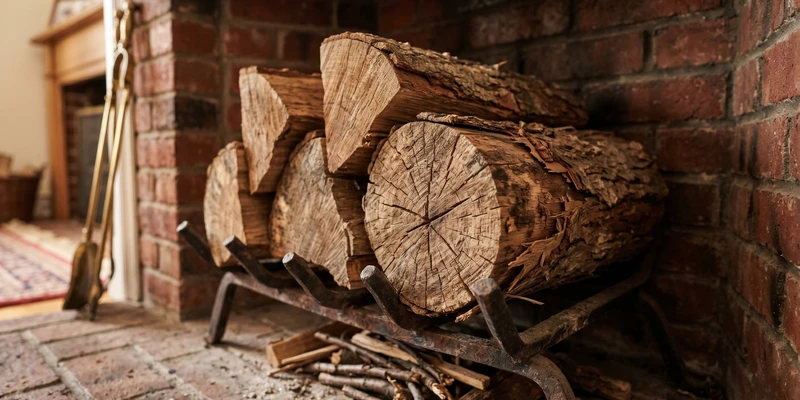
First, inspect the ends of the logs. As wood dries, it shrinks and cracks. You should see deep, spiderweb-like cracks radiating outward from the center of the wood grain on the cut ends. Second, check the bark. On fully seasoned wood, the bark will often be loose or falling off entirely. Third, perform the sound test. If you strike two pieces of seasoned wood together, they will produce a sharp, hollow clack. If they produce a dull thud, the wood is still holding too much water. For the most accurate reading, you can purchase a digital moisture meter from any hardware store. You simply press the metal prongs into the freshly split center of a log to instantly read the water percentage.
Hardwoods vs. Softwoods in Colorado
Once you understand the critical importance of moisture, you can begin looking at wood species. Wood is broadly categorized into two types: hardwoods and softwoods. Hardwoods, such as oak, maple, ash, and hickory, are exceptionally dense. Because of their density, they burn much slower and produce a tremendous amount of sustained heat. They also leave behind a thick bed of glowing coals that will keep your living room warm long after the flames have died down. Hardwoods are the gold standard for home heating.
Softwoods, such as pine, fir, and spruce, are much less dense and contain higher amounts of natural sap and resin. Because they are less dense, they ignite very quickly and produce tall, bright flames. However, they burn out rapidly and require constant reloading. Softwoods are highly abundant in Colorado, making them a very popular and inexpensive choice. It is perfectly safe to burn seasoned pine in your fireplace. However, because of the high resin content, softwoods do produce more creosote than hardwoods. If you choose to burn pine exclusively, you must be extremely diligent about scheduling regular maintenance to keep the flue clear.
The Danger of Burning Construction Scraps
It can be tempting to use scrap lumber from a home renovation project or a nearby construction site as free firewood. You should absolutely never burn construction scraps in your residential fireplace. Materials such as plywood, particleboard, and oriented strand board (OSB) are manufactured using heavy industrial glues, chemical adhesives, and synthetic binders.
When these manufactured materials are subjected to the intense heat of a firebox, the glues break down and release highly toxic chemical fumes directly into your living space and up your chimney. Furthermore, pressure-treated lumber, which is commonly used for outdoor decks and fencing, is infused with chemical preservatives like copper and arsenic to prevent rot. Burning treated wood releases these poisons into the air. The Environmental Protection Agency provides strict guidelines warning homeowners about the severe respiratory dangers of inhaling the smoke from treated wood products. Stick strictly to natural, split logs.
Why You Must Avoid Driftwood and Painted Wood
In addition to construction materials, there are a few other types of wood you must rigorously avoid. If you ever gather driftwood from a lake or reservoir, do not bring it home for your fireplace. Driftwood absorbs a massive amount of mineral salts from the water. When burned, these salts become highly corrosive and will actively eat away at the metal components of your chimney, including the damper assembly and your stainless steel flue liner.
Similarly, never burn wood that has been painted, stained, or varnished. Older paints may contain lead, and modern stains contain a cocktail of volatile organic compounds. The combustion of these chemical coatings produces a harsh, foul-smelling smoke that not only poses a health risk to your family but also leaves a damaging chemical residue baked onto your internal masonry.
Maintaining Your Chimney System
Even if you perfectly follow every rule and only burn the highest quality, kiln-dried oak, your chimney will still accumulate a light layer of soot over time. Combustion always leaves a byproduct. The difference is that by choosing the right fuel, you limit that byproduct to a manageable dusting of stage-one soot rather than a dangerous, hardened glaze of stage-three creosote.
To guarantee that your exhaust system is handling the smoke efficiently and safely, you must incorporate a professional evaluation into your yearly routine. Booking a comprehensive chimney inspection allows a certified technician to verify that your chosen firewood is burning cleanly and that the interior walls of your flue are structurally sound. If the technician discovers soot buildup, they will perform a thorough chimney sweep to reset the system to its factory-clean state.
Responsible Burning for a Warm Winter
Your fireplace is a powerful appliance that demands respect. Treating it like an incinerator for trash, yard waste, or damp branches is a recipe for disaster. By taking the time to source properly seasoned hardwoods or completely dried local softwoods, you ensure that your fires burn hot, bright, and clean. The Chimney Safety Institute of America reminds homeowners that safe burning habits are the first line of defense against residential fires. Invest in good firewood, store it elevated off the ground under a protective shelter, and enjoy the comforting warmth of your fireplace all winter long with complete peace of mind.






Leave A Comment